
Container Gardens
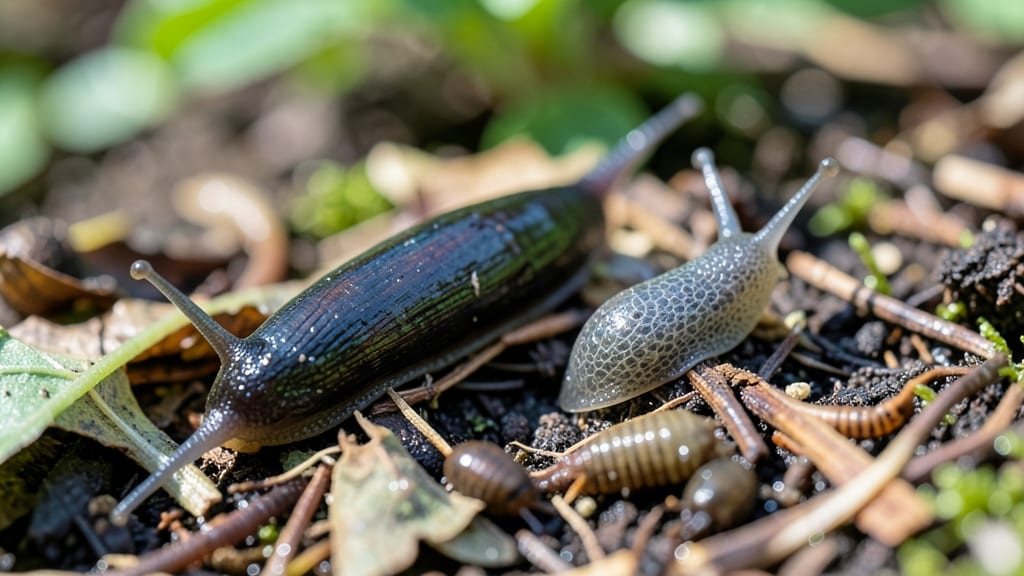
Slugs are beneficial to gardens through their role in decomposing organic matter into nutrient-rich soil, improving aeration, and controlling smaller garden pests—but their appetite for young plants usually makes their drawbacks outweigh these benefits for most gardeners.
These slimy visitors actually play an important role in your garden's health by breaking down fallen leaves and plant debris into compost. 🌱 Their tunnels through the soil help with drainage and oxygen flow, while their feeding habits can reduce populations of other pests like aphids.
However, their love for tender seedlings and leafy greens often means gardeners need to find a balance between their ecological benefits and plant protection.
What's interesting is that slugs thrive in moist, shaded environments, which is why they're more common in container gardens or areas with poor drainage. Their presence can signal a need for better soil management—like adding organic mulch or improving water runoff—rather than just a pest problem.
For many gardeners, the key lies in strategic placement of barriers or natural predators like ducks or ground beetles to enjoy their soil benefits without the damage.
💡 In This Article
- How Slugs Improve Soil and Ecosystem Health
- Balancing Slugs: Natural Control Methods for Gardens
How slugs improve soil and ecosystem health
Slugs act as natural decomposers, breaking down organic matter like fallen leaves, fruit peels, and dead plant material into nutrient-rich compost. Their saliva contains enzymes that accelerate this process, converting complex carbohydrates into simpler compounds that soil microbes can more easily absorb.
This creates a nutrient cycle where slugs effectively recycle plant waste back into the ecosystem, similar to how earthworms aerate soil but with a focus on microbial food sources.
Their feeding habits create micro-tunnels through the soil as they move, which improves soil aeration and water infiltration. Studies show these tunnels can increase soil porosity by up to 30% in heavily organic soils, allowing roots to access oxygen and water more efficiently.
Unlike millipedes that primarily feed on decaying wood, slugs target softer plant materials, creating a complementary role in nutrient cycling that earthworms alone can't match.
Slugs also contribute to pest control by preying on smaller garden pests like aphids, mites, and even small caterpillars. A single slug can consume hundreds of aphids in a season, providing a natural form of biological control that reduces the need for chemical pesticides.
Their presence often indicates a healthy garden ecosystem where multiple species coexist, though their impact on plant health depends entirely on population balance.
What's fascinating is how slugs' digestive systems process tough plant materials. Their gizzard-like radula (a ribbon-like structure with thousands of tiny teeth) grinds up cellulose-rich materials that most other soil organisms can't digest.
This mechanical breakdown creates finer soil particles that improve water retention and microbial activity, making them unsung heroes of soil fertility.
However, their benefits become less clear when considering their preferred diet. While they do consume organic waste, they'll just as eagerly devour young seedlings and tender leaves, creating a delicate balance that most home gardeners struggle to maintain.
The key difference between slugs and their beneficial cousins like earthworms lies in their feeding selectivity—earthworms primarily eat soil and organic matter below ground, while slugs are opportunistic feeders that move above ground.
For gardeners looking to harness slugs' benefits without the damage, creating designated "slug zones" with mulch piles or compost heaps can attract them away from prized plants.
This approach leverages their natural behaviors while minimizing plant losses—a strategy that works particularly well in larger gardens where space allows for separation of functions.