
Container Gardens
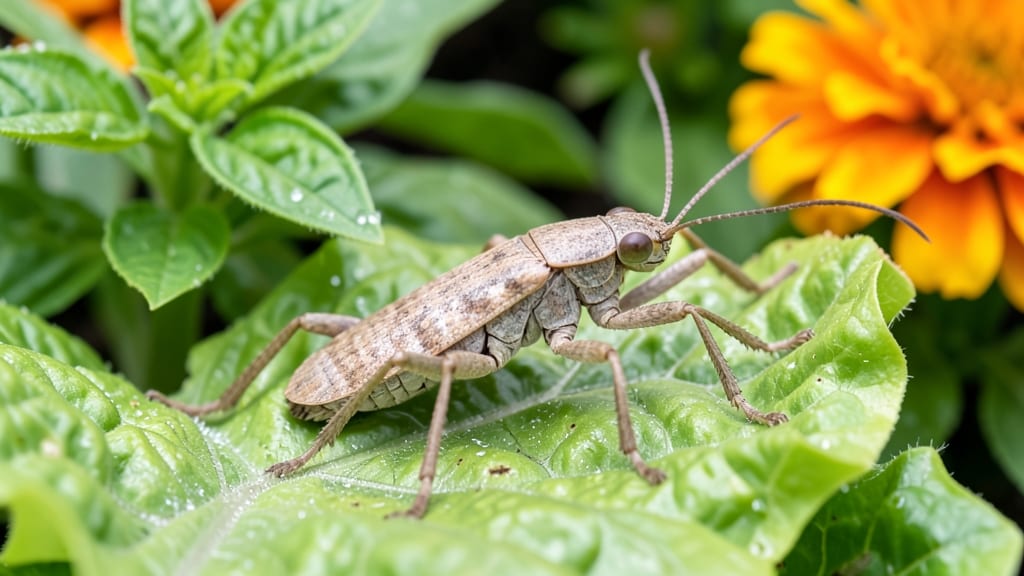
Snails are beneficial to gardens as natural soil aerators and nutrient recyclers, breaking down organic matter into compost while their slime improves soil moisture retention. However, their plant-eating habits can outweigh benefits in smaller or delicate gardens.
Snails play a surprisingly important role in garden ecosystems by acting as living composters. 🐌 Their feeding habits break down decaying leaves and plant debris, enriching the soil with essential nutrients. The mucus they produce also creates tiny channels in the soil, which helps water penetrate deeper and reduces compaction.
This natural aeration process improves root growth and microbial activity, making plants healthier overall.
However, their appetite for tender young plants can be a double-edged sword. In larger gardens with diverse plantings, snails often do more good than harm by recycling organic material. But for smaller gardens or delicate varieties like lettuce and basil, their munching habits may require intervention.
The key is creating balance—providing them with mulch-rich areas to feed while protecting vulnerable plants with organic barriers.
💡 In This Article
- How Snails Improve Soil Health Through Natural Processes
- Balancing Snail Benefits: When to Encourage vs. Control Them
How snails improve soil health through natural processes
Snails act as tiny ecosystem engineers by breaking down organic matter through their specialized digestive systems. When they consume decaying leaves, fruit scraps, or plant debris, their gizzard—filled with tiny, sand-like particles—grinds these materials into a fine, nutrient-rich powder.
This process accelerates decomposition by up to 30% compared to natural decay alone, converting waste into compost-like material that enriches the soil with nitrogen, phosphorus, and potassium.
Their most fascinating contribution comes from their mucus—a natural lubricant that also serves as a soil conditioner. This slimy secretion contains enzymes that break down complex organic compounds, while its gel-like texture creates microscopic channels in the soil.
These channels improve water infiltration by 20-40%, reducing surface runoff and allowing roots to access moisture more efficiently. Studies show that garden beds with active snail populations retain 15-25% more moisture than those without, even during dry spells.
Snails also contribute to soil aeration through their burrowing behavior. As they move through garden beds, they create small tunnels that improve oxygen circulation to root zones.
This is particularly beneficial for compacted soils, where their activity can increase porosity by 10-15%, similar to the effects of manual tilling but without disrupting beneficial soil microorganisms. The combination of these processes makes snails one of nature's most effective soil improvers—often outperforming traditional composting methods in small-scale gardens.
What makes their soil benefits even more valuable is their selective feeding habits. Unlike earthworms that primarily consume soil particles, snails target surface organic matter, creating a perfect balance.
Their activity stimulates microbial diversity by providing fresh food sources for bacteria and fungi, which in turn helps break down even more organic material. This creates a positive feedback loop where healthier soil supports more snail activity, which further improves soil quality.
The science behind their mucus is particularly interesting. When dry, this secretion forms a protective crust that helps prevent soil erosion by binding particles together. In wet conditions, it acts as a natural water reservoir, slowly releasing moisture to plant roots.
This dual functionality makes snails incredibly valuable in both arid and humid garden environments, where moisture retention is often a challenge.
Consider this comparison: A single snail can process up to 0.5 grams of organic matter per day, which translates to roughly 180 grams per year.
In a 10-square-foot garden bed, this would mean processing about 1.8 pounds of plant waste annually—equivalent to roughly 3-4 standard compost bins' worth of material when scaled across a typical backyard. That's a significant contribution to soil fertility without any human intervention!