
Pests
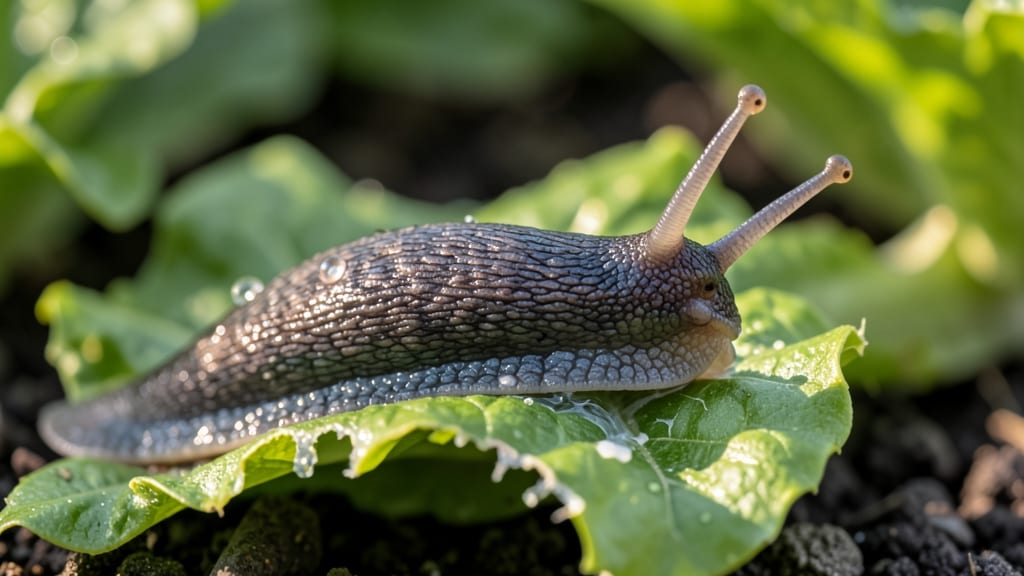
Yes, snails are bad for your garden because they devour young seedlings, leaves, and flowers, leaving behind unsightly slime trails and causing permanent damage to delicate plants like lettuce, hostas, and marigolds. Their nighttime feeding habits make them especially harmful to vulnerable plants.
Snails aren't just a nuisance—they act like tiny, slimy lawnmowers, chewing irregular holes in foliage that leave plants weakened and susceptible to disease. 🌱 Their slime trails don't just look gross; they can actually spread fungal spores and bacteria from plant to plant, creating a domino effect of decay.
The worst part? They're most active at night, so you might not even notice the damage until it's too late. Young plants and stressed vegetation are their favorite targets because they lack the tough defenses of mature growth.
What makes snails particularly destructive is their lifecycle. Eggs hatch in spring, and the tiny snails grow rapidly, multiplying into a full-blown infestation within weeks. A single garden can become a buffet overnight, especially if you have moist, shaded areas where they thrive.
The good news is that with the right strategies—like copper barriers, organic traps, or even strategic plant placement—you can dramatically reduce their impact before they become a full-blown problem.
💡 In This Article
- How Snails Damage Garden Plants and Spread Diseases
- Natural and Chemical Snail Control Methods for Gardens
How snails damage garden plants and spread diseases
Snails cause damage primarily through their unique feeding mechanism. Their radula—a file-like tongue with thousands of tiny teeth—scrapes plant tissue in a circular motion, creating jagged, irregular holes rather than clean bites.
This leaves plants vulnerable to secondary infections because the torn edges expose the plant's vascular system. 🌿 For example, a single snail can completely skeletonize a lettuce leaf overnight, leaving only the midrib intact, while hostas often develop unsightly notches along their edges.
The real danger lies in their slime trails, which aren't just messy—they're a pathogen highway. Snail slime contains bacteria like Pseudomonas and fungal spores that can contaminate healthy plants. Studies show that snails can spread Botrytis cinerea (gray mold) and Phytophthora species, which cause root rot and leaf blight.
The slime acts as a biological vector, transferring diseases between plants as the snails move from one to another during their nightly foraging.
Young plants and stressed vegetation are especially vulnerable because their cell walls are softer and contain higher concentrations of nutrients that attract snails. A 2018 University of California study found that snails prefer plants with nitrogen-rich leaves, which is why they target newly planted seedlings and fertilized crops.
Mature plants with thicker cuticles and waxy coatings are less appealing, but once snails establish a population, they'll eventually move on to more resilient species.
The lifecycle of snails correlates directly with peak garden harm periods. Eggs hatch in spring when soil temperatures reach 50-60°F, and the young snails (called "juveniles") begin feeding immediately. By summer, a single female can lay 50-100 eggs in moist soil, creating a new generation every 6-8 weeks.
The most destructive period occurs from late spring through early fall when temperatures and humidity are ideal for their activity. 🌞 During this time, snails can consume up to 0.5 square feet of foliage per night in severe infestations.
Visual damage patterns can help identify snail activity. Look for:
- Irregular holes: Unlike insect damage, snail holes have smooth, slime-coated edges
- Shiny trails: Silver-gray slime paths (about 1/8-inch wide) leading to feeding sites
- Notched leaves: Semi-circular bites along leaf margins, particularly on hostas and impatiens
- Egg masses: Gelatinous clusters (about 1/2-inch diameter) in shaded, moist areas
The key to minimizing damage is understanding their behavior. Snails are most active during high humidity (above 80%) and at night when temperatures drop to 60-75°F. They avoid direct sunlight and prefer shaded, damp environments, which is why they often congregate under mulch, boards, or dense foliage.
By recognizing these patterns, gardeners can implement targeted control measures before damage becomes irreversible.