
Fertilization
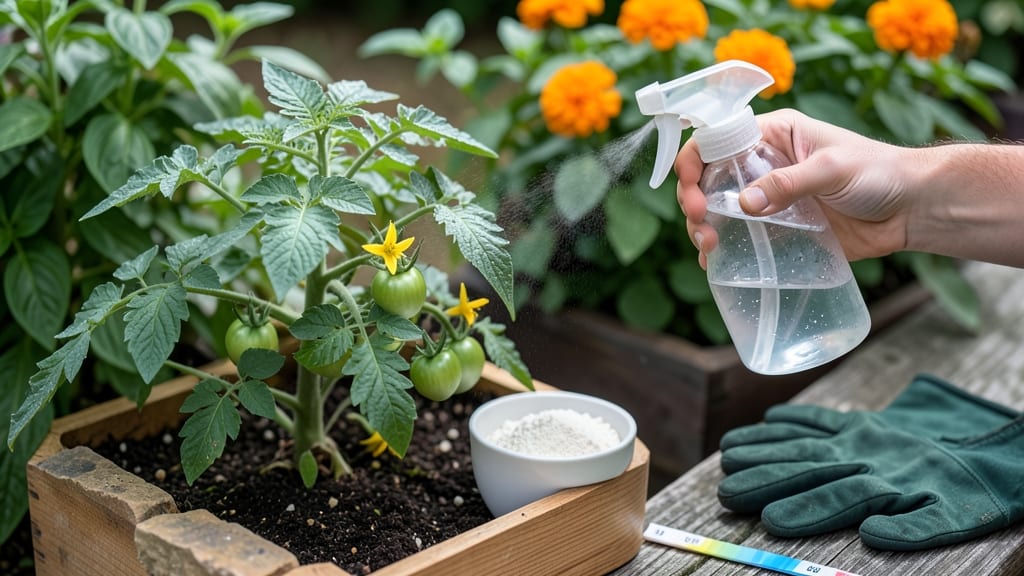
Baking soda in the garden helps neutralize acidic soil, deter pests like slugs and aphids, and act as a natural fungicide for plant diseases. Mix properly to avoid overuse or plant damage.
This versatile household staple works by raising soil pH levels, which is especially helpful for acid-sensitive plants like tomatoes and peppers. 🌱 When mixed into a spray solution, its alkaline properties disrupt fungal spores and deter soft-bodied pests by creating an inhospitable environment.
I've found that a 1-teaspoon-per-quart-water ratio is ideal for most foliar sprays, but always test on a small leaf area first—some plants, like blueberries, can suffer from too much alkalinity.
For soil amendment, I recommend working 1 tablespoon per square foot into the top 2-3 inches of soil and watering thoroughly. The key is consistency—apply every 4-6 weeks during growing season to maintain balance without overwhelming your plants.
Remember, baking soda isn't a cure-all; it's most effective as part of an integrated pest management approach alongside proper watering and companion planting.
💡 In This Article
- How Baking Soda Adjusts Soil pH and Fights Plant Diseases
- Safe Baking Soda Garden Sprays and Soil Mixes for Pest Control
How baking soda adjusts soil pH and fights plant diseases
Baking soda's power in the garden starts with its chemical composition—sodium bicarbonate (NaHCO₃)—which is mildly alkaline with a pH of around 8.3. When dissolved in water, it dissociates into sodium (Na⁺) and bicarbonate (HCO₃⁻) ions.
These ions raise soil pH by neutralizing excess acidity (H⁺ ions) through a simple acid-base reaction: H⁺ + HCO₃⁻ → H₂CO₃ (carbonic acid), which then breaks down into water and carbon dioxide.
This process is particularly effective in soils with pH below 6.5, where many vegetables like tomatoes and peppers struggle to thrive.
The same alkaline properties make baking soda an excellent fungicide. Fungal spores like those causing powdery mildew thrive in acidic conditions, but when baking soda solution (typically 1 teaspoon per quart of water) coats plant leaves, the high pH disrupts the spores' cell membranes.
Studies show this can reduce fungal activity by up to 75% when applied preventatively.
The solution also creates an inhospitable environment for bacteria on leaf surfaces, making it a gentle alternative to harsh chemical fungicides. 🌱 For best results, spray in early morning or late evening when humidity is high but temperatures stay below 80°F.
What's fascinating is how baking soda works at a microscopic level. The bicarbonate ions interfere with the fungal spores' ability to germinate by altering the pH of their immediate environment. This isn't just about making the soil less acidic—it's about creating a chemical imbalance that spores can't survive.
For example, powdery mildew spores need a pH around 5.5 to germinate, but baking soda can raise leaf surface pH to 7.5-8.0 in just minutes after application.
However, this chemical power comes with important caveats. Overuse can lead to sodium buildup in soil, which may harm plants that prefer acidic conditions like blueberries or hydrangeas. The sodium ions can also disrupt the soil's natural cation exchange capacity, affecting nutrient availability.
That's why I recommend starting with ½ teaspoon per quart of water for foliar sprays and monitoring plant responses closely. Always water thoroughly after soil applications to prevent salt concentration near plant roots.
For visible results, think of baking soda as a preventative rather than a cure. Regular applications every 7-10 days during high-risk periods (like humid summers) create a protective barrier.
The white residue you might see on leaves after spraying isn't harmful—it simply indicates the solution is working to maintain that crucial alkaline environment where fungal pathogens can't establish themselves. 💫