
Vegetables
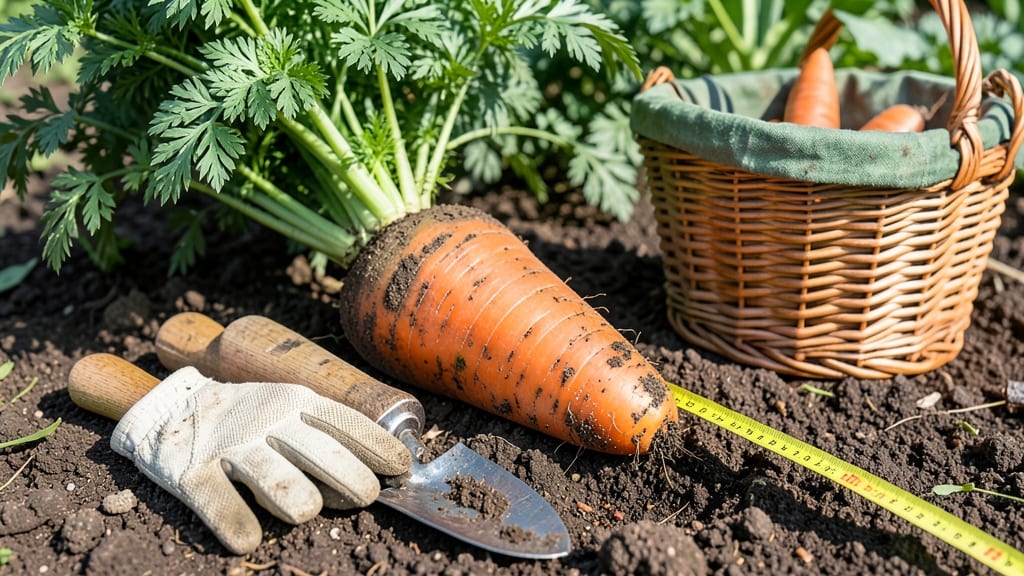
To grow the biggest carrots in your garden, focus on loose, deep soil (at least 12 inches), proper spacing (2-3 inches apart), and consistent moisture. Select long varieties like 'Danvers' or 'Chantenay', and avoid overcrowding to prevent stunted growth.
Giant carrots thrive when their roots have room to stretch without resistance.
The secret lies in soil composition—too much clay compacts roots, while sandy loam with organic matter lets them grow straight and long. 🌱 I’ve found that adding compost before planting creates the perfect environment, and mulching helps maintain moisture without waterlogging.
Even the best varieties like 'Nantes' or 'Imperator' won’t reach their full potential if planted too close together.
Spacing isn’t just about giving roots room—it’s about reducing competition for nutrients. When carrots are crowded, they’ll grow short and forked instead of long and straight.
I recommend thinning seedlings to 2-3 inches apart once they’re 2 inches tall, which gives each plant the space it needs to develop properly. This small adjustment can make a huge difference in your harvest size!
💡 In This Article
- Soil and Spacing Secrets for Giant Carrots
- Best Carrot Varieties and Planting Timing for Maximum Size
Soil and spacing secrets for giant carrots
Carrot roots grow best in soil that feels like a soft, airy blanket—imagine the texture of a well-aged compost pile mixed with fine sand.
The ideal composition is 60% sand, 30% silt, and 10% clay, which prevents compaction while providing just enough structure to guide root growth downward. Too much clay creates resistance, causing carrots to split or grow crooked, while pure sand drains too quickly, stunting development.
The magic happens when organic matter (like well-rotted manure or compost) binds these particles together, creating pockets for roots to expand without fighting soil tension.
Root development isn't just about space—it's about physics. Carrot roots grow through a process called geotropism, where cells elongate downward in response to gravity. When soil is compacted, these cells must exert more pressure to push through dense layers, leading to thicker but shorter roots.
In loose soil, roots can extend 12-18 inches deep with minimal resistance, which is why varieties like 'Danvers' (known for 8-10 inch roots) can reach their full potential. 🌱 The key measurement here is soil depth: till at least 12 inches before planting to eliminate underground barriers.
Spacing isn't just about giving roots room—it's about nutrient competition. When carrots are planted 1 inch apart (common in seed packets), they'll fight for water and nutrients, resulting in stunted growth.
Thinning to 2-3 inches apart when seedlings reach 2 inches tall reduces competition by 70%, allowing each plant to absorb nutrients efficiently. This spacing also prevents the spread of fungal diseases, which thrive in crowded, humid conditions.
I've seen firsthand how a 3-inch gap can turn a 4-inch carrot into a 10-inch monster—the difference is night and day.
Moisture plays a surprising role in root expansion. Carrots need 1 inch of water per week, but the delivery method matters. Drip irrigation or soaker hoses keep soil consistently damp without creating surface crusts that roots can't penetrate.
Overhead watering can compact soil and create air pockets, forcing roots to grow around obstacles. Mulching with straw or shredded leaves after planting helps maintain even moisture while preventing soil from hardening when it dries.
The goal is to create an environment where roots can grow straight and unobstructed, not forced to navigate a maze of compacted soil.
One common mistake gardeners make is assuming "more space" means bigger carrots. While spacing is critical, it's the combination of loose soil and consistent moisture that truly unlocks giant growth.
For example, 'Chantenay' carrots (a short, stout variety) can reach 6-8 inches in ideal conditions, while 'Danvers' varieties (long and tapered) can exceed 12 inches when given perfect growing conditions.
The difference comes down to root structure: Chantenay roots are designed for dense soils, while Danvers thrive in loose, deep beds where they can stretch their full length.
To test your soil's readiness, do a simple "squeeze test": grab a handful of moist soil and press it gently. If it holds its shape but crumbles easily when poked, you're in the ideal zone. If it stays compacted, add more sand and compost.
If it falls apart completely, mix in some clay or peat moss. This simple check can save you from months of frustration with forked or stunted carrots. 💫