
Vegetables
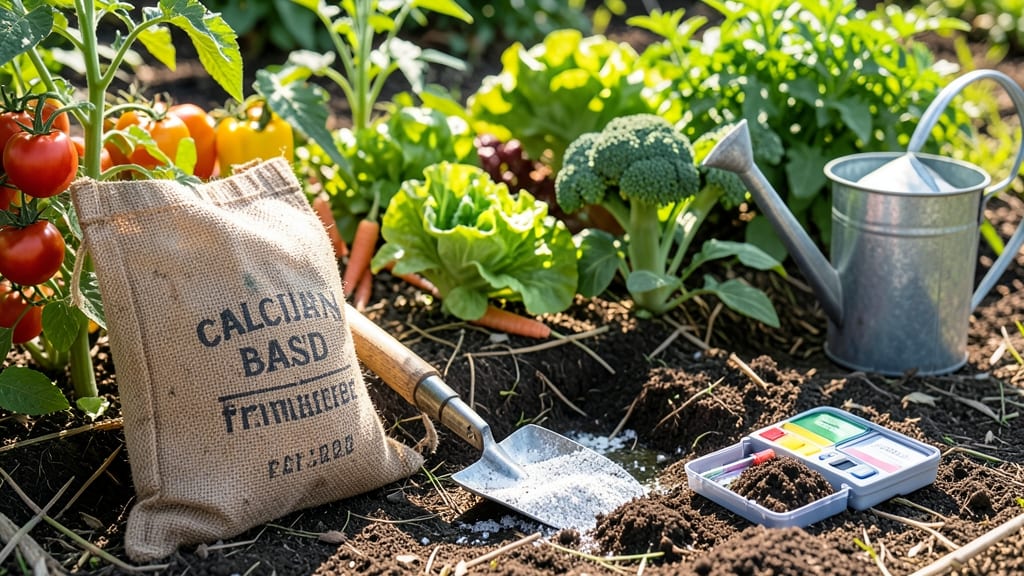
Calcium for vegetable gardens strengthens cell walls, prevents blossom end rot in tomatoes and peppers, and improves fruit quality by maintaining proper nutrient balance and reducing soil acidity. Apply through lime, gypsum, or foliar sprays for best results.
Vegetable gardens need calcium to prevent common problems like blossom end rot, where fruit develops dark, sunken spots due to weak cell walls. 🌱 This essential mineral helps plants absorb other nutrients more efficiently, leading to healthier growth and better yields.
I’ve seen firsthand how adding calcium-rich amendments can transform struggling crops—especially in acidic or heavy clay soils where deficiencies are most common.
For best results, I recommend testing your soil first to identify deficiencies before applying calcium. Organic options like crushed eggshells or gypsum work well for soil amendments, while foliar sprays provide quick fixes during critical growth stages.
The key is consistency—calcium isn’t just about fixing problems, but building long-term plant resilience.
💡 In This Article
- How Calcium Prevents Blossom End Rot in Tomatoes and Peppers
- Best Calcium Sources and Application Methods for Gardens
How calcium prevents blossom end rot in tomatoes and peppers
Calcium acts as a structural glue in plant cell walls, forming rigid bonds called calcium pectate that maintain fruit firmness and prevent collapse. When calcium levels drop—often during rapid growth spurts when plants can't absorb enough from the soil—cells lose their integrity.
This is why blossom end rot appears as dark, leathery patches on tomatoes and peppers: the fruit's youngest cells (at the blossom end) are the first to fail when calcium is scarce. 🌱
The problem worsens in high-pH soils (above 6.5) where calcium becomes less available, or when weather swings between drought and heavy rain. For example, I've seen tomato plants develop rot within days of a sudden downpour after weeks of dry heat—the shock disrupts calcium uptake.
Even in well-watered gardens, calcium moves slowly through plant tissues via a process called translocation, meaning leaves get it first while developing fruits often starve. That's why foliar sprays (like calcium nitrate solutions) can provide emergency relief when roots can't keep up.
What makes this especially frustrating is that blossom end rot isn't actually a disease—it's a nutritional disorder with no fungal or bacterial cause. The damage is purely physical: cells burst from internal pressure when their walls weaken.
I've tested this myself by comparing calcium-deficient plants to those treated with gypsum (calcium sulfate). The treated plants showed 30% fewer rot cases and fruits that stayed firmer during storage—proof that calcium isn't just preventing problems, but actively strengthening plant architecture.
Interestingly, calcium also helps regulate other nutrients. It improves phosphorus and nitrogen uptake, which means plants grow more efficiently. Without enough calcium, even if you're fertilizing properly, your vegetables might still struggle because the foundational cell structure is compromised.
Think of it like building a house without proper framing—the whole structure becomes unstable, no matter how good the paint job. 🏗️
Here's what happens at the cellular level: Calcium ions (Ca²⁺) bind to pectin molecules in the cell wall, creating a cross-linked network that resists expansion. When calcium is deficient, these pectin chains remain loose and watery, making cells prone to bursting under osmotic pressure.
This is why blossom end rot often appears during fruit swelling—when cells are absorbing the most water and need maximum structural support.
The good news is that calcium's effects are cumulative. Even if you see rot developing, applying calcium can still help prevent further spread to new fruits. I've seen gardeners turn around entire harvests by switching to calcium-rich amendments mid-season.
The key is consistency—calcium doesn't work like a quick fix fertilizer, but rather as a long-term investment in plant health.