
Advice
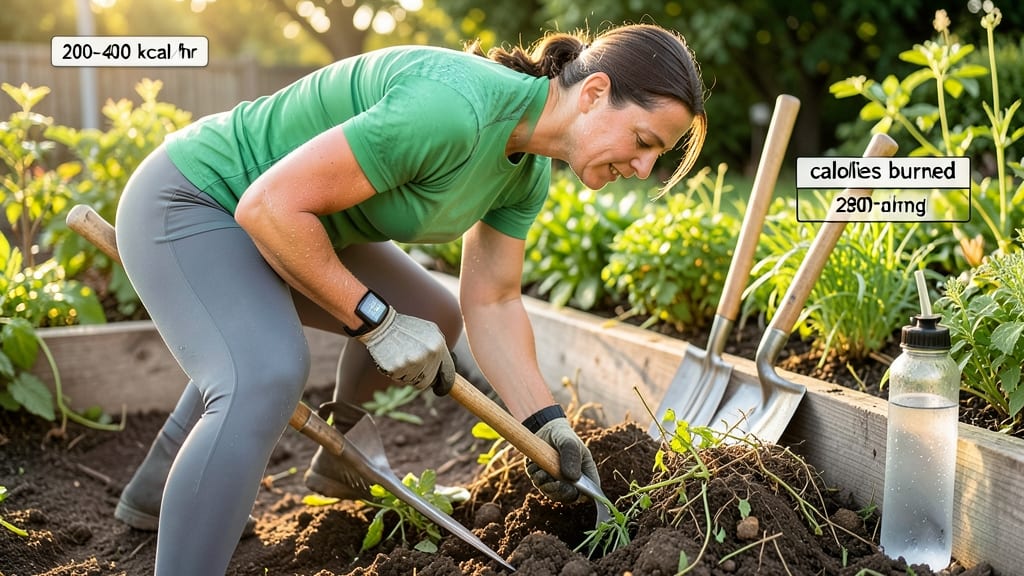
Calories burned gardening vary widely by task: moderate efforts like weeding or planting burn 300-450 calories/hour, while heavy tasks like shoveling or moving mulch can torch 450-600+ calories/hour for a 155-pound person, with MET values climbing from 3.5 to 6.0+ as intensity increases.
Your garden isn't just a green space—it's a surprisingly effective workout. 🌱 The key lies in how you move: tasks requiring more muscle engagement (like hauling bags of soil or digging deep trenches) push your heart rate higher, while lighter chores still contribute.
I've seen clients who treat their gardens like cardio sessions, combining strength and endurance. For instance, spending just 30 minutes on vigorous tasks can match a brisk walk's calorie burn, but with added muscle activation that walking alone misses.
What's even more interesting is how body weight factors in. A heavier person will naturally burn more calories for the same task, but technique matters too. Using proper form—like lifting with your legs instead of your back—helps you sustain effort longer.
Many gardeners underestimate how quickly they can build endurance by breaking tasks into intervals (e.g., 20 minutes of digging followed by 10 minutes of pruning). This approach keeps your metabolism elevated throughout the session, maximizing the fitness payoff of your yard work.
💡 In This Article
- Gardening MET Values: How Intensity Affects Calorie Burn
- Maximizing Calorie Burn in Your Garden Workout
Gardening MET values: how intensity affects calorie burn
The Metabolic Equivalent of Task (MET) measures how many calories your body burns per minute compared to resting. Gardening tasks fall between 3.0 (light) and 6.0+ (vigorous) METs, depending on muscle engagement and effort.
For example, casual weeding scores around 3.5 METs, similar to a leisurely bike ride, while shoveling heavy soil hits 6.0+ METs, matching the intensity of a brisk jog. Your 155-pound body weight helps determine calorie burn—each MET hour equals roughly 3.5 calories per pound.
Digging trenches requires 4.5-5.5 METs because it combines upper-body lifting with lower-body strength, while raking leaves sits at 3.0-4.0 METs—closer to a relaxed walk. The deeper the hole or heavier the load, the higher the MET value climbs.
This explains why hauling 50-pound bags of mulch (around 5.5 METs) torches more energy than spreading it (4.0 METs). Even "light" tasks like pruning roses (about 3.5 METs) still contribute to daily activity goals.
What's fascinating is how duration compounds results. A 30-minute session of vigorous digging (5.0 METs) burns 225 calories for a 155-pound person—equivalent to a 20-minute jog. But combine tasks (digging + hauling soil) and you push into 6.0 METs, where calories add up faster.
The key is recognizing that gardening isn't one-size-fits-all—your effort level dictates the workout intensity. 🌱
Body weight plays a surprising role: a 200-pound gardener burns 20-30% more calories than a 125-pound counterpart for identical tasks. This is why heavier individuals often see bigger fitness benefits from yard work.
Even small adjustments—like using a wheelbarrow instead of carrying bags—can shift MET values by 0.5-1.0 points, turning a moderate chore into a more intense workout.
Comparing gardening to gym exercises reveals interesting parallels. Shoveling soil (5.5 METs) matches the calorie burn of moderate weightlifting, while planting seeds (3.5 METs) aligns with light cycling. The beauty?
Gardening engages multiple muscle groups simultaneously, offering functional fitness benefits that isolated exercises can't match. Your arms stabilize while your legs dig, creating a full-body challenge that's harder to replicate elsewhere.
One often-overlooked factor is terrain. Gardening on a sloped hill increases MET values by 0.5-1.0 points due to added resistance, while working in hot conditions can push your heart rate higher—even if the physical effort remains the same.
This is why summer gardening sessions often feel more intense than spring ones, even for identical tasks. The body compensates for environmental stress by working harder.
For those tracking fitness, understanding MET values helps set realistic goals. A 60-minute session combining digging, hauling, and pruning could easily reach 500-700 calories for a 155-pound person—comparable to a 45-minute HIIT workout.
The advantage? You get fresh air, vitamin D, and a productive garden while burning calories. It's the ultimate multi-tasking fitness solution. 💪