
Container Gardens
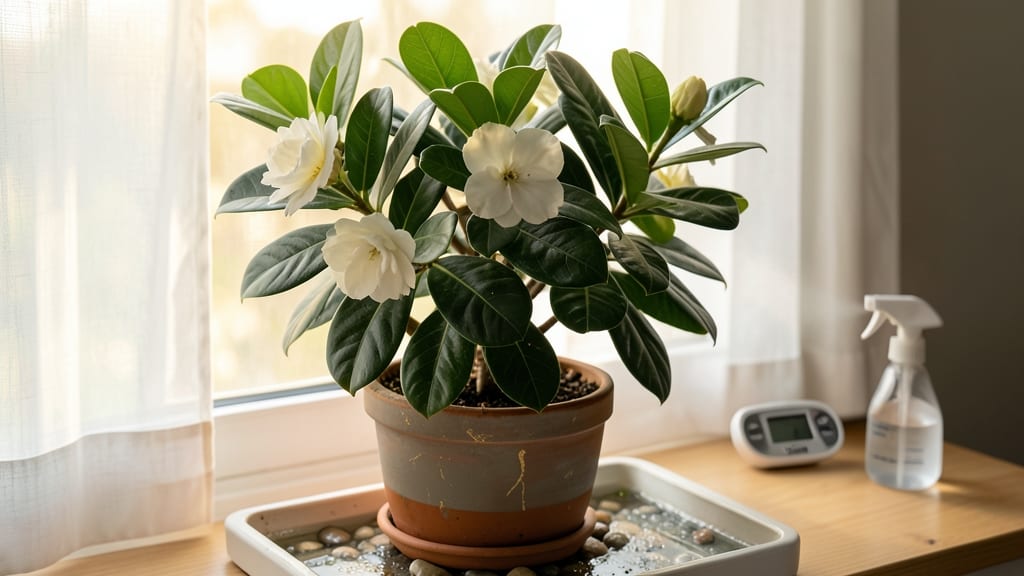
Yes, gardenias can be grown indoors with the right conditions: bright, indirect light, high humidity (60%+), and consistent warmth (65–75°F). Use a well-draining potting mix, water when the top inch feels dry, and fertilize lightly during blooming season to encourage fragrant flowers year-round.
Gardenias are tropical plants that naturally crave the same conditions they'd find in their native Southeast Asia—warmth, moisture, and dappled sunlight. 🌿 The key to success indoors is replicating these elements: place your plant near an east-facing window where it gets morning sun without harsh afternoon rays, or use a grow light for 12-14 hours daily.
Humidity is non-negotiable—try a pebble tray with water or a humidifier, especially in dry winter months when indoor air becomes parched. I've found that grouping plants together creates a microclimate that helps maintain those critical moisture levels.
Don't overlook the soil—gardenias despise soggy roots, so a mix designed for acid-loving plants with perlite or sand works best. When it comes to feeding, less is more: over-fertilizing can lead to lush foliage but fewer blooms.
I recommend a balanced liquid fertilizer diluted to half-strength every 4-6 weeks during spring and summer, then cutting back in fall and winter. The reward? Those iconic creamy-white blooms will perfume your home for months.
💡 In This Article
- Indoor Gardening Essentials for Growing Gardenias
- Step-by-Step Guide to Indoor Gardenia Care
Indoor gardening essentials for growing gardenias
Gardenias thrive indoors because they mimic their natural tropical environment, where they receive filtered sunlight, high humidity, and stable temperatures. The plant's blooming mechanism is triggered by specific light wavelengths—particularly the blue and red spectrums found in natural daylight.
Without enough of these wavelengths, gardenias may produce fewer flowers. 🌸 Artificial grow lights that replicate full-spectrum sunlight (like LED grow bulbs with a color temperature of 5000-6500K) can compensate if natural light is insufficient, especially in north-facing rooms where sunlight is dimmer.
Humidity is another critical factor—gardenias need 60-70% relative humidity to prevent bud drop and leaf scorch. In dry indoor air (common in winter when heating systems run), the plant loses moisture through transpiration faster than it can absorb water through roots. This creates a physiological stress that halts blooming.
A simple pebble tray filled with water and decorative stones creates a localized humidity boost, while a hygrometer helps monitor levels. I've seen gardenias in homes with 40% humidity struggle to bloom, while those in 70%+ environments produce abundant flowers.
Temperature plays a subtle but vital role in gardenia health. These plants originate from regions where nighttime temperatures rarely drop below 60°F, and daytime highs stay under 85°F. Fluctuations outside this range can shock the plant, causing leaf drop or bud abortion.
A consistent 65-75°F range keeps metabolic processes—like photosynthesis and nutrient uptake—running smoothly. Avoid placing gardenias near drafts, air conditioning vents, or radiators, as sudden temperature swings mimic seasonal changes that trigger dormancy in tropical plants.
The soil's acidity (pH 5.0-6.5) is equally important—gardenias are "acid-lovers" that absorb nutrients most efficiently in slightly acidic conditions. A potting mix with 50% peat moss or coconut coir (for moisture retention), 30% perlite or sand (for drainage), and 20% compost creates the ideal balance.
The perlite prevents root rot by ensuring excess water drains within 15-30 minutes after watering, while the compost provides slow-release nutrients. Over time, organic matter in the mix breaks down, raising pH—so repotting every 2-3 years maintains optimal conditions.
Pest resistance also ties directly to these environmental factors. Gardenias grown under stress (low humidity, poor light, or temperature swings) become more susceptible to spider mites and scale insects. These pests thrive in dry conditions, where they can drain plant sap more efficiently.
A regular misting schedule (especially on undersides of leaves) disrupts their life cycle, while introducing beneficial insects like ladybugs creates a natural defense. I've noticed that gardenias kept in 65%+ humidity environments develop thicker, waxier leaves that naturally repel pests better than stressed plants.
Finally, the plant's circadian rhythm—its internal clock—affects blooming patterns. Gardenias typically flower in response to consistent daylight cycles, with buds forming in late winter to early spring. Disrupting this cycle with erratic light exposure (like moving the plant frequently) can confuse the plant, leading to sporadic blooming.
Positioning your gardenia in a fixed location with stable light conditions helps maintain predictable flowering times. 🌿