
Advice
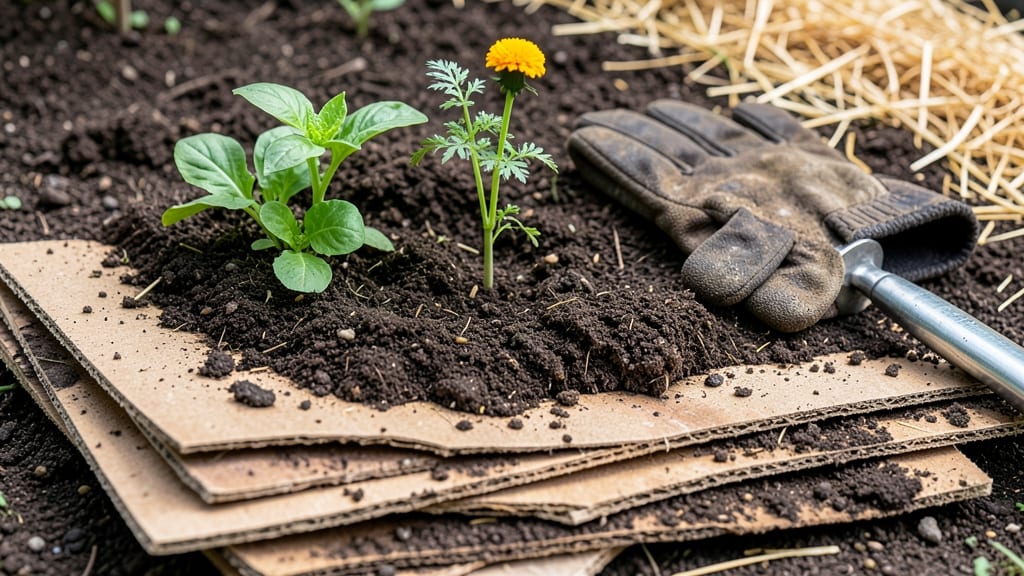
You can use cardboard in your garden to block weeds and hold moisture, but only if it's plain, uncoated, and fully covered with soil or mulch. This prevents harm to plants and stops pests from nesting. Never use glossy or colored cardboard, as these contain harmful chemicals.
Plain cardboard breaks down naturally in soil over time, acting like a slow-release mulch that enriches the earth as it decomposes. 🌱 The key is preparation—remove all tape and staples, then bury it at least 2-3 inches deep to prevent wind from scattering it.
I've found this method works best in vegetable beds where weeds are stubborn, but it's less ideal for delicate flowers that might struggle with the initial decomposition process.
If you're concerned about potential mold or pests, opt for shredded cardboard instead of large sheets—it decomposes faster and blends more naturally into the soil. For areas where you want immediate plant growth, consider alternatives like straw or grass clippings, which provide similar moisture benefits without the wait.
The right choice depends on your garden's specific needs and the plants you're growing.
💡 In This Article
- How Cardboard Breaks Down in Garden Soil
- Plant-Safe Cardboard Preparation and Alternatives
How cardboard breaks down in garden soil
Plain cardboard decomposes through a process called cardboard composting, where soil microbes—particularly bacteria and fungi—break down the cellulose fibers. This happens fastest in warm, moist conditions, typically taking 3-6 months to fully integrate into the soil.
The decomposition releases nutrients like nitrogen and carbon, which improves soil structure and fertility over time. Think of it like a slow-release mulch that gradually enriches the earth as it disappears.
The weed-suppressing power comes from cardboard's dense, flat surface blocking sunlight, which weeds need to grow. A single layer can reduce weed seeds from sprouting by up to 80% in the first season. However, this barrier effect lasts only until the cardboard breaks down—usually 6-12 months depending on climate.
In hot, humid regions, it may decompose faster, while cooler climates slow the process. The moisture retention benefit comes from the cardboard acting like a temporary water reservoir, holding up to 30% more moisture in the soil compared to bare ground.
Here's what happens when you bury cardboard properly: The outer layer decomposes first, creating a sponge-like structure that aerates the soil while holding water. This is why gardeners often see improved root growth in plants after using cardboard—roots can penetrate more easily through the partially decomposed material.
The risk of mold or pests arises if the cardboard isn't buried deep enough (2-3 inches) or if it's left exposed to wind or rain, which can scatter fragments and create unsightly piles that attract rodents.
For optimal results, I recommend cutting cardboard into 2-3 foot strips before burying. This increases surface area for microbial activity while preventing large sheets from creating air pockets that could trap moisture and promote mold. The strips also decompose more evenly, reducing the chance of uneven plant growth.
In my own garden, I've noticed that shredded cardboard works even better—it breaks down in just 2-3 months while still providing excellent weed suppression during that time.
The decomposition process also affects soil pH slightly. Plain cardboard is neutral (pH 7), but as it breaks down, it may temporarily lower pH slightly due to the release of organic acids. This is rarely a problem for most vegetables, but acid-loving plants like blueberries might need additional pH adjustments.
The good news is that the long-term effect is usually a slight improvement in soil tilth, making it easier to work with over time.
One common misconception is that cardboard will create a permanent weed barrier. In reality, it's a temporary solution that works best in combination with other mulching techniques.
For example, I often use cardboard as a base layer under wood chips or straw, which provides long-term weed suppression while the cardboard decomposes. This two-layer approach gives you the best of both worlds: immediate weed control and gradual soil improvement.