
Container Gardens
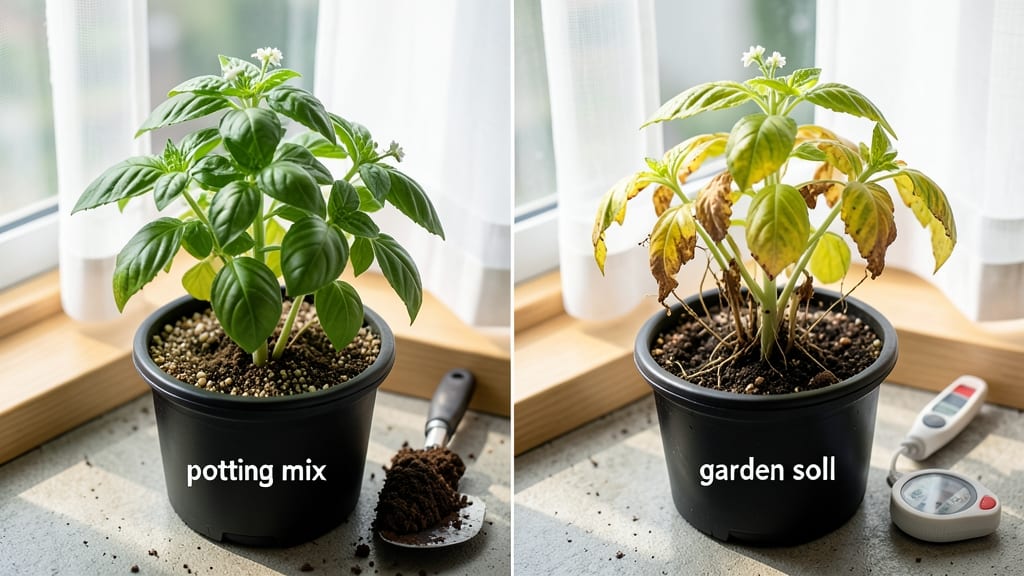
You shouldn't use garden soil for potting because it compacts easily, lacks drainage, and may contain pests or diseases. Opt for lightweight potting mixes with perlite, vermiculite, or compost instead to ensure healthy root growth and aeration.
Garden soil is heavy and dense, which can suffocate plant roots by blocking airflow and water movement. 🌱 Without proper aeration, roots struggle to absorb nutrients, leading to stunted growth or even rot.
I’ve seen firsthand how plants in garden soil often develop yellowing leaves or fail to thrive because their roots can’t expand properly. For containers, you need a mix designed specifically for potting—one that stays loose and drains well to keep roots happy and healthy.
Even if you amend garden soil with sand or compost, it still won’t replicate the ideal texture of a quality potting mix. Most commercial blends include ingredients like coconut coir or peat moss to retain moisture while preventing compaction.
For example, succulents need a gritty mix with extra perlite, while herbs thrive in a well-draining blend with compost. Always check the plant’s specific needs before choosing a medium.
💡 In This Article
- Why Garden Soil Fails as a Potting Medium
- Best Potting Soil Blends for Different Plants
Why garden soil fails as a potting medium
Garden soil is designed for in-ground planting where roots can spread freely and natural drainage occurs over time. But in containers, its heavy clay and silt particles pack tightly, reducing pore space by up to 70% compared to ideal potting mixes.
This compaction creates an anaerobic environment where roots suffocate, unable to absorb oxygen or water efficiently. Think of it like trying to breathe through a wet sponge—roots can't expand properly, leading to stunted growth or even root rot.
The issue goes deeper than texture. Garden soil often contains pathogens like fungal spores or nematodes that thrive in dense, moist conditions.
These microscopic invaders can hitchhike from your yard into pots, attacking delicate plant roots. 🌱 For example, a single tablespoon of garden soil can contain thousands of harmful microbes, while sterile potting mixes eliminate this risk entirely.
Even "clean" garden soil may harbor weed seeds that sprout uncontrollably in containers, competing with your intended plants for nutrients.
Nutrient availability also differs dramatically. Garden soil releases nutrients slowly through natural decomposition processes that take months or years. Potting mixes, however, are formulated with fast-acting organic matter like worm castings or composted bark, providing immediate nourishment.
Without this balance, container plants often show deficiency symptoms like yellowing leaves (chlorosis) within weeks, despite appearing to have enough soil. The key difference is that potting mixes maintain a 1:1 ratio of organic to inorganic material, while garden soil can be 90% inorganic.
Moisture retention is another critical failure point. Garden soil holds water like a sponge, creating soggy conditions that promote root diseases. Potting mixes incorporate ingredients like perlite or vermiculite that create air pockets—about 30-40% air space compared to garden soil's 10-15%.
This aeration allows roots to breathe while still maintaining adequate moisture for plant health. For instance, a basil plant in garden soil may develop fungal leaf spots within days, while the same plant in a well-draining potting mix thrives for weeks.
Consider the physical stress on containers too. A 5-gallon pot filled with garden soil can weigh 30-40 pounds when saturated, making it difficult to move or water properly. Potting mixes are formulated to be 30-50% lighter, reducing strain on both your plants and your back.
The weight difference comes from replacing dense clay particles with lightweight additives like coconut coir or rice hulls, which also improve drainage.
What most gardeners don't realize is that even "amended" garden soil—mixed with sand or compost—still fails to replicate the ideal container environment. Sand, for example, improves drainage but creates new problems by repelling water instead of absorbing it, leaving roots thirsty.
The solution lies in using pre-formulated potting mixes that balance all these factors: aeration, moisture retention, weight, and nutrient availability. This is why professional growers never use garden soil for containers, even for temporary planting.