
Container Gardens
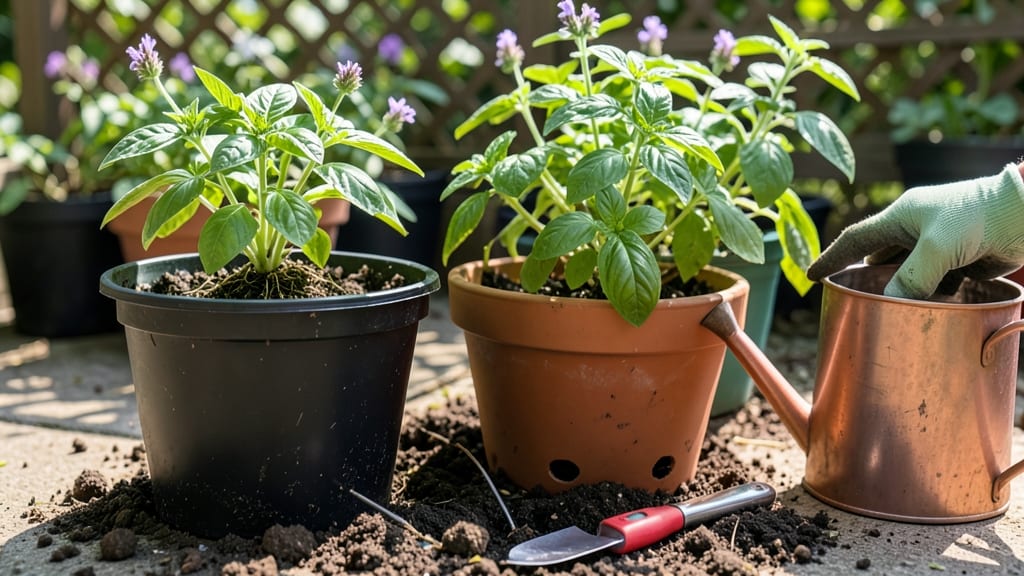
Using garden soil in containers requires mixing it with perlite, vermiculite, or compost to improve drainage and aeration, as pure garden soil compacts easily and suffocates roots. Avoid using it alone unless amended properly for potted plants.
Pure garden soil is heavy and dense, making it ideal for in-ground planting but disastrous for containers. 🌱 When you use it straight from the yard, it compacts quickly, blocking water flow and starving plant roots of oxygen.
The solution is blending it with 20-30% organic matter like coconut coir or compost, which creates air pockets while retaining moisture. For succulents and cacti, I recommend adding up to 50% coarse sand or pumice to prevent root rot entirely.
Think of container soil like a sponge—it needs the right balance of firmness to hold plants upright while staying loose enough to breathe. A simple DIY mix I use often combines 60% garden soil, 20% perlite for drainage, and 20% worm castings for nutrients.
This works well for most vegetables, but flowering plants often need extra phosphorus-rich amendments like bone meal.
💡 In This Article
- Why Garden Soil Needs Amendments for Containers
- Best Mixing Ratios for Container Gardening Soil
Why garden soil needs amendments for containers
Garden soil from your yard is packed with nutrients and microbes, but its dense structure makes it unsuitable for containers. When you plant directly in unamended garden soil, the particles compress under the weight of the plant and water, reducing pore space by up to 70%.
This creates a suffocating environment where roots struggle to access oxygen—a critical issue since plant roots need 10-20% air space in the soil to thrive. Without proper aeration, roots suffocate, leading to stunted growth or even death.
The problem worsens in containers because they lack the natural drainage of in-ground soil. Rainwater or irrigation can't seep away easily, causing waterlogging that drowns roots within 24-48 hours. Pure garden soil also leaches nutrients rapidly in containers, as there's no replenishment from surrounding soil layers.
For example, nitrogen—essential for leafy greens—can deplete by 50% in just 6 weeks without organic amendments. This is why container mixes often include slow-release fertilizers like osmocote or worm castings.
Consider how different plants react: a tomato plant in unamended garden soil will show wilting leaves and yellowing stems within 2-3 weeks, while the same plant in a well-amended mix thrives with vibrant foliage.
The key difference is the soil's water retention capacity—amended mixes hold 30-40% more moisture without becoming soggy. This balance is crucial for root health, as roots need both water and oxygen to function properly.
Another critical factor is the Cation Exchange Capacity (CEC), which measures a soil's ability to hold nutrients. Garden soil typically has a CEC of 10-20 meq/100g, while amended container mixes can reach 25-35 meq/100g due to added organic matter.
This higher CEC means plants have better access to essential minerals like potassium and magnesium, which are vital for flowering and fruiting. Without amendments, plants often show deficiency symptoms like purple stems or weak stems.
For visual comparison, imagine two pots side by side: one with pure garden soil and one with a 60/30/10 mix of garden soil, perlite, and compost. After watering, the unamended pot will have water pooling on top for hours, while the amended mix drains within 10-15 minutes.
The difference is immediately visible in how the plants grow—amended soil promotes strong root development and prevents the grayish, mushy roots that signal suffocation.
What most gardeners overlook is how temperature affects soil behavior. In containers, soil heats up faster than in-ground soil, especially in black pots. Pure garden soil can reach 100°F+ on sunny days, cooking delicate roots.
Amended mixes with perlite or vermiculite stay 15-20°F cooler because these additives reflect heat and improve airflow. This temperature difference is why container gardens often need more frequent watering in summer—amended soil dries out 30% faster but also warms roots less.