
Tools
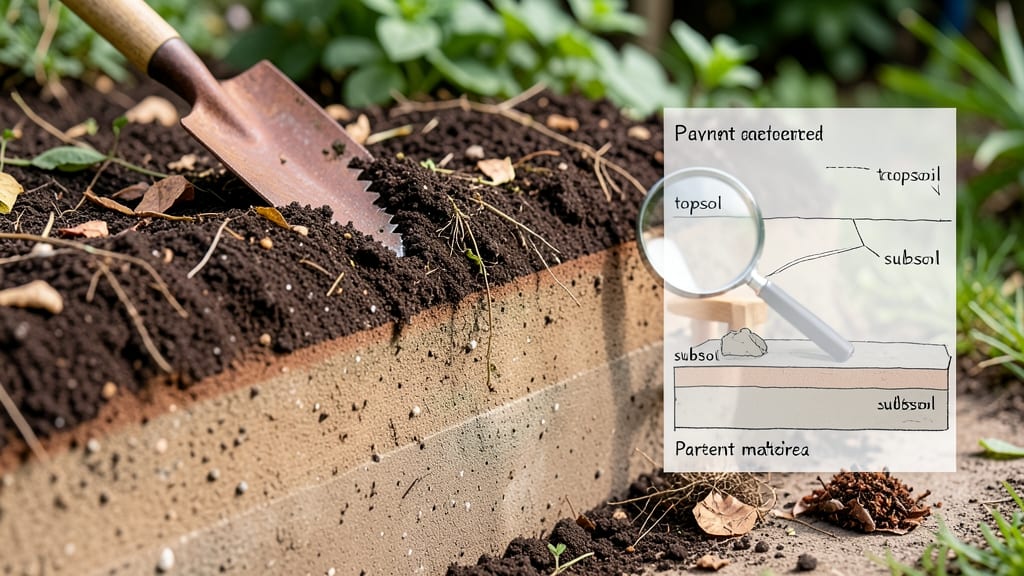
Understanding garden soil layers reveals how topsoil, subsoil, and parent material work together: topsoil nourishes plants with organic matter, subsoil stores essential minerals, and deeper layers stabilize roots while regulating moisture. A well-structured soil profile creates the foundation for healthy garden growth.
Soil layers develop over centuries through natural processes like weathering, organic decomposition, and microbial activity. 🌱 The topsoil layer, rich in organic material, supports most root systems and microbial life, while the subsoil beneath stores minerals and water.
Deeper layers, often composed of weathered rock fragments, provide structural support and drainage. Climate and local geology determine how these layers form and their relative thickness, which is why soil profiles vary dramatically across regions.
For gardeners, recognizing these layers helps identify what each zone contributes to plant health. The top 3-6 inches of topsoil typically contain the highest concentration of nutrients, while the subsoil can become compacted over time, restricting root growth.
Testing soil layers with a simple trowel or soil probe reveals their structure, helping you amend compacted areas with compost or organic matter to improve drainage and aeration.
💡 In This Article
- How Soil Horizons Develop Naturally
- Improving Soil Layer Structure for Gardens
How soil horizons develop naturally
Soil horizons form through a dynamic interplay of physical, chemical, and biological processes. At the surface, organic matter like fallen leaves and decomposed plant material mixes with minerals from weathered rock, creating the nutrient-rich topsoil layer.
This zone, typically 3-12 inches deep, thrives with microbial activity that breaks down organic material into plant-accessible nutrients like nitrogen and phosphorus. The process begins with rainfall and temperature fluctuations that fracture rocks through freeze-thaw cycles or chemical reactions, while earthworms and fungi accelerate decomposition.
Beneath the topsoil lies the subsoil, or B-horizon, where minerals leached from above accumulate. This layer often contains higher concentrations of clay and iron oxides, giving it a denser texture that stores water and nutrients during dry periods.
The transition between topsoil and subsoil can be abrupt in some regions, like the 10-inch boundary in sandy soils, or gradual in others where organic matter seeps downward.
Climate plays a crucial role—tropical regions develop deeper, more weathered profiles over centuries, while arid areas may have thinner layers due to limited organic input.
The deepest layer, called parent material or C-horizon, consists of partially broken-down rock fragments and minimal organic content. Here, roots from deep-rooted plants like oak trees or fruit trees find anchorage, while water percolates through to recharge groundwater.
This layer's composition varies dramatically: in some areas, it's composed of limestone fragments, while in others, it's volcanic basalt. The rate of horizon development depends on time—some soils take 1,000+ years to form just a few inches of topsoil, explaining why preserving soil health is critical.
Microorganisms are the unsung heroes of soil formation. Bacteria, fungi, and actinomycetes break down complex organic compounds into simpler forms, while mycorrhizal fungi form symbiotic relationships with plant roots, enhancing nutrient uptake.
In forest ecosystems, fallen needles and bark create acidic conditions that accelerate mineral weathering, while grassland soils develop more neutral pH profiles. These biological processes create the vertical stratification we recognize as soil horizons, each with its own ecological role.
Geological activity also shapes soil profiles. Glacial till deposits create thick, mineral-rich layers in northern climates, while wind-blown loess deposits form the fertile soils of the American Midwest.
The interaction between these factors explains why a garden in California might have a shallow, rocky subsoil while one in the Midwest has deep, fertile layers.
Understanding these natural processes helps gardeners appreciate why some soils drain quickly (sandy) while others hold moisture (clay-heavy), and how to work with—not against—the natural soil structure.
What most gardeners don't realize is that soil horizons aren't static—they evolve continuously. Erosion can strip away topsoil, while human activities like tilling or adding compost can accelerate layer development.
The key is recognizing your soil's natural profile before making amendments, as forcing changes can disrupt the delicate balance between horizons. For example, adding too much organic matter to clay-heavy subsoil might create a waterlogged layer that roots can't penetrate. 🌍