
Container Gardens
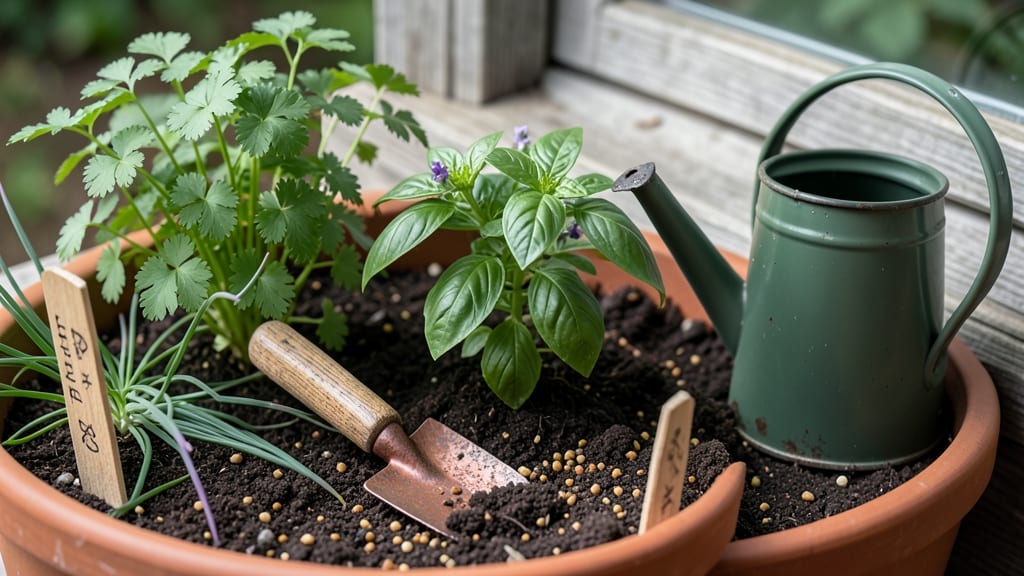
Creating garden soil in pots requires a precise blend of 60% organic matter (compost or peat), 20% perlite or vermiculite, and 20% coarse sand or pumice to prevent waterlogging while nourishing roots. Fine-tune these proportions based on your plants' needs and container size.
This ratio isn't just random science—it's about balancing moisture retention with airflow. 🌱 The organic matter feeds roots, while perlite and sand create air pockets that prevent suffocation.
For example, succulents need more sand (30%) to mimic their desert habitat, whereas leafy greens thrive with extra compost (70%) for nutrient density. I always adjust the mix after testing drainage by pouring water through a sample—if it drains in under 30 seconds, the blend is perfect.
Here's why this matters: Overwatering kills more container plants than underwatering. The right mix keeps roots happy by preventing soggy soil, which leads to rot. For heavy feeders like tomatoes, I add a handful of worm castings to the organic portion—they're nature's slow-release fertilizer.
And if you're using recycled materials, sterilize them first to avoid introducing pathogens to your potted garden.
💡 In This Article
- Why Soil Composition Matters in Container Gardening
- Customizing Soil Mixes for Different Potted Plants
Why soil composition matters in container gardening
The foundation of healthy potted plants lies in understanding how each soil component plays a specific role in root development. Organic matter like compost or coconut coir acts as a nutrient reservoir, breaking down slowly to feed roots over time.
This component holds moisture while also providing essential microbes that help decompose organic material. Without it, your plants would starve, even if the soil looks fine. For instance, a mix with 70% compost works wonders for leafy greens like basil, which are heavy feeders.
Perlite or vermiculite are the unsung heroes of container soil—they create tiny air pockets that improve aeration, allowing roots to breathe. Perlite, in particular, expands when heated and remains porous, making it ideal for preventing compaction.
When mixed in at 20%, it mimics the natural aeration found in loose garden soil. Without these additives, soil can become as dense as clay, suffocating roots and leading to rot.
I’ve seen tomato plants in poorly aerated mixes develop black, mushy roots within weeks—it’s heartbreaking but preventable with the right blend.
Coarse sand or pumice serves as the drainage regulator, preventing water from pooling at the bottom of pots. Unlike fine sand, which compacts over time, pumice has a rough texture that maintains its structure.
This component ensures excess water flows through the soil profile, carrying away salts that can build up and harm roots. For example, a 30% pumice mix is perfect for succulents, which thrive in fast-draining conditions. Without this gritty element, even the hardiest plants like cacti will develop root rot.
What most gardeners overlook is how these components interact. Organic matter retains water, while perlite and sand create pathways for it to move. This balance is why the 60-20-20 ratio works so well—it’s a Goldilocks zone for most plants. However, this isn’t one-size-fits-all.
For instance, orchids need a mix with 50% bark or charcoal for extra aeration, while ferns prefer a higher organic content (80%) to stay consistently moist. The key is testing your mix: pour water through a sample—if it drains in 10-30 seconds, you’ve got it right.
Another critical factor is the pot’s size. Larger containers can support a slightly higher organic content because they hold more moisture, while small pots need more perlite to prevent drying out too quickly.
For example, a 5-gallon pot might use the standard ratio, but a 1-gallon pot for herbs could benefit from 30% perlite to compensate for its limited volume. The goal is always to mimic the plant’s natural growing conditions as closely as possible.
Finally, consider the long-term health of your soil. Over time, organic matter decomposes and needs replenishing. I recommend adding a handful of fresh compost every few months to maintain fertility.
For plants with high nutrient demands, like peppers or eggplants, I mix in 10% worm castings into the organic portion—this gives them an extra boost without overwhelming the mix. The science here is simple: healthy soil equals healthy plants, and the right composition makes all the difference. 🌱