
Fertilization
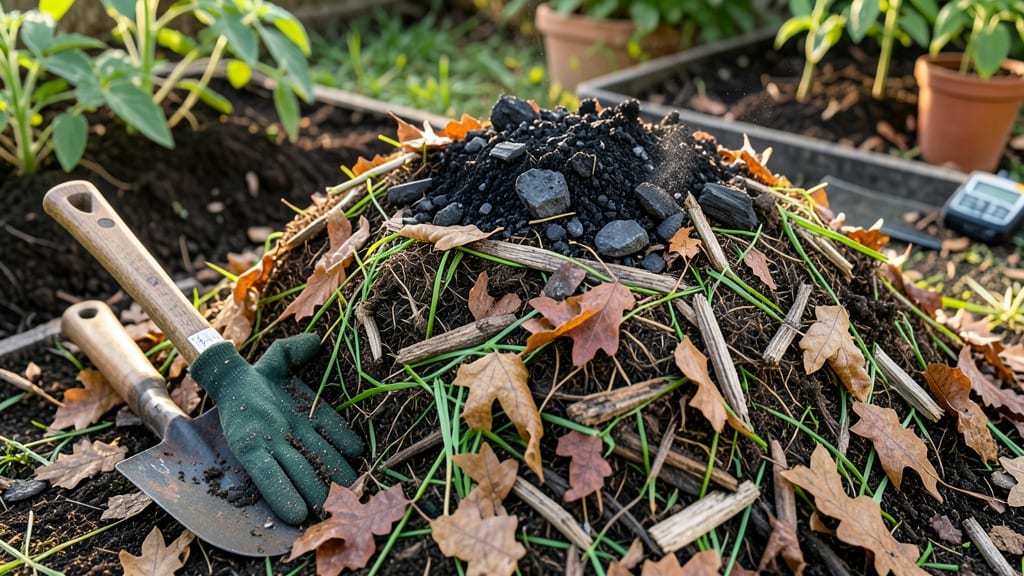
Using charcoal ash in gardens helps neutralize acidic soil and improve drainage while providing micronutrients like calcium and magnesium, but requires careful application to avoid altering pH excessively or introducing contaminants.
Charcoal ash acts as a natural soil amendment because its alkaline properties counteract acidic conditions, making it especially useful for plants like blueberries or azaleas that thrive in slightly acidic environments. 🌱 When applied correctly, it not only balances pH but also enhances soil aeration by breaking down compacted layers.
The key is moderation—too much can raise soil pH beyond optimal levels, creating problems for acid-loving plants.
Most gardeners find success by sprinkling a thin layer (½ inch) over the soil surface and lightly mixing it into the top 2-3 inches of soil. Always test your soil's pH before applying ash, and monitor it afterward to avoid overcorrecting.
For best results, use ash from untreated wood charcoal, as commercial products may contain additives that could harm plants.
This method works particularly well for container gardens or raised beds, where you can control the soil mix more precisely. Just remember: charcoal ash isn't a fertilizer substitute—it's a soil conditioner that supports nutrient availability rather than providing nitrogen or phosphorus directly.
💡 In This Article
- How Charcoal Ash Adjusts Soil pH and Nutrient Balance
- Safe Application Methods for Charcoal Ash in Gardens
How charcoal ash adjusts soil pH and nutrient balance
Charcoal ash contains potassium carbonate and calcium oxide, both highly alkaline compounds that react with acidic soil components like hydrogen ions.
When sprinkled on acidic soil (pH below 6.5), these minerals undergo a neutralization reaction, converting harmful hydrogen ions into water and carbon dioxide while raising the pH toward neutral (7.0).
This process is particularly effective because charcoal ash's alkalinity typically measures between pH 9.0-10.5, creating a powerful but controllable buffer against soil acidity.
The micronutrient benefits come from the slow-release nature of these minerals. Calcium, for instance, improves cell wall structure in plants, while potassium enhances root development and drought resistance.
What's fascinating is how charcoal ash also acts as a soil conditioner: its porous structure improves water retention by 20-30% while preventing compaction. The ash particles create tiny air pockets that enhance microbial activity, which breaks down organic matter more efficiently than untreated soil. 🌱
For optimal results, apply charcoal ash to soil that's already slightly acidic (pH 5.5-6.5). Testing before application is crucial because overuse can create alkaline conditions (pH 8.0+) that harm acid-loving plants like hydrangeas or blueberries.
The ideal application rate is 1-2 pounds per 100 square feet, spread evenly and worked into the top 2-3 inches of soil. This dosage provides enough alkalinity to raise pH by 0.5-1.0 points without overwhelming the soil ecosystem.
One common misconception is that charcoal ash provides nitrogen, but it actually contains negligible amounts.
Instead, its real value lies in improving nutrient availability by balancing pH. For example, phosphorus becomes more accessible to plants at neutral pH, which explains why ash-amended soil often shows improved growth in phosphorus-dependent crops like tomatoes.
The ash also helps reduce aluminum toxicity—a common problem in acidic soils—that can stunt root growth.
Consider this comparison: A 1-gallon container of charcoal ash can raise the pH of 1 cubic foot of acidic soil by about 0.8 points. This makes it an efficient amendment compared to lime, which requires 5-10 pounds per 100 square feet for similar results.
The key difference is that charcoal ash works faster (within weeks) while providing additional structural benefits that lime cannot match. However, its effects are temporary—reapplication may be needed every 2-3 years depending on rainfall and plant uptake.
For gardeners dealing with heavily compacted clay soils, charcoal ash offers an additional advantage: its granular texture physically breaks up dense layers when tilled in. This creates better root penetration and drainage, which is why it's particularly valuable for container gardens or urban plots with poor soil structure.
The combination of pH adjustment, nutrient availability, and improved aeration makes charcoal ash one of the most versatile natural soil amendments available. 💫