
Fertilization
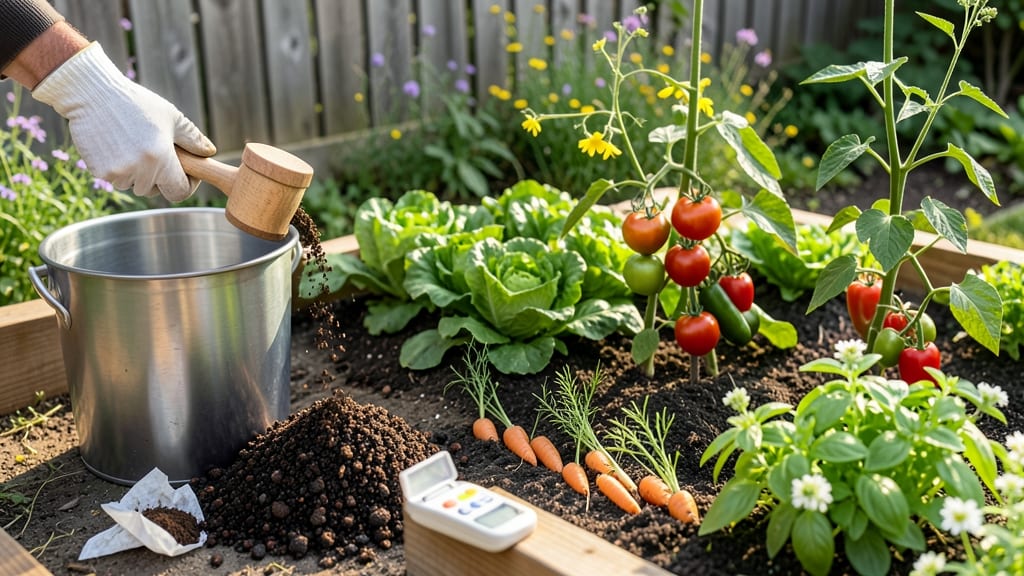
Using coffee grounds in the vegetable garden adds nitrogen-rich organic matter that improves soil fertility but may lower pH over time, requiring balancing with lime or compost for acid-sensitive plants like tomatoes and peppers.
Coffee grounds work like a natural fertilizer because they're packed with 2% nitrogen—a key nutrient for leafy greens and fruiting plants. 🌱 The caffeine and oils in grounds also act as a mild pesticide, deterring pests while the organic matter breaks down into nutrient-dense humus.
However, their acidity can shift soil pH toward the lower end, which may benefit blueberries but harm tomatoes or peppers that prefer neutral to slightly alkaline conditions.
For best results, mix ½ to 1 inch of used grounds into the top 6 inches of soil or compost them first to neutralize acidity. I've found that pairing them with wood ash (a natural pH booster) creates the perfect balance for most vegetable gardens.
Always test your soil first—this simple step prevents over-acidification while maximizing the grounds' fertility benefits.
💡 In This Article
- How Coffee Grounds Impact Soil Fertility and pH Levels
- Best Practices for Applying Coffee Grounds to Vegetable Gardens
How coffee grounds impact soil fertility and pH levels
Coffee grounds contain about 2% nitrogen by weight—roughly half the concentration of fresh manure but far more accessible to plants. This nitrogen comes from proteins, caffeine, and oils that break down into ammonium (NH₄⁺) and nitrate (NO₃⁻) forms, which are immediately available to roots.
The caffeine, though often feared, actually acts as a mild stimulant for microbial activity, accelerating decomposition and nutrient release compared to other organic amendments. 🔥
When grounds decompose, they create a crumbly, moisture-retentive structure that improves soil aeration while adding 1-2% organic matter per application. However, their pH typically ranges from 4.25 to 5.0—acidic enough to slowly lower garden soil pH by 0.2 to 0.5 points per annual application.
This acidification happens because the decomposition process releases organic acids that dissolve calcium and magnesium from soil minerals, making them unavailable to plants.
For most vegetables, this acid shift matters more than you'd think. Leafy greens like spinach and lettuce tolerate pH 6.0-6.5 well, but fruiting plants like tomatoes and peppers need 6.2-6.8 for optimal calcium uptake.
The acidity also increases aluminum and manganese solubility, which can become toxic at high levels—especially in sandy soils where buffering capacity is low. 💫
Soil type determines how much impact grounds will have. Clay soils with high cation exchange capacity (CEC) can absorb the acidity better than sandy soils, which may see pH drops of 0.8 points or more.
I've seen gardeners in Florida's sandy soils add coffee grounds without balancing and end up with stunted tomato plants—until they started mixing in crushed eggshells or wood ash to neutralize the acidity.
Timing matters too. Fresh grounds applied in spring will acidify soil faster than those composted first, where microbes pre-process the caffeine and oils. A 1:1 mix with finished compost reduces acidity by 30-40% while maintaining nitrogen benefits.
The key is monitoring soil pH annually—most home test kits show the shift clearly when grounds are used regularly.
Consider these nutrient trade-offs: While nitrogen boosts growth, the acidity can lock out phosphorus in alkaline soils or increase micronutrient toxicity. For example, blueberries thrive with pH 4.5-5.5, but carrots may rot if manganese levels spike from over-acidification.
Always pair coffee grounds with soil tests and targeted amendments like lime or composted manure. ✨