
Tools
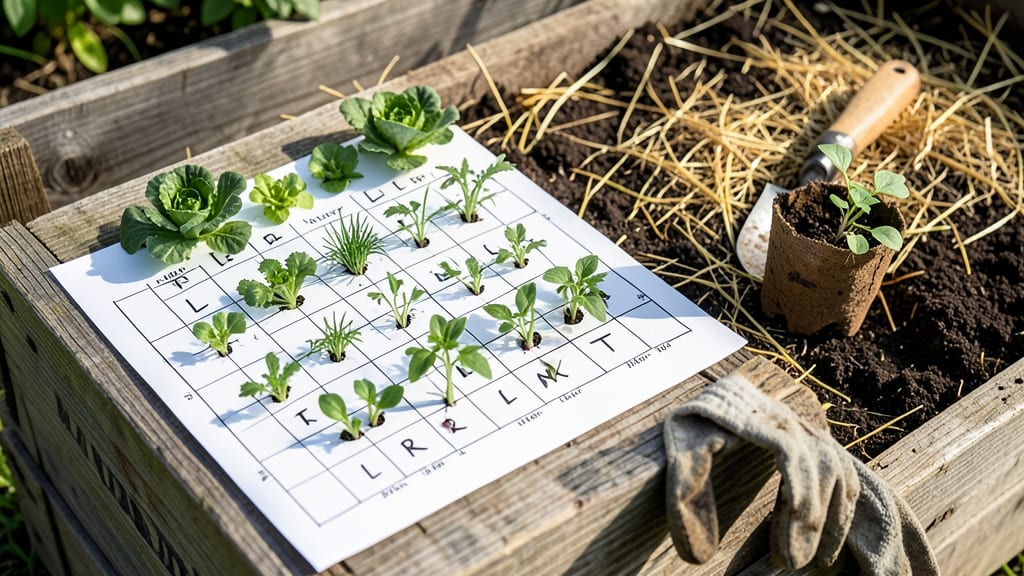
Square foot gardening plans divide small spaces into 1-foot grids, each planted with carefully selected crops to maximize yields and efficiency. This space-saving approach works perfectly for balconies, containers, or tight yards by eliminating wasted soil and optimizing plant placement.
This method isn't just about saving space—it's about creating a high-performance growing system. 🌱 By focusing on each plant's specific needs, you avoid overcrowding that leads to competition for nutrients and sunlight.
For example, leafy greens like lettuce thrive in their own square, while vining plants like tomatoes get their own dedicated space to spread.
The beauty of square foot gardening is its flexibility: you can adapt layouts for containers, raised beds, or even vertical gardens, making it perfect for urban gardeners or those with limited outdoor space.
What sets square foot gardening apart is its precision. Instead of guessing how much space each plant needs, you follow a proven formula: 1 square foot per plant, with spacing tailored to the crop's maturity size.
This approach reduces waste by using only the soil needed for each plant, cutting down on water and fertilizer use. Plus, the modular design makes it easy to rotate crops seasonally or swap out plants as they mature.
💡 In This Article
- How Square Foot Gardening Optimizes Plant Spacing and Yields
- 12 Customizable Square Foot Garden Layouts for Beginners and Experts
How square foot gardening optimizes plant spacing and yields
The 1-foot square grid isn't arbitrary—it's rooted in plant biology and soil mechanics. Each square provides the perfect root zone for a single plant to access nutrients without competing with neighbors.
For instance, a radish needs only 1 square foot because its roots grow shallow and fast, while a tomato plant requires 4 squares to accommodate its sprawling root system and fruit production.
This precision prevents what gardeners call "nutrient theft," where aggressive roots like those of corn or squash can starve nearby plants of water and minerals.
Compare this to traditional row gardening, where plants are spaced based on mature height rather than root spread. In rows, you often end up with 30-50% wasted space between plants, leading to lower yields and more weeds. Square foot gardening eliminates this inefficiency by packing plants at their ideal density.
The method also reduces water use by up to 40% because mulch retains moisture directly around each plant's root zone, preventing evaporation from unused soil areas. 💧
Companion planting principles are baked into square foot layouts. For example, placing basil near tomatoes doesn't just deter pests—it also improves flavor through natural chemical interactions. The square's fixed size forces you to consider these relationships intentionally.
Unlike row gardening, where companion plants might be too far apart to benefit each other, square foot gardens create micro-ecosystems where every plant supports its neighbors. This is why a square foot layout for a "salad garden" might include lettuce, radishes, and chives—all shallow-rooted plants that thrive together without competing.
Another key advantage is the "interplanting" technique, where you fill empty spaces with fast-growing crops like lettuce or spinach between slower maturing plants. This keeps your garden productive year-round and prevents soil erosion.
The rigid grid also makes crop rotation effortless—simply move plant groups to new squares each season to prevent disease buildup. For urban gardeners with limited space, this means you can grow twice as much food in the same footprint compared to traditional methods.
Let's talk about the science of soil in these small spaces. Square foot gardens use a special mix (often one-third compost, one-third peat moss, and one-third vermiculite) that drains quickly but retains moisture. This prevents the waterlogging that can occur in larger beds where soil compacts over time.
The loose texture also encourages beneficial microbial activity right at the root zone, which is why square foot plants often grow faster than their row-garden counterparts. 🌱 The method's precision turns gardening from an art into a measurable science—you're not just planting, you're engineering a high-performance growing system.
For those skeptical about the 1-foot rule, consider this: a study by the University of Nebraska found that square foot gardens produced 20-30% more tomatoes per square foot than traditional row plantings. The reason? Tomatoes in squares get consistent water and nutrients without competing for space with other vining plants.
Meanwhile, leafy greens like kale or Swiss chard can be planted 9 per square foot because their compact growth habit doesn't require the same spacing as sprawling crops.
What most people don't realize is how this method adapts to containers. A 4x4-foot raised bed becomes 16 squares, but you can achieve the same density in a 2-foot square container by using the same planting ratios.
This flexibility is why square foot gardening works equally well on a balcony in New York City or a backyard in Arizona. The only limit is your creativity in arranging the squares. 💡