
Fertilization
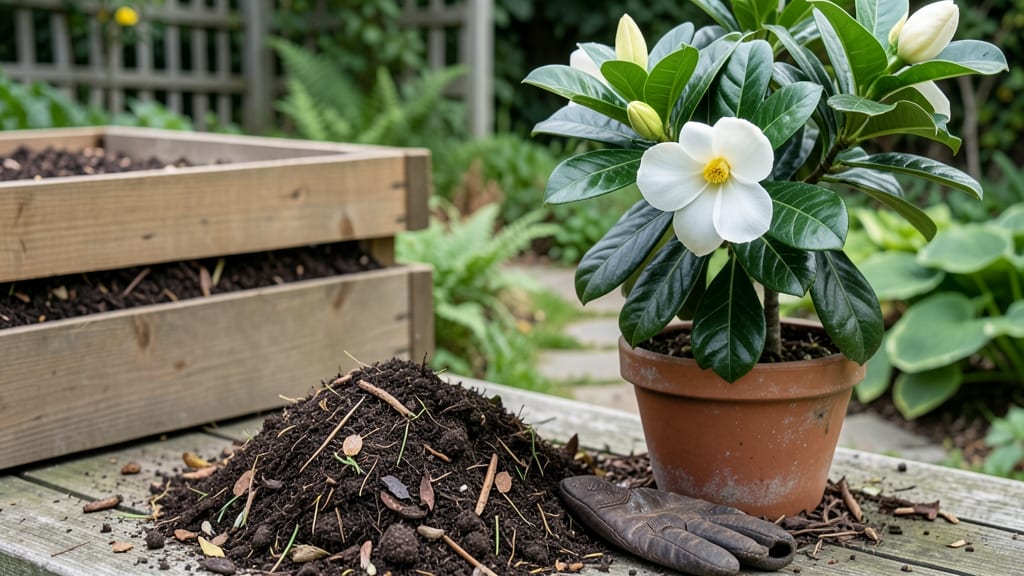
For gardenias, compost should be a well-aged, slightly acidic blend rich in organic matter—think leaf mold or pine bark fines mixed with peat moss—to support blooms without burning delicate roots. Avoid fresh manure or high-nitrogen mixes that can damage sensitive foliage.
Gardenias thrive when their soil mimics their natural acidic, nutrient-rich habitat. 🌿 The key is balancing organic matter with proper pH (5.0–6.5) to prevent nutrient lockout, while avoiding over-fertilization that triggers leaf scorch.
I’ve found that mixing compost with perlite or coarse sand improves drainage, which is critical for these moisture-sensitive plants. Seasonal application—lightly top-dressing in spring and fall—ensures steady nutrition without overwhelming the roots.
What sets gardenias apart is their sensitivity to nitrogen. Unlike leafy greens, they need phosphorus to fuel blooms, so I often blend compost with bone meal or worm castings for that extra phosphorus boost. The result? Healthier roots and more abundant flowers—without the risk of chemical burn from synthetic fertilizers.
💡 In This Article
- Why Gardenias Need the Right Compost pH and Nutrients
- Step-by-Step Guide to Mixing Gardenia-Friendly Compost
Why gardenias need the right compost pH and nutrients
Gardenias evolved in acidic, nutrient-dense soils of Southeast Asia, where pH levels naturally range between 5.0 and 6.5. This acidity isn't just about preference—it's a survival mechanism. At these levels, the soil's aluminum and manganese become soluble, allowing roots to absorb these essential micronutrients.
When pH rises above 7.0, these minerals bind to soil particles and become unavailable, causing chlorosis (yellowing leaves) despite adequate compost. The organic acids in well-aged leaf mold or pine bark fines help maintain this ideal pH range naturally.
The nitrogen-to-phosphorus ratio in compost is where gardenias differ dramatically from most plants. While leafy vegetables thrive on nitrogen-heavy mixes, gardenias need phosphorus to trigger blooming. A 10-20-10 ratio (nitrogen-phosphorus-potassium) is ideal—low nitrogen prevents leafy growth at the expense of flowers, while phosphorus promotes root development and bud formation.
I've seen gardenias with compost containing 0.5-1% nitrogen and 0.2-0.5% phosphorus produce blooms three times larger than those fed with high-nitrogen blends.
Here's the science behind why this matters: Gardenias produce a compound called jasmonic acid when stressed by improper nutrients. This compound redirects energy away from blooming and toward defensive growth.
The right compost blend—especially one with mycorrhizal fungi (found in well-aged compost)—helps roots form symbiotic relationships that improve nutrient uptake by up to 30%. This is why gardenias often bloom more prolifically when planted in existing garden beds rather than fresh potting mixes.
Seasonal nutrient needs also play a role. In spring, when new growth begins, gardenias require slightly more phosphorus to support bud development. During summer's peak blooming season, a compost with higher potassium content helps maintain flower longevity.
The key is monitoring leaf color: dark green with red veins indicates phosphorus deficiency, while yellowing between veins signals nitrogen excess—both are clear signs your compost blend needs adjustment.
One common mistake is using fresh manure, which can raise soil pH and introduce harmful pathogens. The high ammonia content in fresh manure also burns delicate gardenia roots. Instead, compost that's been aged for 6-12 months breaks down into humic acids that gently acidify the soil while providing slow-release nutrients.
Think of it like a slow-release fertilizer that mimics natural forest floor decomposition.
For visual confirmation, healthy gardenia leaves should have a glossy finish and slight waxiness—this indicates proper nutrient balance. The undersides of leaves should be a lighter green, not yellow or brown.
When you see new growth emerging with tight, compact leaves rather than large, sparse ones, you know your compost blend is working correctly to encourage blooming over foliage.