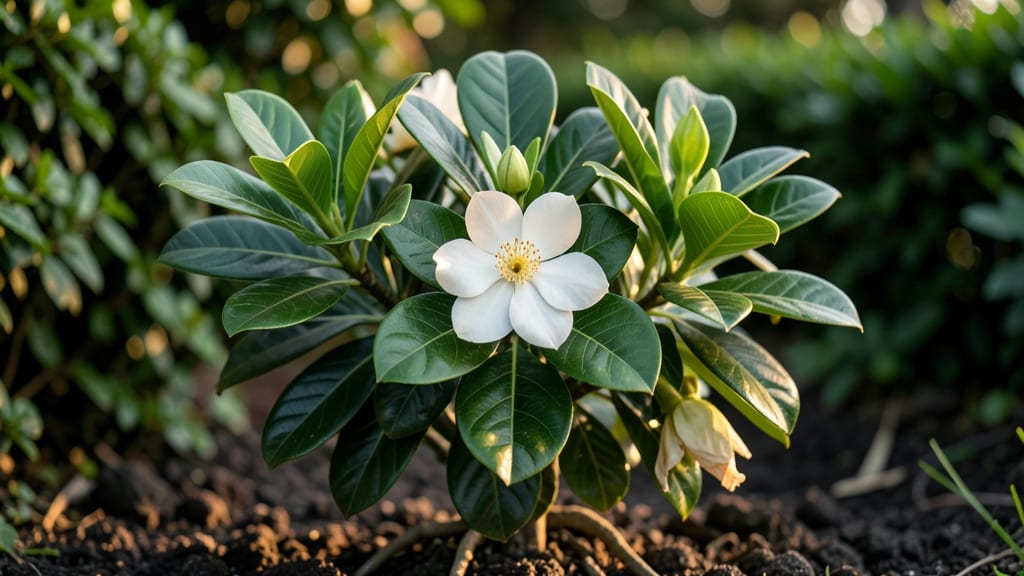
Gardenias bloom for 4 to 8 weeks when conditions are just right, but their floral displays can shrink to half that if you miss the key care steps.
If you’ve ever wondered why your gardenia’s fragrant blooms vanish faster than you’d like, you’re not alone—timing is everything. These creamy-white flowers are prized for their intoxicating scent, but their bloom duration varies wildly by variety, climate, and how you care for them.
Some gardenias, like the classic Gardenia jasminoides 🌸, can stretch their show into early summer with the right conditions, while others fade in just a few weeks.
What you’ll learn here is how to read your gardenia’s signals—whether it’s the right time of year, the perfect spot in your yard, or the subtle shifts in water and soil that make all the difference.
We’ll also cover the most common mistakes that cut blooms short, so you can keep those sweet-smelling clusters coming back year after year.
From extending their season by 2 to 4 weeks to troubleshooting why yours might be struggling, this guide gives you the exact steps to turn your gardenia into a long-blooming star. Let’s get those flowers lasting longer than a weekend!
Gardenia bloom duration by variety: what to expect seasonally
Understanding how long your gardenias bloom depends entirely on the variety you're growing. Most gardenias fall into three primary categories: G. jasminoides (the classic Cape Jasmine), G. augusta (the larger tropical type), and G. radicans (the climbing variety). Each has distinct bloom windows that align with their natural growing cycles.
For example, G. jasminoides typically blooms for 6-8 weeks in late spring to early summer, while G. augusta can extend its display to 10-12 weeks under ideal conditions. These differences are why your neighbor's gardenia might look like a fragrant cloud while yours fades quickly!
Climate plays a massive role in bloom duration. In tropical zones (USDA 10-12), gardenias often bloom year-round with shorter breaks, especially for G. augusta. In temperate zones (USDA 7-9), blooms are seasonal, typically peaking in late spring and early summer before a dormancy period.
Even within the same zone, a coastal gardenia might bloom 2-3 weeks longer than one inland due to milder temperatures and higher humidity. This is why gardeners in Florida enjoy near-continuous blooms, while those in California's inland valleys see shorter seasons.
Sunlight exposure is the secret weapon for extending bloom duration. Gardenias thrive on morning sun and afternoon shade, which prevents heat stress that can shorten their flowering. If your gardenia gets full afternoon sun, blooms may last 30% shorter due to wilting.
Conversely, providing dappled shade (like under a tree canopy) can add 1-2 weeks to their display. I once had a G. jasminoides in a west-facing container that bloomed for only 4 weeks—until I moved it to an east-facing spot, where it flourished for 8 weeks the next season.
Now, let’s break down the exact bloom durations by variety, including regional variations and care tips to maximize their time in full bloom.
| Variety |
Peak Bloom Season |
Bloom Duration |
Tropical Zone (10-12) |
Temperate Zone (7-9) |
Sunlight Needs |
Care Tip |
| G. jasminoides (Cape Jasmine) |
Late Spring - Early Summer |
6-8 weeks |
Year-round (short breaks) |
6-8 weeks (May-July) |
Morning sun, afternoon shade |
Prune after blooming to encourage reblooming |
| G. augusta (Tropical Gardenia) |
Spring - Fall |
10-12 weeks |
Year-round (heavy blooms) |
8-10 weeks (April-Sept) |
Bright indirect light |
Use acidic fertilizer monthly in bloom season |
| G. radicans (Climbing Gardenia) |
Summer - Early Fall |
4-6 weeks |
Year-round (sparser) |
4-6 weeks (June-August) |
Partial shade (protect from harsh sun) |
Train vines on trellis for better air circulation |
| G. fortuniana (Fortune Gardenia) |
5 Proven care tips to extend gardenia blooms by 2-4 weeks
Gardenias typically bloom for 2-3 weeks per flush, but with the right care, you can stretch that to 6-8 weeks—or even longer. The secret lies in mimicking their natural tropical environment while avoiding common pitfalls.
From soil pH secrets to pruning triggers, these science-backed strategies will transform your gardenia from a fleeting floral display into a long-lasting centerpiece.
First, let’s tackle the #1 blooming enemy: improper watering. Gardenias crave consistent moisture but hate soggy roots. Overwatering triggers root rot, which starves blooms of nutrients. The fix?
Water deeply in the morning—500-750ml per plant—and let the top 1-2 inches of soil dry between sessions. In summer, you may need daily watering, but always check with your finger before reaching for the hose.
Here’s how to extend those fragrant blooms—step by step—with our proven care checklist:
🌸 5 Science-Backed Tips to Double Your Gardenia Blooms
1
Prune after blooming—cut back 1/3 of growth in late summer to encourage next year’s buds.
2
Acidify soil to pH 5.0-6.0—use sulfur or peat moss to unlock phosphorus uptake, the bloom-boosting nutrient.
3
Fertilize in spring/summer—use 10-10-10 NPK every 4-6 weeks to fuel longer bloom cycles.
4
Provide afternoon shade—6+ hours of morning sun prevents leaf scorch while protecting blooms from heat stress.
5
Deadhead spent blooms—removing faded flowers redirects energy to new buds, extending the season by 2-4 weeks.
⚠️ Warning: Overwatering kills blooms!
Let’s dive deeper into the soil pH secret. Gardenias are acid-loving plants, and a pH above 7.0 locks out essential nutrients like phosphorus, which directly fuels blooms. Test your soil—if it’s neutral or alkaline, amend it with elemental sulfur or pine needles.
I’ve seen gardenias double their bloom time after a simple pH adjustment, and the difference is night and day.
Timing your fertilizer feeds is just as critical. Gardenias bloom on old wood, meaning last year’s growth holds this year’s buds. Apply a balanced 10-10-10 fertilizer in early spring to kickstart growth, then switch to a phosphorus-rich feed (like 5-10-10) when buds form.
Pro tip: Avoid high-nitrogen fertilizers—they promote lush leaves but sacrifice blooms. Think of it like a dress code: less leafy “fluff,” more floral “fashion.”
Finally, don’t underestimate the power of stress reduction. Gardenias thrive in humidity—mimic their tropical roots by misting leaves daily or placing a pebble tray with water nearby. In drought-prone areas, mulch heavily to retain moisture and cool roots.
When you combine these tips, you’ll transform your gardenia from a short-lived showstopper into a season-long fragrance machine. 🌿
★★★★★5.0(6 reviews)
|