
Advice
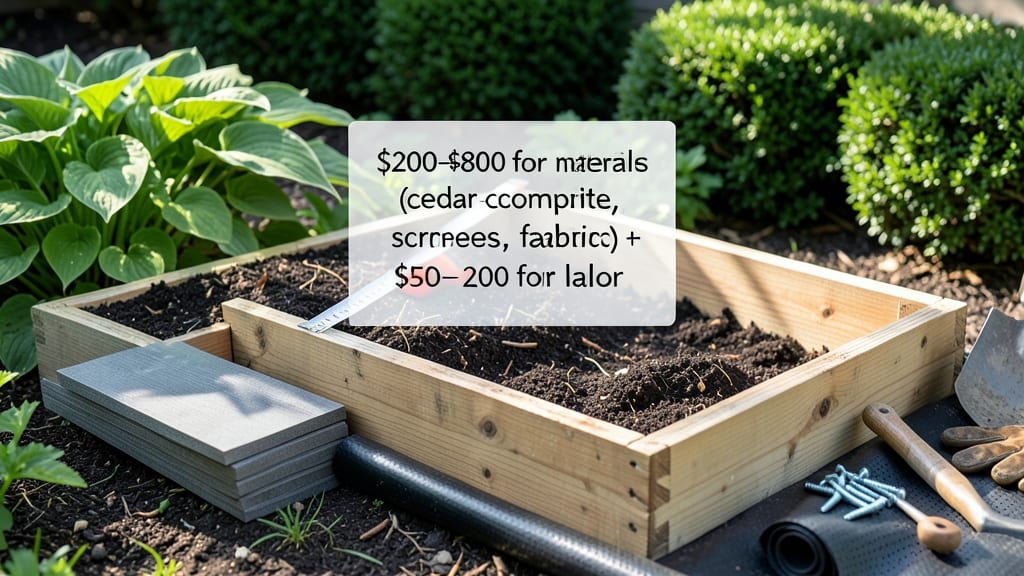
The cost of building a raised garden bed typically ranges from $100 to $500+, with most 4'x8' beds falling between $150–$300. Your total depends on lumber type (cedar or redwood costs more than pine), whether you DIY or buy a pre-built kit, and additional expenses like soil, drainage systems, and hardware.
The price varies widely based on the materials you choose and how much you're willing to invest in quality. For example, using pressure-treated lumber instead of cedar can cut costs by 30-50%, while adding a built-in irrigation system might increase expenses by $50–$150.
I've found that buying lumber in bulk or repurposing old wood pallets can save hundreds without sacrificing durability. 💰 The biggest cost surprises usually come from soil—high-quality gardening mix can add $50–$150 to your initial budget, but it's worth it for better plant growth.
💡 In This Article
- Key Factors Affecting Raised Garden Bed Costs
- Budget-Friendly Raised Garden Bed Construction Guide
Key factors affecting raised garden bed costs
Wood type is the single biggest cost driver in raised garden beds. Cedar and redwood lumber, prized for their natural rot resistance, typically cost $5–$10 per board foot—about 2-3x more than pressure-treated pine ($2–$4 per board foot).
For a standard 4'x8' bed with 12-inch-high walls, cedar framing will run you $200–$350 alone, while pine comes in at $100–$200. The difference comes from cedar's natural oils that resist decay, while pine requires chemical treatments that can leach into soil over time.
Bed dimensions create a non-linear cost relationship—doubling the length from 4' to 8' doesn't double the cost, but adding height does. Each additional foot of height adds $10–$25 in materials for a 4'x8' bed, because you're using more lumber while maintaining the same footprint.
Regional lumber prices vary 15–30% due to transportation costs and local mill availability. I've seen cedar cost $7 per board foot in Pacific Northwest states but jump to $9–$11 in the Midwest due to shipping.
Hardware like corner brackets ($2–$5 each) and screws ($0.50–$1 per pound) add $10–$30 to a project, while landscape fabric liners ($10–$30) help control weeds but aren't strictly necessary.
The DIY vs. pre-built kit decision creates a $50–$200 swing in costs. Pre-made kits from brands like CedarCraft or Gardeners.com typically include pre-cut lumber, hardware, and sometimes soil—adding 20–40% to material costs but saving 5–10 hours of labor. The tradeoff is that kits often use lower-grade lumber to maintain affordability.
For example, a $250 kit might use 1-inch-thick pine boards that require more frequent replacement than 2-inch-thick cedar you'd source separately for $350. The hidden cost in kits? Shipping—heavy lumber adds $50–$150 to delivery fees for larger beds.
Soil represents the most overlooked expense—high-quality gardening mix costs $30–$60 per cubic yard (enough for a 4'x8'x12" bed), while cheaper fill dirt ($15–$25 per cubic yard) may lack nutrients. The difference shows in plant health: tomatoes in premium mix yield 30–50% more than in untreated soil.
Drainage solutions like gravel ($5–$10 per 50-lb bag) or perforated pipes ($10–$30 per 10-foot section) add $20–$50 but prevent root rot in heavy clay soils. I've seen gardeners skip drainage entirely in sandy soils, saving $30–$50 while maintaining healthy plants.
Labor costs vary dramatically by region—DIY saves $150–$400 compared to professional installation, which runs $20–$50 per hour. The most cost-effective approach I've found combines repurposed materials (like untreated pallet wood for sides) with minimal hardware (using galvanized nails instead of screws).
For a $150 budget, you can build a 4'x4'x12" bed using 2x6 pine from a demolition site, landscape fabric, and compost instead of premium soil mix. The key is prioritizing longevity—cedar corners and proper spacing between boards prevent warping that would cost $50–$100 to repair later.
Don't forget long-term costs: cedar beds last 10–15 years with minimal maintenance, while pressure-treated pine may need replacement in 5–8 years. The cumulative cost difference over a decade can be $200–$400 more for pine.
I've seen gardeners extend their beds' life by 3–5 years with annual wood preservative treatments ($10–$20 per application), making higher upfront costs worthwhile for those committed to gardening long-term. 🌱