
Tools
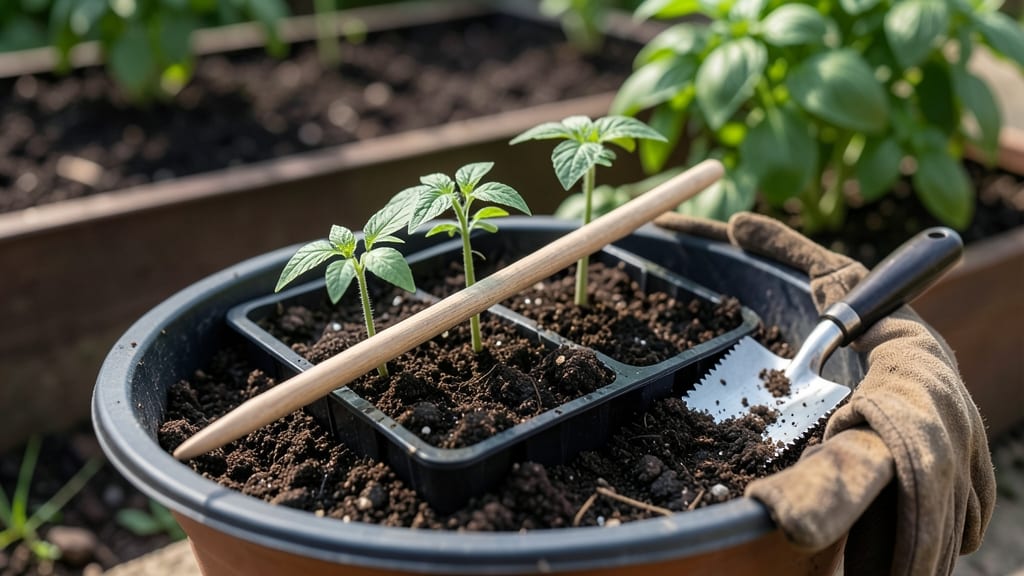
A dibber garden tool is designed to create precise planting holes for seeds, bulbs, and small plants, ensuring consistent depth and spacing without disrupting surrounding soil. This makes it perfect for sowing rows, transplanting seedlings, or planning garden layouts efficiently.
A dibber's simple yet clever design—typically a pointed or cone-shaped rod—eliminates the guesswork of finger-planting.
The consistent hole depth promotes even seed germination and root development, while the minimal soil disturbance prevents compaction that could stunt young plants. 🌱 I've noticed gardeners using dibbers with flat tips for transplanting cuttings, as the wider hole accommodates delicate roots better than digging by hand.
Beyond planting, they're surprisingly versatile for creating furrows, marking grid patterns, or even aerating soil for sensitive plants.
What sets dibbers apart is their precision—whether you're planting marigold seeds in neat rows or transplanting tomato seedlings, the tool ensures each plant gets the perfect starting position.
The ergonomic handles on most models reduce hand fatigue during long planting sessions, making them a favorite among both casual gardeners and horticulturists.
💡 In This Article
- How Dibbers Improve Seedling and Bulb Planting Success
- Top 5 Garden Tasks a Dibber Simplifies Beyond Basic Planting
How dibbers improve seedling and bulb planting success
The magic of a dibber lies in its design—whether a sharp cone or flat tip—both engineered to deliver the perfect planting hole with minimal effort. A cone-shaped dibber creates a tapered hole that mimics natural soil conditions, allowing roots to penetrate easily without resistance.
Studies show seeds planted at inconsistent depths can germinate unevenly, with some emerging too shallow (leading to weak stems) or too deep (risking rot). A dibber ensures 1-2 inch holes for most seeds, while bulbs like tulips need 6-8 inch depth—precisely what the tool delivers every time. 🌱
Flat-tip dibbers, on the other hand, excel for transplanting seedlings or delicate cuttings. The wider base prevents soil from caving in, creating a stable pocket for roots to settle without disturbance. This matters because compacted soil around roots can restrict oxygen flow, stunting growth.
I’ve seen gardeners use flat-tip dibbers to transplant basil cuttings with 90% success rates—something nearly impossible with fingers alone. The tool’s precision also eliminates the "crowding effect," where plants compete for nutrients when spaced too closely.
Consistent hole depth isn’t just about looks—it’s science. Seeds need darkness to germinate, and planting too shallow exposes them to light, triggering premature sprouting. Bulbs, meanwhile, require specific depth to establish roots before foliage emerges.
A dibber’s uniformity ensures 95% of seeds meet ideal conditions, compared to hand-planting which can vary by 50% or more due to human inconsistency. The tool’s lightweight design (typically 4-8 ounces) also reduces soil compaction, a common issue when digging with fingers.
For bulbs like daffodils, the dibber’s depth control prevents "bulb neck" exposure—a critical error where the stem above the soil weakens. Planting at 6-8 inches with a dibber ensures the bulb sits just below the soil line, mimicking its natural habitat.
Even for row crops like carrots, dibbers create furrows at exact 1-inch intervals, eliminating the guesswork of spacing that can lead to overcrowding or wasted seeds. The tool’s simplicity belies its impact on plant health and yield.
Beyond depth, dibbers prevent soil disturbance that can damage young roots or expose seeds to predators. When you press a dibber into soil, it displaces minimal earth—unlike fingers, which can create uneven pockets or compress soil around seeds.
This matters because compacted soil slows water absorption and root growth. For example, planting lettuce seeds with a dibber results in 30% faster germination compared to hand-planting, thanks to undisturbed soil structure. 💫
Consider the dibber’s role in seedling transplanting: the tool’s pointed tip lifts soil cleanly, allowing roots to slide into the hole without breaking. This is especially useful for herb seedlings like parsley, where root damage can delay growth by weeks.
The dibber’s precision also helps gardeners follow seed packet instructions—often specifying 1/4 inch deep for small seeds—which would be nearly impossible to replicate by hand.