
Plants
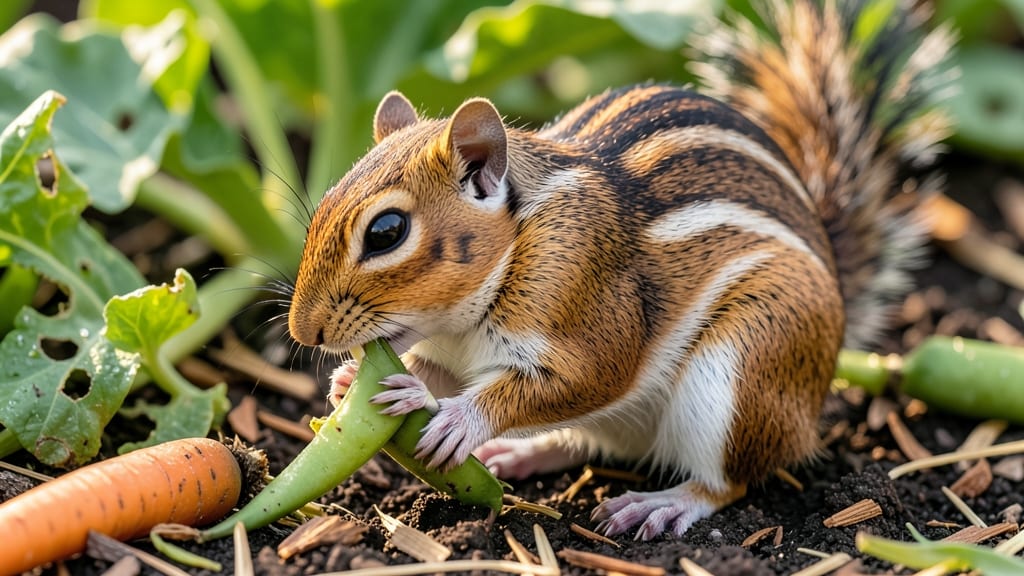
Chipmunks do eat garden plants, particularly tender vegetables like lettuce, beans, peas, and carrots, along with fruits and seeds. These small rodents are notorious for raiding gardens, often devouring entire plants if left unprotected.
Chipmunks are opportunistic foragers with a particular fondness for young, soft garden growth. 🌱 Their diet includes not just vegetables but also flower bulbs and even small fruits, making them a persistent problem in home gardens.
What makes them especially troublesome is their ability to dig and tunnel, which can uproot seedlings before they have a chance to establish themselves. Understanding their behavior—like their preference for seeds and fresh greens—helps gardeners implement targeted deterrents, such as physical barriers or natural repellents.
These rodents are most active during dawn and dusk, which is when they’re most likely to raid your garden. 🐿️ Their foraging habits are driven by instinct, as they store food in their cheek pouches to eat later, often leading them to overharvest plants.
This means that even if you think you’ve protected one area, they’ll simply move to the next unguarded spot. The key to managing them is a combination of prevention—like using wire mesh or raised beds—and monitoring their activity to catch them early.
💡 In This Article
- Why Chipmunks Target Garden Vegetables
- Effective Chipmunk-Proofing Techniques for Gardens
Why chipmunks target garden vegetables
Chipmunks are natural seed-eaters and foragers, but their love for garden vegetables stems from the high nutrient content and soft texture of young plants. 🌱 In the wild, they primarily consume seeds, nuts, and insects, but cultivated gardens offer an all-you-can-eat buffet of tender leaves and stems.
Lettuce, for example, has a moisture content of about 95% and minimal fiber, making it an easy, high-reward snack for these tiny rodents. Their teeth are designed to gnaw through plant stems with ease, allowing them to strip entire rows in minutes.
Their foraging behavior is driven by instinctual food-storing habits. Chipmunks collect food in their cheek pouches, which can hold up to one ounce of seeds or plant material at a time. This means they’ll often overharvest—taking more than they need—to create a personal pantry.
Studies show they can cache 10,000+ seeds in a single season, which explains why they’ll target gardens relentlessly during planting and harvest times. Their preference for fresh, young growth is particularly damaging to seedlings, which they can uproot entirely in search of roots and bulbs.
Seasonal patterns also play a role in their garden raids.
Spring and early summer are peak times because that’s when most garden plants are at their most vulnerable—tender, water-rich, and full of energy. 🌿 Chipmunks are most active during dawn and dusk, which coincides with the cooler temperatures when plants are often irrigated (another draw for them).
Their digging habits—using their sharp claws to tunnel just below the soil surface—can destroy entire rows of carrots or potatoes before they even emerge. Unlike squirrels, which focus on nuts and fruits, chipmunks are generalists, making them equally problematic for vegetable and herb gardens.
What makes them particularly challenging is their adaptability. In urban and suburban areas, chipmunks have learned to associate gardens with easy meals, often ignoring natural food sources like acorns or berries. Their small size—typically 8-11 inches long—allows them to squeeze through tiny gaps in fences or under low-hanging plants.
This means traditional deterrents like chicken wire may not always work unless installed properly. Their social nature also means that if one chipmunk discovers a food source, others will follow, turning a single problem into a full-blown garden invasion.
Understanding their motivations—nutrient-seeking, caching instincts, and seasonal activity—helps gardeners implement smarter defenses.
For instance, planting marigolds or daffodils (which chipmunks dislike) around vulnerable crops can create natural barriers. 🌼 The key is combining physical protection with behavioral knowledge: chipmunks avoid strong smells (like peppermint oil) and are deterred by obstacles they can’t easily navigate.
Their targeting of gardens isn’t just random—it’s a calculated foraging strategy that clashes directly with human cultivation efforts.