
Tools
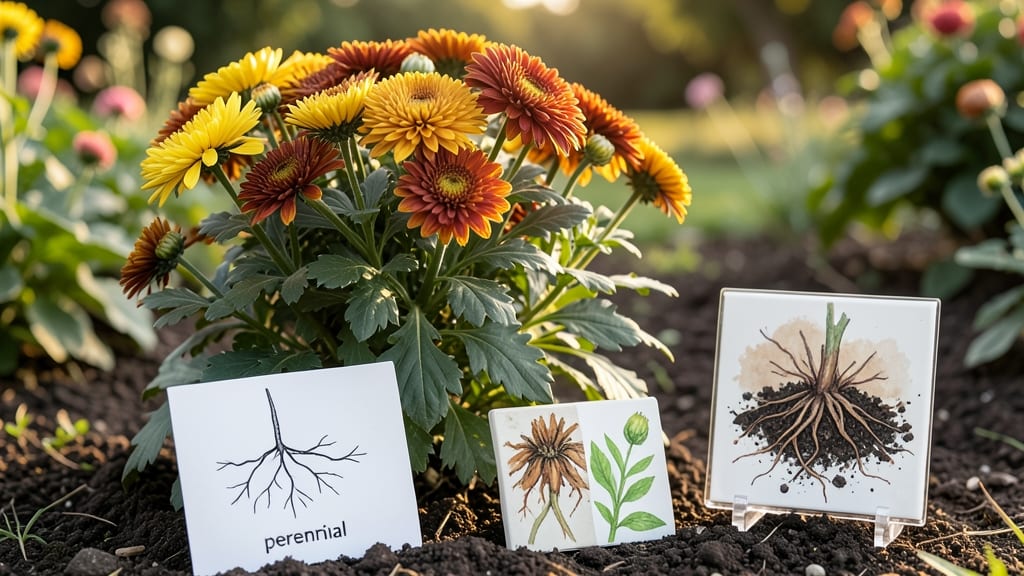
Garden mums don't come back every year unless they're perennial hardy mums (Chrysanthemum spp.), which survive winters in zones 5-9 with proper care. Most store-bought mums are annuals that need yearly replanting.
Most garden mums you buy at nurseries are annual varieties bred for vibrant fall color but won't survive winter. 🌸 The key difference lies in their roots—perennial hardy mums develop deep root systems that store energy for regrowth, while annuals have shallow roots that freeze.
Even in mild climates, annuals typically last just one season unless you treat them as perennials with winter protection. I've seen gardeners successfully overwinter annual mums by cutting back foliage, mulching heavily, and protecting them from frost, but this requires extra effort compared to true perennials.
For reliable year-after-year blooms, choose hardy mum varieties labeled for your zone. These plants often rebloom in spring if given proper care during dormancy. The trade-off? Perennial mums may have slightly smaller flowers than their annual cousins but offer the satisfaction of returning beauty without replanting each fall.
💡 In This Article
- Perennial vs. Annual Mums: Key Differences
- How to Overwinter Perennial Mums for Year-Round Returns
Perennial vs. annual mums: key differences
The fundamental distinction between perennial and annual garden mums lies in their root systems and cold tolerance. Perennial hardy mums (Chrysanthemum spp.) develop extensive, deep root networks that store carbohydrates for winter survival, while annual varieties have shallow roots that freeze back to the ground each winter.
This biological difference means perennials can regrow from their root crowns in spring, whereas annuals must be replanted yearly for seasonal color.
Hardy mums thrive in USDA zones 5-9, where they can withstand temperatures down to -20°F to -10°F with proper winter care. Their growth habit includes a woody base that persists underground, allowing them to rebound after frost damage.
Annual mums, on the other hand, are typically bred for vibrant fall blooms but lack this hardy structure—most commercial varieties originate from Japan and China where they grow as annuals in temperate climates.
Another key difference is flowering behavior: perennial mums often produce smaller initial blooms in fall but may rebloom in spring with proper care, while annuals deliver their showiest flowers in a single season.
The trade-off? Perennial varieties like 'Autumn Joy' or 'Mammoth' develop stronger stems and larger root systems over time, making them more resilient to pests and drought once established. 🌿
Botanically, the confusion stems from how garden centers classify mums. Many labeled "perennial" are actually tender perennials that require winter protection in colder zones, while true hardy mums (like Chrysanthemum × grandiflorum) can handle frost without extra care.
The key is checking the plant tag or researching the specific cultivar—some "annual" mums can be overwintered successfully with proper techniques.
Consider this visual comparison: a perennial mum's root system resembles a carrot with multiple storage roots, while an annual's roots look more like a shallow dandelion taproot. This structural difference explains why perennials survive winters while annuals require complete replanting.
The deeper roots also mean perennials establish more slowly but become self-sustaining after 2-3 years in the ground.
For gardeners in transitional zones (like zone 6), the choice often comes down to whether you want the convenience of annuals or the long-term investment of perennials. Annuals provide instant seasonal impact with minimal upkeep, while perennials reward patience with years of blooms and reduced maintenance costs after establishment. 🌸