
Tools
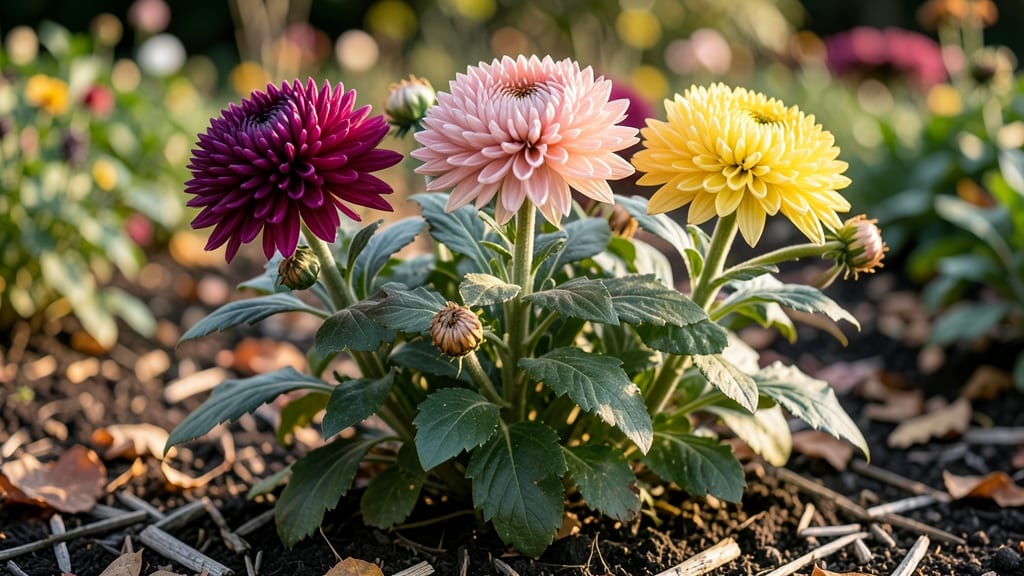
Garden mums will come back yearly in USDA zones 5-9 when you provide proper winter care—like mulching, steady watering, and cutting stems back in late fall or early spring. Hardy varieties handle these zones well, but tender types need extra winter protection.
Garden mums are perennial plants that rely on their root systems to survive winter, but they need the right conditions to regrow each spring. 🌱 The key is protecting those roots from freezing temperatures while allowing them to stay dormant.
In colder zones (5-7), a thick layer of mulch—like straw or shredded leaves—can make all the difference by insulating the soil. I’ve found that cutting back stems to about 2-3 inches above the ground helps prevent rot and encourages new growth in spring.
What many gardeners overlook is that some varieties are more cold-tolerant than others. Hardy garden mums, like 'Autumn Joy' or 'Williamson's Gold,' can handle winters down to -20°F, while tender types might need to be dug up and stored indoors.
Even in warmer zones (8-9), consistent watering during dry spells keeps the roots healthy for next year’s blooms.
💡 In This Article
- Understanding Garden Mum Cold Hardiness by Zone
- Step-by-Step Guide to Overwintering Garden Mums
Understanding garden mum cold hardiness by zone
Garden mums (Chrysanthemums) survive winter through a process called dormancy, where their above-ground growth slows and energy is stored in the roots. The plant’s cold tolerance depends on its variety and the USDA zone it’s planted in.
In zones 5-6, where winter lows can drop to -10°F to -20°F, hardy varieties like 'Autumn Joy' enter a deep dormancy, with roots protected by insulating mulch and the soil’s natural frost barrier.
The science here is fascinating: as temperatures fall below 32°F, the plant’s cells produce antifreeze proteins that prevent ice crystals from forming and damaging tissues.
In zones 7-9, where winters are milder (rarely below 10°F), garden mums still benefit from dormancy but with less extreme conditions. Here, the challenge shifts to preventing root rot from excess moisture during cool, wet winters.
Tender varieties, like those bred for container growing, may struggle in zone 5 winters unless given extra protection—such as a thick layer of 6-8 inches of mulch (straw or shredded leaves work best) or even a protective burlap wrap around the crown.
The key is balancing insulation with airflow to avoid suffocating the roots.
What most gardeners don’t realize is that the timing of stem cutting directly impacts winter survival. Cutting stems back to 2-3 inches in late fall (after the first hard frost) removes dead foliage that could harbor pests or diseases.
This also allows the plant to redirect energy to root growth, which is critical for spring regrowth. In zone 9, where winters are mild but unpredictable, I’ve seen garden mums thrive with minimal cutting—just enough to remove browned leaves—because the roots stay active longer.
Temperature thresholds matter too. Most garden mums can tolerate brief dips to -10°F if the roots are protected, but prolonged exposure below -20°F risks root damage.
This is why zone 5 gardeners often use gravel or sand layers beneath mulch to improve drainage and prevent soil saturation, which can lead to freezing. The goal is to keep the soil temperature within 5°F of the air temperature—a difference that mulch can achieve when applied correctly.
Here’s a quick comparison of how different zones affect garden mum survival:
- Zones 5-6: Mulch 8+ inches deep; cut stems to 2-3 inches after first frost; expect -20°F tolerance with protection.
- Zones 7-8: Mulch 4-6 inches; minimal stem cutting; watch for root rot in wet winters.
- Zone 9: Light mulch (2-3 inches) or none in very mild winters; focus on consistent watering during dry spells.
One final tip: If you’re in a transitional zone (like zone 6b), monitor winter forecasts. A sudden cold snap can push temperatures below the plant’s tolerance, so having a backup plan—like moving potted mums to a sheltered spot—can save your blooms for next year. 🌟