
Tools
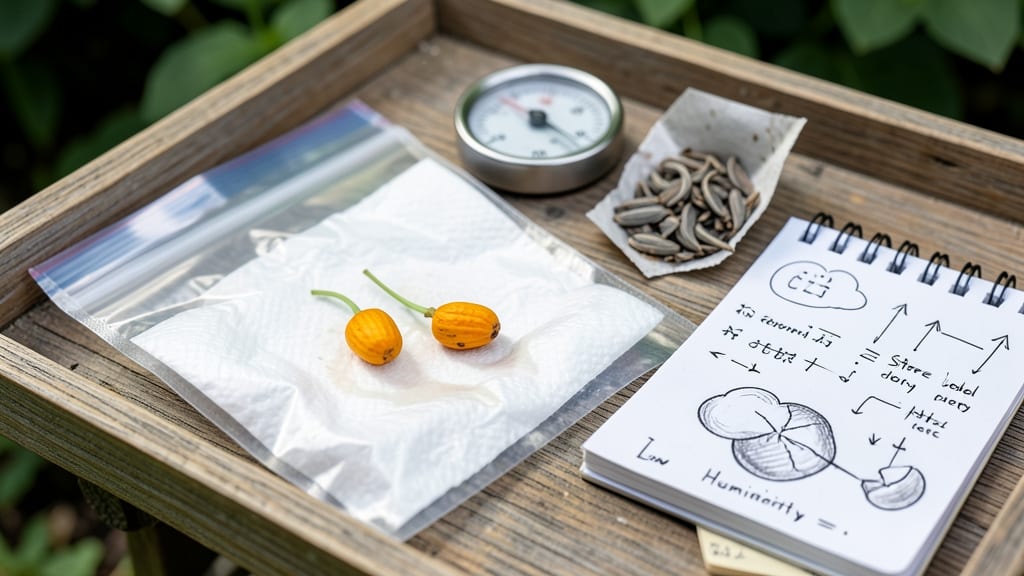
Garden seeds do expire, though they typically retain viability for 1-5 years depending on the type, storage conditions, and seed packaging codes. Always check the expiration date or lot number for accuracy before planting.
Garden seeds don't last forever—they lose their ability to sprout as they age, a process called seed viability decline. 🌱 Factors like humidity, temperature swings, and oxygen exposure speed up this deterioration, with some varieties (like lettuce) lasting only 1-2 years while others (like beans) may stay good for 4-5 years.
The seed's protective coating also plays a role—thicker shells slow moisture absorption, helping seeds stay fresh longer.
To maximize your chances of success, always test old seeds before planting by doing a simple paper towel germination test. Place seeds between damp paper towels in a sealed bag for 3-5 days—if most sprout, they're still viable.
Many seed packets include ISO codes (like "18M" for 2018) or lot numbers that indicate when they were packaged, giving you a better idea of their true age than the printed expiration date.
💡 In This Article
- How Seed Viability Declines Over Time
- Testing Seed Freshness Before Planting
How seed viability declines over time
The biological process behind seed expiration begins with cellular deterioration inside the seed. Over time, enzymes break down essential nutrients like proteins and carbohydrates that fuel germination.
This happens naturally as seeds age, but external factors accelerate the process. 🌱 For example, a packet of tomato seeds stored in 70°F humidity will degrade faster than the same seeds kept in a cool, dry place at 35-40°F.
Moisture is the #1 enemy of seed longevity. Even minimal humidity (above 10% relative humidity) causes seeds to absorb water, triggering metabolic activity that depletes their stored energy reserves. The seed coat's integrity matters too—thicker coats (like those on corn) protect against moisture better than thin coats (like lettuce).
Oxygen exposure also plays a role by promoting oxidation reactions that damage cell membranes, reducing germination rates by up to 30% per year in poorly stored seeds.
Temperature extremes create another challenge. Freezing temperatures can physically rupture seed coats, while heat above 90°F accelerates chemical breakdown. This is why refrigeration (35-40°F) is ideal for long-term storage—it slows metabolic processes to a crawl.
The combination of these factors explains why a 5-year-old bean seed might still sprout while a 3-year-old lettuce seed fails completely.
Seed viability isn't an all-or-nothing phenomenon—it declines gradually. Most seeds follow a 50% viability curve, meaning half will germinate after their recommended storage period. For instance, onion seeds typically last 2 years with 80% germination, but after 3 years, that drops to 50%.
The decline accelerates after the halfway point, which is why testing becomes critical with older seeds.
Interestingly, some seeds enter a dormancy state that naturally extends their shelf life. These include perennial seeds (like peonies) that can remain viable for decades when properly stored. The key difference lies in their biochemical composition—these seeds produce protective compounds that inhibit metabolic activity until conditions are favorable for germination.
Understanding these mechanisms helps explain why your 2019 packet of basil seeds might still work while your 2017 packet of carrots fails. The biology of each plant species determines how quickly its seeds age, making seed selection and storage practices equally important for gardeners.