
Watering
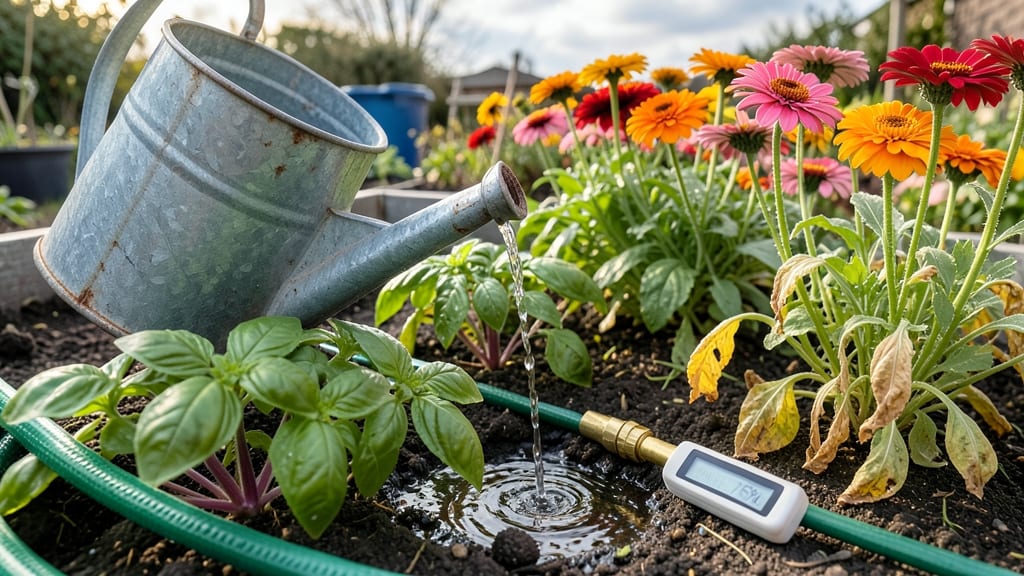
You don’t need to water your garden every day—most plants grow best with 1 to 1.5 inches of water per week, tailored to soil conditions, weather, and plant types. Daily watering often drowns roots, while inconsistent watering causes stress; deeper, less frequent watering encourages stronger root systems.
Most gardeners overestimate how often plants need water. 🌱 The key is understanding that most plants—especially vegetables and perennials—prefer infrequent, deep watering that encourages roots to grow deeper in search of moisture.
Sandy soils drain quickly and may need daily watering in extreme heat, while clay soils retain moisture for weeks. Even drought-resistant plants like lavender or succulents can suffer from overwatering, which leads to root rot.
Instead of sticking to a rigid schedule, check soil moisture by sticking your finger 1-2 inches deep: if it feels dry, that’s your cue to water.
Seasonal changes also shift your watering needs dramatically. During summer heatwaves, you might need to water twice weekly, while winter rainfall could mean skipping watering entirely. 💧 Pay attention to leaf color and plant posture—yellowing leaves or wilting often signal underwatering, while mold or mushy stems indicate overwatering.
A simple moisture meter can help take the guesswork out of it.
💡 In This Article
- How Soil and Plant Types Dictate Watering Frequency
- Smart Watering Schedules for Different Garden Zones
How soil and plant types dictate watering frequency
The science behind watering lies in how different soils and plants interact with moisture. Sandy soils drain water quickly, often within 30-60 minutes, forcing plants to drink frequently—sometimes daily in hot weather. In contrast, clay soils hold moisture for 2-3 weeks, making daily watering unnecessary even in summer.
The key is root depth: shallow-rooted plants like lettuce need frequent, light watering, while deep-rooted veggies like tomatoes thrive with 1-2 inches of water every 5-7 days.
Plant biology plays a huge role too. Succulents and cacti store water in their leaves and stems, needing water only every 2-4 weeks unless in extreme heat.
Meanwhile, leafy greens like spinach or herbs like basil have shallow roots and wilt within 24 hours of drying out. 🌱 The soil’s ability to hold water—called its "field capacity"—varies wildly: sandy loam holds about 10-15% moisture by volume, while clay can retain up to 40%.
Seasonal shifts matter just as much as soil type. In summer, evaporation rates can double, requiring 50% more water than in spring. Humidity also changes the equation: in dry climates, plants lose moisture faster, while high humidity slows evaporation.
Even rainfall patterns vary—some regions get 1 inch of rain per week naturally, while others see droughts lasting months. This is why generic "water every day" advice fails: it ignores these critical variables.
Here’s how to test your soil’s moisture needs: Stick your finger 1-2 inches deep—if it feels dry, water deeply. For clay soils, you might only need to water once every 10-14 days, while sandy soils may need daily checks.
Overwatering in clay soils creates anaerobic conditions, suffocating roots, while sandy soils dry out too fast, stressing plants. The goal is to mimic natural rainfall patterns: slow, deep soakings that encourage roots to grow downward.
Consider plant families too. Vegetables like peppers and eggplants prefer consistent moisture, while fruits like peaches tolerate drought better. Flowers like roses need 1-1.5 inches per week, but drought-resistant perennials like lavender can survive on half that.
The rule of thumb? Observe your plants: crisp, upright leaves mean you’re on track, while yellowing or wilting signals a need to adjust your schedule.
Advanced gardeners use a tensiometer (a tool measuring soil suction) to track moisture levels precisely. For most home gardeners, a simple moisture meter or the finger test works perfectly.
The deeper the water penetrates, the stronger your plants’ roots will grow—think of it as building a sturdy foundation for your garden’s health. 💧