
Watering
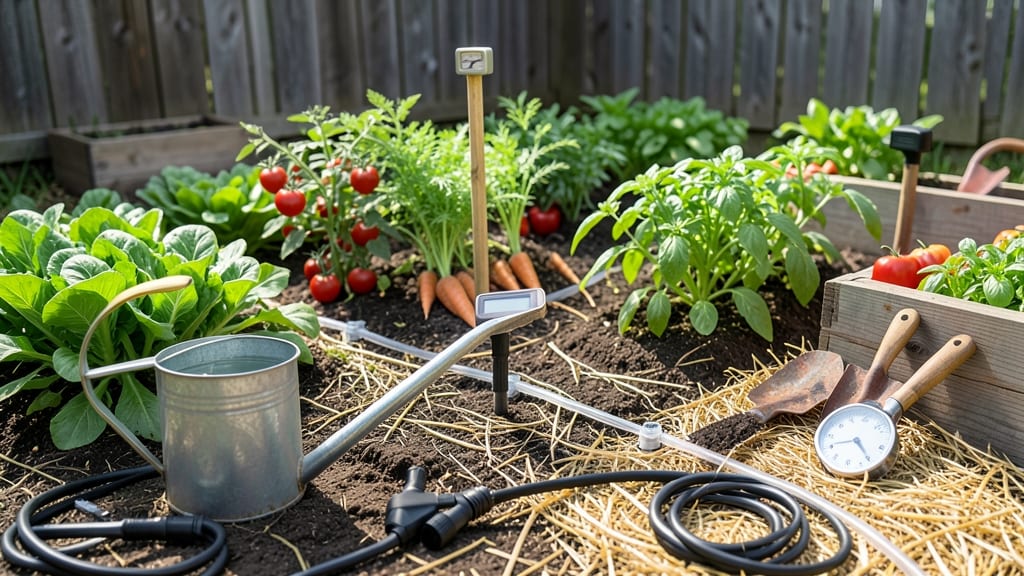
Your vegetable garden’s watering frequency determines whether you’ll harvest crisp carrots or wilted disappointment — and the right schedule isn’t just about timing, it’s about science.
Overwatering or underwatering your vegetable garden can mean the difference between a bountiful harvest and wasted effort—so why guess when science provides precise watering schedules?
Leafy greens like lettuce need consistent moisture, while root crops like carrots prefer deep but infrequent watering. Meanwhile, tomatoes and peppers thrive on a steady schedule that keeps soil evenly damp but never soggy.
Below, I break down the exact watering frequency for each plant type, how to adjust for your climate, and the telltale signs when you’re getting it wrong.
Science-backed watering frequency for common vegetable types
Watering your vegetable garden isn't just about keeping the soil damp—it's about understanding plant physiology and soil science. Too little water stresses roots, while too much suffocates them. The key lies in consistent moisture tailored to each plant's needs.
For example, leafy greens like lettuce and spinach thrive with daily watering in shallow soil, while root vegetables like carrots and beets need deep, infrequent watering to prevent splitting.
Soil moisture levels matter just as much as frequency. Aim for 1-2 inches of water per week, delivered in the morning to reduce evaporation and fungal risks.
Use your finger to test moisture—if the top 1-2 inches feel dry, it's time to water. Mulch with straw or wood chips to retain moisture and regulate soil temperature, cutting water needs by up to 30%.
Here’s how to water each vegetable type based on their unique needs—backed by research on transpiration rates and root depth:
| Plant Type | Watering Frequency | Optimal Moisture Level | Drought Tolerance | Overwatering Risk |
|---|---|---|---|---|
| Leafy Greens (Lettuce, Spinach, Kale) | Daily (seedlings), Every 1-2 days (mature) | Consistently moist, never soggy | Low | High (root rot, yellowing leaves) |
| Root Vegetables (Carrots, Beets, Radishes) | Every 2-3 days (deep watering) | Even moisture, avoid fluctuations | Moderate | Moderate (forked roots, cracking) |
| Fruiting Plants (Tomatoes, Peppers, Cucumbers) | Every 1-2 days (1-2 inches/week) | Deep, consistent moisture | Low-Moderate | High (blossom end rot, fungal diseases) |
| Herbs (Basil, Parsley, Cilantro) | Every 1-2 days (shallow roots) | Moist but well-draining | Moderate | Moderate (wilting, mold) |
| Alliums (Onions, Garlic, Leeks) | Every 2-3 days (reduce as bulbs form) | Consistent, avoid waterlogging | High | Low (rot if overwatered) |
For leafy greens, shallow roots mean frequent watering—think of them like a sponge that dries out quickly.
Let the top inch of soil dry between waterings to prevent bolting (premature flowering). Drip irrigation works best here, delivering water directly to the soil without wetting foliage, which can cause disease.
Root vegetables need a different approach: deep watering encourages straight, unbroken growth. Water deeply every 2-3 days rather than daily shallow sessions. Avoid overhead sprinklers, as wet leaves can lead to fungal infections like powdery mildew. Soil probes are your best tool—insert one 2 inches deep; if it comes out dry, water again.
When it comes to fruiting plants like tomatoes and peppers, consistency is critical. These plants have deep taproots but need steady moisture to prevent blossom end rot (a calcium deficiency triggered by uneven watering).
Mulch heavily to retain moisture and reduce stress. Morning watering is ideal—it gives foliage time to dry before evening, minimizing pests like aphids.
Herbs often get overlooked, but they’re just as particular. Basil, for instance, wilts dramatically when thirsty but can’t handle soggy soil. Water when the top ½ inch feels dry, and use a well-draining potting mix if growing in containers. Parsley and cilantro are more drought-tolerant but still prefer consistent moisture—never let them dry out completely.
Adjust your watering schedule based on weather conditions.
During hot, dry spells, increase frequency by 30-50%, while rainy seasons may require halting watering entirely. Container gardens dry out faster than in-ground beds, so check soil moisture daily and water at the container’s base to encourage deep root growth.
Overwatering is just as damaging as underwatering. Signs include yellowing leaves, mushy stems, and a sour smell from the soil. If you notice these, reduce watering and improve drainage by amending soil with perlite or sand.
For drought-stressed plants, wilted leaves that recover after watering are normal, but crispy, brown edges mean it’s too late—prevent this with regular, deep watering.
Pro tip: Use a rain gauge to track weekly rainfall and adjust your watering accordingly. Most vegetable gardens need supplemental water even in rainy seasons because 1 inch of rain isn’t always enough to reach deep roots.
Pair this with mulch, and you’ll save time, water, and stress on your plants.
How to adjust watering frequency based on climate and soil
Your vegetable garden’s watering needs aren’t one-size-fits-all—they shift with climate, soil type, and even the container size you’re using. A hot, dry summer demands deeper, more frequent watering, while clay soil holds moisture longer than sandy soil.
Ignoring these factors can lead to wilting plants or root rot, both of which kill yields faster than pests. Let’s break down how to customize your watering schedule like a pro.
Start by checking your local climate zone—USDA Zone 9’s intense sun will dry out soil twice as fast as Zone 5’s cooler temps. Rainy seasons reduce your watering needs by 30-50%, while container gardens dry out 2-3x faster than in-ground beds.
The key is soil moisture testing: stick your finger 1-2 inches deep—if it’s dry, water; if damp, wait. This simple trick saves 1,000+ gallons of water per season.
- Hot/Dry Climates: Water deeply every 2-3 days (1-2 inches) at dawn to reduce evaporation. Use mulch to retain moisture.
- Rainy Seasons: Reduce watering by 50% and check for soil saturation. Avoid waterlogged roots by improving drainage with compost.
- Sandy Soil: Water frequently but lightly (every 1-2 days) since it drains quickly. Use organic matter to improve water retention.
- Clay Soil: Water every 4-5 days with deep soaks. Test moisture at 3-inch depth—clay stays damp longer.
- Container Gardens: Water daily in summer (small pots dry out fastest). Use self-watering containers or moisture meters for consistency.
For container gardening, size matters—5-gallon pots need water every 1-2 days in summer, while 50-gallon barrels can stretch to 5-7 days. Always water until 20% runs out the drainage holes to ensure roots get hydrated.
If your containers are cracked or unglazed, they’ll dry out 30% faster, so monitor closely.
Adjust your routine seasonally: in spring, focus on establishing roots with daily watering for seedlings. By fall, reduce to weekly deep waterings as plants prepare for dormancy. Winter watering should be minimal—just enough to prevent soil from freezing solid, which can damage roots.
Use a decision flowchart to simplify adjustments:
- Check weather forecasts—if rain is predicted, skip watering.
- Test soil moisture at root depth (1-2 inches).
- Adjust based on plant type (e.g., tomatoes need more than carrots).
- Mulch all beds to lock in moisture and block weeds.
Remember, consistency is critical—vegetables hate boom-and-bust watering. A drip irrigation system or soaker hose delivers steady moisture, while morning watering prevents fungal diseases. By tailoring your approach, you’ll maximize yields and minimize waste—no guesswork required. 🌱