
Tools
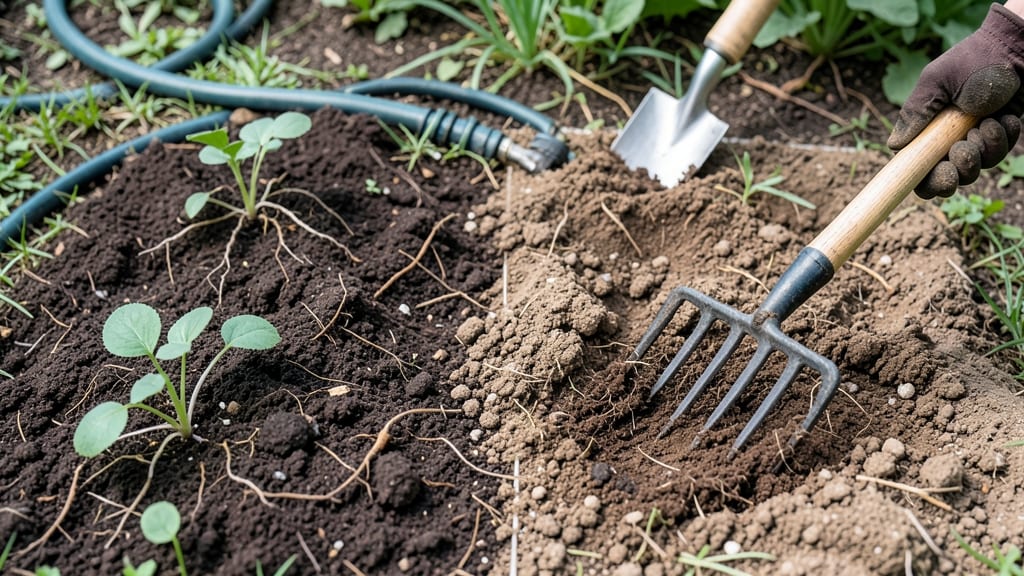
You don’t have to till a garden, but tilling can break up compacted soil and incorporate nutrients—though no-till methods preserve soil structure and microbial life better long-term for sustainable planting.
Tilling disrupts the natural soil ecosystem by breaking up fungal networks that help plants access nutrients, while also exposing organic matter to rapid decomposition. 🌱 However, it’s particularly useful for starting new garden beds or breaking through dense clay layers.
The key trade-off is between short-term convenience and long-term soil health—no-till methods gradually improve soil fertility through natural processes like decomposition and root growth.
For gardeners prioritizing sustainability, alternatives like cover cropping (planting clover or vetch) or using a broadfork (a manual tool that aerates without overturning soil) can achieve similar benefits. These methods build organic matter over time while maintaining beneficial soil organisms.
I recommend trying no-till techniques for at least one season to notice the difference in soil structure and plant vitality.
💡 In This Article
- Pros and Cons of Tilling vs No-Till Gardening
- Best Alternatives to Tilling for Healthy Garden Soil
Pros and cons of tilling vs no-till gardening
Tilling physically disrupts soil by breaking up compacted layers and mixing in organic matter, which can improve drainage in heavy clay soils (like 20-30% clay content). However, this process severs fungal hyphae—the underground "highways" that connect plants and help them absorb nutrients.
These networks can take years to regenerate, which is why tilled soil often shows reduced microbial diversity in the first 1-2 growing seasons after disturbance. The immediate aeration benefits contrast sharply with the long-term damage to soil structure.
When you till, you're also exposing buried organic matter to oxygen, which speeds up decomposition—sometimes too fast.
This can lead to nutrient loss as carbon-rich material breaks down into carbon dioxide instead of gradually feeding soil life. 🌱 In contrast, no-till methods let organic matter decompose slowly at the surface, creating a protective layer that retains moisture and insulates soil organisms.
Studies show no-till soils can hold 2-3 times more organic carbon than tilled soils over a decade.
The biggest advantage of tilling appears in new garden beds or areas with severe compaction. For example, heavy machinery or foot traffic can create 6-12 inch compacted layers that restrict root growth. Tilling at 10-12 inches deep can break these layers, but it requires annual maintenance to prevent re-compaction.
No-till avoids this cycle entirely by encouraging root systems to naturally loosen soil through seasonal growth.
Consider this trade-off: tilling gives you quick results for starting seeds or planting, but it creates a dependency on continued disturbance. No-till requires patience—soil improvement happens gradually through compost additions and plant root activity—but it builds resilience against erosion and drought.
For instance, no-till vegetable gardens often show 15-20% higher yields in dry years because of better moisture retention.
Another critical factor is weed control. Tilling buries weed seeds, but it also brings them closer to the surface where they germinate—creating more weeds over time. No-till suppresses weeds through mulching and dense plantings, reducing the need for mechanical intervention.
The choice often comes down to whether you prioritize immediate productivity (tilling) or long-term sustainability (no-till).
For gardeners who love the tactile experience of working the soil, there's a middle ground: minimal tilling with tools like a broadfork (which aerates without overturning) or hand-digging only where needed. This approach maintains some soil structure while still allowing you to work with the earth.
The key is understanding that soil health isn't about perfection—it's about finding the right balance for your specific conditions and goals. 💫