
Landscaping
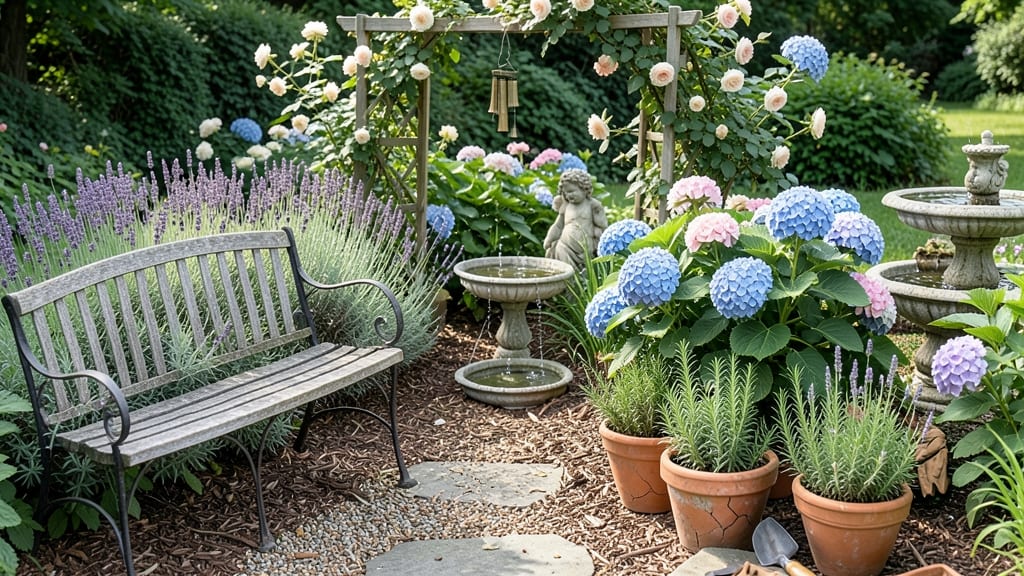
English garden front yard ideas create romantic charm through carefully layered perennials like lavender and peonies, climbing roses for vertical interest, and neatly clipped boxwood hedges. Soft pastel color schemes, winding gravel paths, and classic stone borders deliver effortless elegance that thrives with minimal seasonal maintenance.
Creating an authentic English garden in your front yard goes beyond just planting flowers—it's about crafting a layered, textured scene that feels both welcoming and refined. 🌸 The secret lies in combining hardy perennials that bloom at different times (like hydrangeas for summer and hellebores for winter) with structural elements such as arbors and stone pathways.
These combinations ensure year-round interest while keeping the garden's classic, slightly wild appeal. For example, pairing deep purple lavender with creamy white roses creates that signature English contrast, while gravel paths between neatly edged flower beds reduce weeds and maintenance.
The magic of English gardens also comes from their ability to blend formality with natural beauty.
Think of it as a curated cottagecore aesthetic—where every plant has its place but still feels organic. 🌿 I've found that adding a few climbing plants (like clematis) to trellises or fences instantly adds vertical dimension, making small front yards appear larger.
The key is balancing structured elements (like boxwood hedges) with softer, more informal plantings (like delphiniums) to create that signature English look.
💡 In This Article
- Key Plants for an Authentic English Front Garden
- Low-Maintenance Layouts to Enhance Curb Appeal
Key plants for an authentic English front garden
English front gardens thrive on a mix of hardy perennials that provide seasonal color and fragrance.
Lavender, for instance, isn't just a pretty purple bloom—it's a drought-resistant workhorse that repels pests naturally while releasing its signature scent when brushed. 🌿 Studies show lavender's oil contains camphor and linalool compounds that deter aphids, making it a dual-purpose plant for both beauty and function.
Pair it with hydrangeas, which offer 4-6 weeks of blooms in summer and adapt to both acidic and neutral soils, giving you flexibility in placement.
The real secret to English gardens lies in their layered planting strategy. Start with 3-4 foot tall structural plants like peonies (which bloom in late spring) as your mid-layer, then add 18-24 inch perennials like delphiniums for vertical interest.
Boxwood hedges serve as the foundation—these evergreens stay neatly trimmed at 2-3 feet tall year-round, creating that classic "boxed" look while requiring only monthly pruning in growing seasons.
For climates like USDA Zones 5-8, these plants handle winter dormancy beautifully, with boxwoods even surviving down to -20°F with proper mulching.
Fragrance plays a crucial role too—English gardens are meant to be experienced with all senses.
Sweet-smelling roses (like 'David Austin' varieties) release their scent most intensely in late afternoon sunlight, while evening primrose blooms open at dusk, attracting pollinators. 🌹 The scent molecules from these flowers can travel up to 15 feet on a still evening, creating that signature "garden atmosphere" even from your front door.
For northern climates, consider hellebores—they bloom in late winter/early spring when little else is growing, providing that early-season color boost.
One common mistake is overcrowding plants. English gardens use spacious spacing (18-24 inches between plants) to allow air circulation, which prevents fungal diseases like powdery mildew. The classic "English border" technique involves planting in 3-5 rows of decreasing height, with the tallest at the back and shortest in front.
This creates a natural progression that draws the eye upward, making even small front yards appear grander. For example, a 6-foot tall arbor covered in clematis can visually double the perceived depth of a 10-foot wide front yard.
Don't forget about foliage contrast—English gardens use plants with variegated leaves (like hostas with yellow centers) to add texture when flowers aren't blooming. These plants provide year-round interest and help tie the garden together seasonally.
The key is to select plants that complement rather than compete—pairing deep purple foliage (like 'Black Lace' elderberry) with silver-blue lamb's ear creates that signature English contrast that's both striking and harmonious. 💫