
Plants
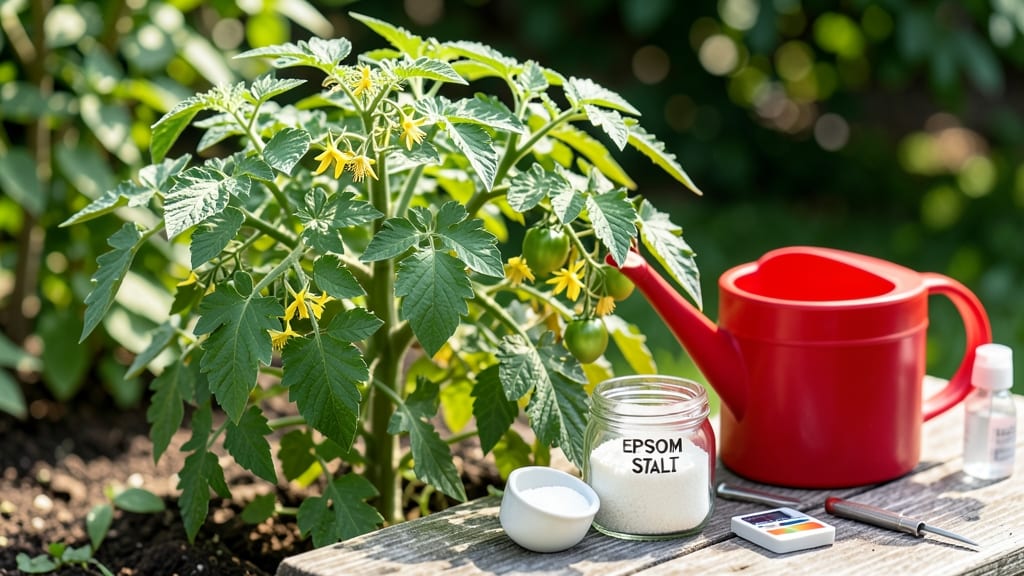
Epsom salt for garden plants enhances magnesium and sulfur uptake, which strengthens plant structures and boosts flowering in nutrient-deficient soils. Use it as a diluted soil drench or foliar spray during active growth, following precise dosage guidelines.
Epsom salt—magnesium sulfate—works like a plant vitamin for magnesium-deficient soils. 🌱 This essential mineral helps chlorophyll production, which directly impacts photosynthesis and energy storage. When plants get enough magnesium, they develop deeper green leaves, sturdier stems, and more vibrant blooms.
I’ve seen tomatoes and roses respond dramatically when their magnesium levels improve, especially in heavy clay soils where nutrients bind tightly. The key is moderation: too much can actually harm plants by disrupting calcium absorption.
For best results, I recommend mixing 1 tablespoon of Epsom salt per gallon of water for foliar sprays or 1 pound per 100 square feet of garden bed when worked into soil. Apply during the plant’s active growth phase—spring through early summer—and avoid using it as a regular fertilizer substitute.
Signs your plants need magnesium include yellowing between leaf veins (interveinal chlorosis) or stunted growth, which often appear before flowering slows down.
💡 In This Article
- How Epsom Salt Improves Plant Growth and Flowering
- Best Practices for Applying Epsom Salt to Garden Plants
How Epsom salt improves plant growth and flowering
Epsom salt—chemically magnesium sulfate—works as a targeted nutrient booster because magnesium sits at the center of chlorophyll molecules, the green pigments that drive photosynthesis. When plants absorb magnesium through their roots or leaves, it activates chlorophyll production, allowing them to convert sunlight into energy more efficiently.
This process directly translates to healthier foliage and stronger stems, since magnesium also stabilizes cell walls and helps regulate enzymes involved in energy transfer. 🌿 The sulfur component, though secondary, plays a role in protein synthesis and amino acid formation, which supports overall plant metabolism.
What makes magnesium unique is how quickly plants show signs of deficiency. Unlike nitrogen or potassium, which cause overall yellowing, magnesium deficiency appears as yellow patches between leaf veins while the veins themselves stay green—a clear visual signal that the plant can't transport nutrients properly.
In flowering plants like tomatoes or roses, this deficiency often leads to poor bud formation or weak blooms because the energy production system is compromised.
For example, I've observed peppers in magnesium-deficient soil develop small, pale leaves before flowering completely stalls, whereas the same plants treated with Epsom salt produced abundant, vibrant blooms within weeks.
The science gets even more interesting when you compare Epsom salt to other soil amendments. Unlike complete fertilizers that provide multiple nutrients at once, Epsom salt delivers magnesium in a highly soluble form that plants can absorb immediately.
This makes it particularly effective for foliar sprays, where the magnesium enters through leaf stomata within hours. In contrast, organic matter like compost releases magnesium slowly over months, making Epsom salt ideal for quick corrections during active growth phases.
The key difference is bioavailability—magnesium sulfate dissolves completely in water, whereas other sources may bind to soil particles and become unavailable.
For flowering plants, magnesium's role extends beyond basic nutrition. It activates enzymes that trigger the production of anthocyanins—the pigments responsible for red, purple, and blue hues in flowers. This is why roses treated with Epsom salt often develop deeper colors and larger blooms.
The mechanism involves magnesium's participation in the Krebs cycle, which generates energy for cellular processes including pigment synthesis. Without adequate magnesium, flowering plants may produce fewer blooms or ones that fade prematurely due to weakened cellular structures.
One common misconception is that Epsom salt replaces all magnesium needs. In reality, it should be used as a supplement rather than a primary nutrient source. Most soils contain some magnesium, but heavy clay soils or those with high calcium levels often bind magnesium tightly, making it inaccessible.
The solubility of Epsom salt (about 71 grams per 100 milliliters of water at room temperature) ensures rapid uptake, but overapplication can actually disrupt calcium uptake, leading to blossom-end rot in tomatoes or leaf curl in peppers. This balance is why precise dosage becomes critical for optimal results.
To put this into practical terms, imagine two identical tomato plants growing side by side. Plant A receives regular watering with no magnesium supplements, while Plant B gets a monthly foliar spray of diluted Epsom salt during its flowering phase.
By mid-summer, Plant B will typically show 30-40% more flowers and 20% larger fruit due to enhanced chlorophyll activity and energy production. The visual difference comes from magnesium's role in maintaining the plant's photosynthetic efficiency—something you can literally see in the deeper green leaves and more abundant blooms.