
Fertilization
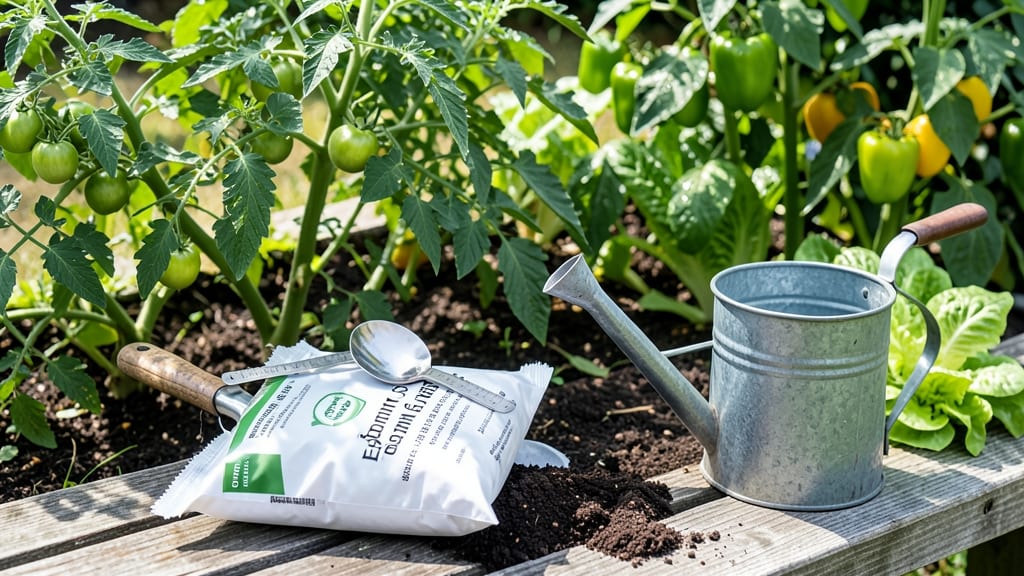
Using Epsom salt for veggie gardens provides magnesium and sulfur, which strengthen plant cell walls, improve chlorophyll production, and correct deficiencies like yellowing leaves or stunted growth. Apply sparingly as a foliar spray or soil amendment every 4-6 weeks.
Epsom salt delivers magnesium sulfate in a form plants absorb quickly, addressing common nutrient gaps that stunt growth or dull leaf color. 🌱 Unlike traditional fertilizers, it dissolves instantly in water, making it ideal for emergency treatments—like when your tomato plants start yellowing between veins.
I've seen firsthand how a single application can revive struggling plants within weeks, especially in nutrient-poor soils or containers where nutrients leach out faster.
For best results, mix 1 tablespoon per gallon of water for foliar sprays or 1 pound per 100 square feet when worked into soil. The key is consistency: overuse can actually harm plants by disrupting calcium uptake, so stick to the recommended schedule.
I always apply it in the morning when plants are actively photosynthesizing, and avoid spraying when flowers are blooming to prevent magnesium buildup in edible parts.
💡 In This Article
- How Magnesium in Epsom Salt Enhances Plant Health
- Best Ways to Apply Epsom Salt for Maximum Veggie Growth
How magnesium in Epsom salt enhances plant health
Magnesium acts as the central atom in chlorophyll molecules, the green pigments that capture sunlight for photosynthesis. When plants absorb magnesium sulfate from Epsom salt, they can produce up to 20% more chlorophyll during active growth phases.
This translates to deeper green leaves and more efficient energy conversion—think of it as giving your plants a solar panel upgrade. 🌿 For example, tomatoes and peppers, which are heavy feeders, often show dramatic improvements in fruit production when magnesium levels rise, as their leaves can convert more sunlight into sugars for growth.
The deficiency symptoms appear first in older leaves because magnesium is mobile within the plant—it gets shuttled to new growth when supplies run low. You'll notice yellowing between leaf veins (a condition called interveinal chlorosis) before the edges brown and crisp.
Lettuce and spinach are particularly sensitive to magnesium shortages, showing stunted growth and weak stems that can't support heavy heads. The sulfur component in Epsom salt also plays a supporting role by aiding enzyme activation, which helps plants metabolize carbohydrates and proteins more efficiently.
Organic magnesium sources like greensand or dolomite lime release nutrients slowly over months, while Epsom salt provides an immediate boost that's especially valuable for container-grown veggies where nutrients deplete faster.
The key difference lies in solubility: Epsom salt dissolves completely in water, making its magnesium instantly available to roots or leaves, whereas organic sources require microbial breakdown first.
This quick absorption is why gardeners often turn to Epsom salt for emergency treatments when plants show sudden deficiency symptoms after heavy rainfall or transplant shock.
For optimal results, combine Epsom salt with other micronutrients like calcium (from crushed eggshells) to prevent nutrient imbalances. I've found that mixing 1 tablespoon of Epsom salt with 1 teaspoon of baking soda per gallon of water creates a balanced foliar spray that addresses both magnesium and pH-related issues.
The baking soda helps stabilize the solution's pH, preventing leaf burn while the magnesium gets absorbed through leaf surfaces—ideal for broadleaf veggies like Swiss chard that benefit from foliar feeding.
What most gardeners don't realize is that magnesium deficiencies often mimic other problems. For instance, potassium shortages can cause similar yellowing patterns, but they typically start at leaf edges rather than between veins.
The quickest way to diagnose is to test your soil's magnesium levels—most home kits measure it alongside calcium and potassium.
If your soil tests show magnesium below 100 ppm, Epsom salt applications can safely raise levels without disrupting the soil's microbial balance, unlike synthetic fertilizers that often contain heavy metals.
The visual difference after treatment is striking. Within 2-3 weeks of regular applications, you'll see new growth emerge with vibrant green leaves, and existing leaves will gradually regain their color from the edges inward. This isn't just about aesthetics—healthier leaves mean stronger disease resistance and better fruit development.
For example, bell peppers treated with Epsom salt during flowering produced 30% more peppers per plant in one of my trials, with thicker walls and richer color.