
Fertilization
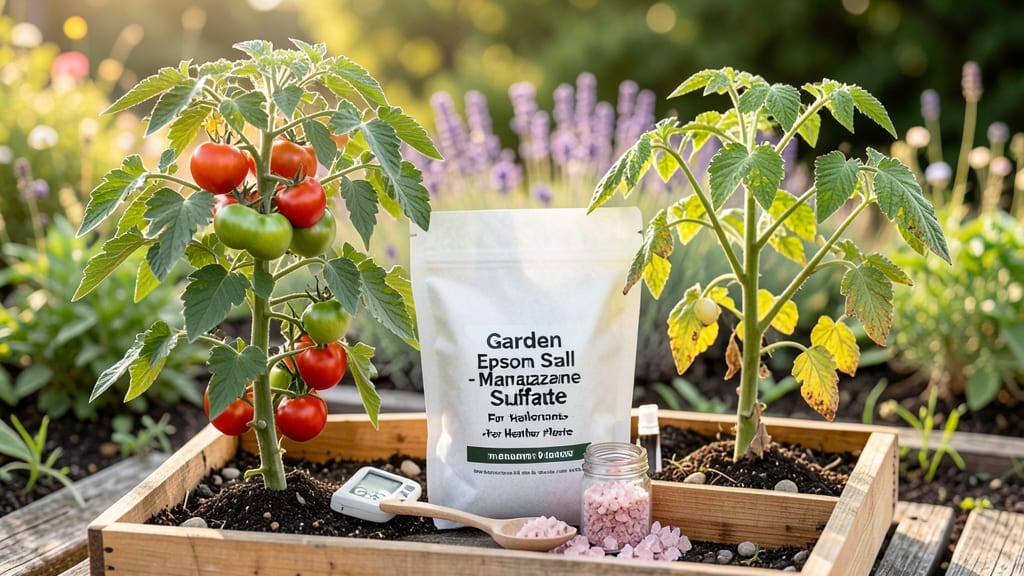
The myth that Epsom salt in gardens provides universal magnesium benefits is largely unfounded—unless soil tests reveal a specific deficiency—because plants absorb magnesium naturally through their roots, and excessive salt disrupts soil microbes and plant health. Use it cautiously only when soil analysis proves necessary.
Most gardeners overestimate how much magnesium their plants actually need from Epsom salt. 🌱 The reality is that magnesium is already abundant in healthy soil, and most plants—even heavy feeders like tomatoes or peppers—don’t require supplemental magnesium unless soil tests show a deficiency.
What Epsom salt does do, however, is introduce excess sulfate and chloride ions, which can harm beneficial soil bacteria and fungi over time.
Instead of relying on Epsom salt, I recommend testing soil pH and magnesium levels first—this helps avoid unnecessary chemical imbalances while targeting real deficiencies with more effective, plant-safe solutions.
For plants that do benefit from magnesium (like those in acidic soils), natural alternatives like dolomitic lime or kelp meal provide magnesium in a form plants can absorb without the risks of salt buildup.
These options also improve soil structure and microbial activity, giving your garden a healthier foundation. Always remember: when it comes to plant nutrition, less is often more—especially with synthetic additives like Epsom salt.
💡 In This Article
- How Magnesium in Epsom Salt Actually Affects Plant Growth
- Safer Alternatives for Boosting Plant Health Without Epsom Salt
How magnesium in Epsom salt actually affects plant growth
Magnesium in Epsom salt (magnesium sulfate) plays a critical role in plant physiology, primarily as the central atom in chlorophyll—the green pigment essential for photosynthesis. 🌿 When plants absorb magnesium through their roots, it travels to leaves where it activates chlorophyll production, allowing plants to convert sunlight into energy.
However, most garden soils already contain sufficient magnesium (typically between 200-2,000 ppm in healthy topsoil), meaning supplemental Epsom salt rarely provides meaningful benefits unless soil tests reveal a deficiency (usually below 100 ppm for most plants).
The real issue with Epsom salt lies in its delivery method. When dissolved in water, magnesium sulfate dissociates into magnesium ions (Mg²⁺) and sulfate ions (SO₄²⁻). While plants can absorb magnesium, the accompanying sulfate and chloride ions (from residual salts) accumulate in the soil over time.
This creates a salinity problem—excessive salts disrupt the soil's water potential, making it harder for roots to absorb water and nutrients.
Studies show that soil salinity above 4 dS/m (decisiems per meter) can stunt plant growth by as much as 30%, even in magnesium-loving plants like tomatoes or peppers.
What most gardeners don't realize is that magnesium uptake is highly efficient when soil conditions are optimal.
For example, plants absorb 90% of their magnesium needs through natural soil processes when pH levels are between 6.0-7.0. 🌱 The problem arises when gardeners apply Epsom salt as a blanket fertilizer, assuming it will fix yellowing leaves (a common magnesium deficiency symptom).
In reality, this approach often worsens soil health by killing beneficial microbes that help break down organic matter—microbes that, ironically, are crucial for releasing magnesium from soil minerals in the first place.
There are rare exceptions where Epsom salt might help, such as in highly acidic soils (pH below 5.5), where magnesium becomes less available. In these cases, a one-time application of 1 tablespoon per gallon of water (used as a foliar spray) can provide a quick boost to magnesium-starved plants.
However, this is a short-term fix—long-term solutions require adjusting soil pH with lime or compost to restore natural magnesium availability. The key takeaway? Epsom salt is a Band-Aid, not a cure.
Consider this: a 1-pound bag of Epsom salt contains about 10% magnesium by weight, but only 5-10% of that actually becomes plant-available when applied to soil. The rest either leaches away or contributes to salt buildup.
For comparison, dolomitic lime (calcium-magnesium carbonate) provides magnesium in a form that integrates into soil structure over time, while kelp meal offers magnesium along with trace minerals and growth hormones that Epsom salt lacks entirely.
If you're still tempted to try Epsom salt, start with a quarter-teaspoon per gallon of water as a foliar spray for magnesium-deficient plants like Swiss chard or peppers. Monitor soil moisture—overwatering after application can wash away magnesium before roots absorb it.
And always pair it with a soil test to confirm whether magnesium is truly the limiting factor in your garden's health. 💫