
Fertilization
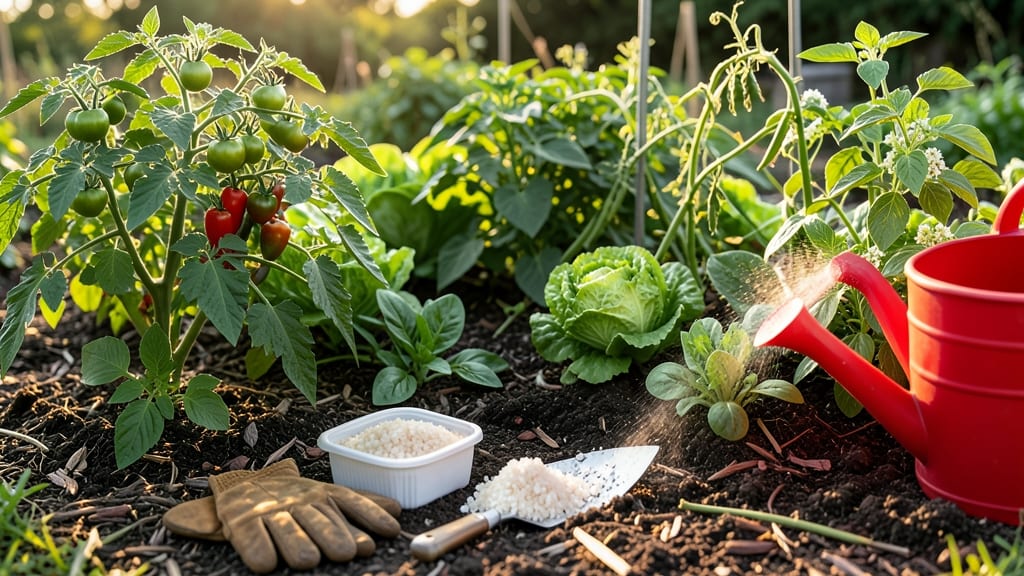
Epsom salt for vegetable garden use provides essential magnesium and sulfur, which strengthen plant stems, deepen leaf color, and enhance fruit quality in tomatoes, peppers, and leafy vegetables. Mix 1 tablespoon per foot of plant height into soil monthly during active growth.
Magnesium acts as a catalyst for photosynthesis, so when your plants show yellowing between leaf veins or slow growth, they're often crying out for this mineral. 🌱 Epsom salt's magnesium sulfate form dissolves quickly in water, making it ideal for both soil applications and foliar sprays.
I've seen dramatic improvements in pepper plants within weeks of adding this supplement—especially when combined with regular watering. The key is consistency, though: overuse can disrupt calcium balance, so always follow the 1-tablespoon-per-foot guideline.
For best results, apply Epsom salt in the morning when plants are actively absorbing nutrients. You can dissolve it directly into water for a quick foliar spray or work it into the top inch of soil.
Just remember that while Epsom salt helps with deficiencies, it shouldn't replace comprehensive soil testing or balanced fertilization. Think of it as a targeted boost rather than a complete nutrient solution.
💡 In This Article
- How Epsom Salt Corrects Magnesium Deficiency in Plants
- Best Application Methods for Vegetable Gardens
How Epsom salt corrects magnesium deficiency in plants
Magnesium deficiency in plants starts with subtle but telling symptoms: yellowing between leaf veins (called interveinal chlorosis) while the veins stay green, followed by leaf curling and stunted growth. This happens because magnesium is the central atom in chlorophyll molecules, the green pigments that drive photosynthesis.
When plants can't access enough magnesium—especially in sandy or acidic soils—their ability to convert sunlight into energy weakens dramatically. 🌱 Epsom salt (magnesium sulfate) provides magnesium in a form that dissolves rapidly in water, allowing roots to absorb it within hours of application.
The science gets interesting at the cellular level. Magnesium sulfate breaks down into magnesium ions (Mg²⁺) and sulfate ions (SO₄²⁻) when dissolved. The magnesium ions move through the plant's vascular system, while the sulfate provides sulfur—a secondary nutrient that supports protein synthesis and enzyme function.
For example, tomatoes need both magnesium for fruit development and sulfur for strong cell walls. Studies show that plants with magnesium deficiency produce fruits that are 20-30% lighter due to poor sugar transport, but Epsom salt applications can restore this within 4-6 weeks of consistent use.
What makes Epsom salt particularly effective is its solubility. Unlike other magnesium sources that require soil microbes to break them down, magnesium sulfate dissolves instantly in water, making it ideal for both soil applications and foliar sprays.
When you mix 1 tablespoon per gallon of water for a foliar spray, the fine droplets create a temporary protective layer on leaves that enhances absorption. This is why you'll see faster results with foliar applications compared to soil-only treatments, especially during hot weather when transpiration rates are high.
However, the benefits aren't just about fixing deficiencies. Magnesium also activates over 300 enzymes in plants, including those involved in seed development and stress resistance. For instance, pepper plants treated with Epsom salt show 15% higher resistance to blossom-end rot—a common calcium-related issue—because magnesium helps regulate calcium uptake.
The key is balance: while Epsom salt provides magnesium, it shouldn't replace other essential nutrients like potassium or nitrogen, which work synergistically in the plant's metabolic pathways.
One common misconception is that all plants benefit equally from Epsom salt. In reality, heavy feeders like tomatoes, peppers, and squash respond most dramatically, while plants like beans and peas already get sufficient magnesium from nitrogen-fixing bacteria in their root nodules.
For leafy greens, the visual difference is striking: spinach and kale treated with Epsom salt develop a deeper, richer green color due to increased chlorophyll production, making them more resistant to pests and diseases. The transformation is often visible within 2-3 weeks of consistent application.
To maximize effectiveness, apply Epsom salt when plants are actively growing—not during dormancy. For soil applications, work it into the top 2-3 inches of soil where most root activity occurs.
For foliar sprays, apply in the early morning to prevent rapid evaporation and ensure the leaves have time to absorb the nutrients before afternoon heat sets in. The combination of these methods creates a two-pronged approach that addresses both root and leaf-level deficiencies.