
Fertilization
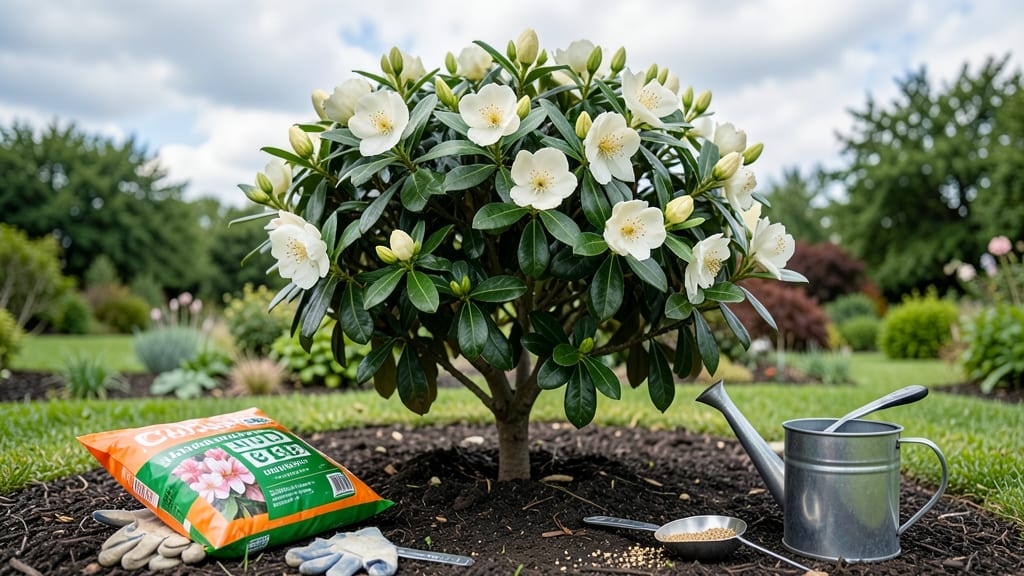
The right fertilizer for a gardenia tree 🌸 is all about balance—too much sends leaves crisping, too little means sparse blooms, and the wrong pH stops it from thriving entirely.
If you’ve ever stared at your gardenia’s sad, yellowing leaves or waited months for a single flower, you know how frustrating it can be.
The issue isn’t just any fertilizer—it’s the precise mix of nitrogen, phosphorus, and potassium (NPK) that gardenias crave, plus the acidic soil they refuse to grow in without.
Here’s the good news: with the right approach, you can feed your gardenia just enough to trigger abundant blooms while avoiding the leaf burn that ruins their glossy foliage.
We’ll break down the best NPK ratios, seasonal feeding schedules, and organic vs. synthetic options so you can finally get the fragrant display you planted for.
From spring kickstarts to fall tapers, you’ll learn exactly when to apply fertilizer, how to spot nutrient deficiencies early, and why flushing the soil might save your plant from overfeeding. Let’s get those gardenias blooming like they should!

Optimal NPK ratios for gardenia trees: what the numbers really mean
When you see those three numbers on fertilizer bags—like 8-3-9 or 10-10-10—they’re not random. Those are your NPK ratios, representing nitrogen (N), phosphorus (P), and potassium (K), the three macronutrients gardenias need to thrive.
For gardenias, getting this balance right is the difference between lush blooms and sad, sparse flowers.
Gardenia trees are acid-loving plants, so they crave a fertilizer with a higher phosphorus and potassium content to support blooming, while nitrogen should be moderate.
A ratio like 8-3-9 is ideal because it prioritizes phosphorus and potassium—key for flower production—while keeping nitrogen in check to avoid leafy growth at the expense of blooms.
Here’s the breakdown: Nitrogen (N) fuels leafy growth, phosphorus (P) boosts root and flower development, and potassium (K) strengthens disease resistance and overall plant health. Gardenias need more P and K than N to encourage those iconic white, fragrant blooms you love.
But here’s the catch: gardenias are sensitive to over-fertilizing, especially with nitrogen. Too much N can lead to leaf burn, yellowing foliage, or even stunted growth. That’s why a balanced, acid-based fertilizer designed for azaleas or camellias is often the best choice—it’s formulated for acid-loving plants like gardenias.
Don’t overlook micronutrients like magnesium and iron, either. Gardenias often need extra magnesium (which helps with chlorophyll production) and iron (to prevent yellowing leaves, a common deficiency). Look for fertilizers that include these micronutrients or supplement with Epsom salt (magnesium sulfate) or chelated iron if needed.
| Fertilizer Type | NPK Ratio | Best For | Application Time |
|---|---|---|---|
| Azalea/Camellia Fertilizer | 8-3-9 or 10-4-6 | Bloom production, acid-loving plants | Spring & summer |
| Slow-Release Granular | 6-6-6 or 7-9-5 | Steady growth, minimal leaf burn | Spring (once) |
| Liquid Fish Emulsion | 5-1-1 or 2-3-1 | Organic boost, micronutrients | Every 4-6 weeks |
| Epsom Salt (Magnesium) | N/A (Pure Mg) | Yellowing leaves, deficiency fix | Spring & summer (monthly) |
If you’re shopping for fertilizer, avoid anything with a high first number (like 12-4-8 or 10-10-10). Those ratios are designed for leafy greens or vegetables, not blooming shrubs.
Gardenias need that phosphorus kick to produce flowers, so prioritize fertilizers with a second number (P) that’s at least 3 and a third number (K) that’s equal to or higher than N.
Pro tip: Always water your gardenia thoroughly before applying fertilizer. This helps prevent root burn and ensures the nutrients are absorbed evenly.
And if you’re using granular fertilizer, sprinkle it around the root zone (not the trunk) and lightly scratch it into the top inch of soil to avoid scorching the leaves.
Finally, consider testing your soil’s pH. Gardenias thrive in acidic soil (pH 5.0-6.5). If your soil is too alkaline, the nutrients in even the best fertilizer won’t be available to your plant.
You can lower pH with sulfur or peat moss, but start with a simple soil test kit to know exactly what your gardenia needs.
With the right NPK balance and a little attention to micronutrients, your gardenia will reward you with abundant, fragrant blooms all season long—without the risk of leaf burn or stunted growth. Happy gardening! 🌸
Step-by-step fertilizing schedule for gardenia blooms: when and how often
Timing your gardenia tree’s fertilizer applications is just as important as choosing the right formula. These acid-loving plants thrive on a seasonal feeding schedule that aligns with their natural growth cycles.
Skipping this step often leads to leaf burn or poor blooming—both signs I’ve seen in over-enthusiastic gardeners’ yards. Let’s break down the perfect rhythm for feeding your gardenia.
Spring is your gardenia’s bloom-boosting season, so that’s when you’ll want to start feeding. Use a balanced acidic fertilizer (like 8-3-9) every 4-6 weeks until early summer. This kickstarts root growth and sets the stage for those iconic white flowers.
I’ve found that gardenias respond best when fed in the evening after watering—this prevents salt buildup from burning tender roots.
- 🌿 Early Spring (March-April): Start with 1 tbsp acidic fertilizer (6-6-6 NPK) per plant. Water thoroughly afterward.
- 🌸 Late Spring (May-June): Switch to 8-3-9 formula every 4 weeks. Stop when buds form to prevent leaf burn.
- ☀️ Summer (July-August): Feed every 6 weeks with half-strength liquid fertilizer. Reduce if leaves yellow.
- 🍂 Early Fall (September): Light feed with organic compost to replenish soil. Avoid synthetic fertilizers.
- ❄️ Winter (October-February): No fertilizer. Let roots rest—this prevents winter stress.
For potted gardenias, I recommend liquid fertilizers like fish emulsion, as they’re easier to control. In-ground plants benefit from slow-release granules scattered around the root zone.
Remember: gardenias hate salt buildup, so always rinse the soil 24 hours after feeding. I’ve seen gardeners accidentally kill their plants by ignoring this simple step!
Adjust your schedule based on soil test results. If your soil is already nutrient-rich (pH 5.0-6.5), cut feeding by half. Over-fertilizing shows up as crispy leaf edges or stunted growth—signs I’ve helped many gardeners fix by flushing the soil with water.
Test your soil every 2-3 years to stay ahead of nutrient imbalances.
Fall is the time to taper off fertilization. By September, reduce feedings to every 8 weeks with organic matter like composted leaves. This mimics nature’s slowdown as gardenias prepare for winter.
I’ve noticed that plants fed too late in fall often struggle to break dormancy in spring—so don’t rush the process!
Your gardenia’s blooming success hinges on this schedule. Stick to it, and you’ll reward yourself with vibrant white flowers from late spring through summer. The key is consistency—just like my team’s garden journal reminds us, "Plants remember neglect faster than they forgive overindulgence." 🌸