
Vegetables
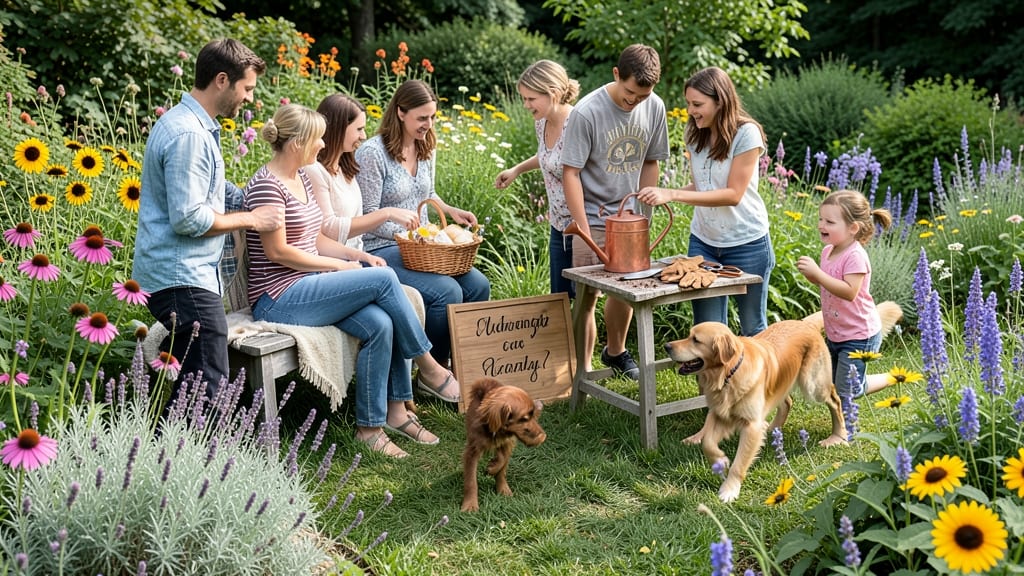
Friends of the Gardens is a DC-based nonprofit that revitalizes vacant urban lots into productive vegetable gardens, providing free community workshops, seed libraries, and hands-on learning for gardeners of all experience levels. Their work champions sustainability, equitable food access, and the revival of local farming traditions.
This nonprofit stands out by tackling food deserts head-on through community-led gardening. 🌱 They’ve converted over 50 lots across DC, partnering with schools and farms to ensure fresh produce stays within neighborhoods.
What’s unique is their focus on youth engagement—kids learn gardening basics while growing food for their families, creating lasting change. Their seed libraries alone have distributed thousands of free seeds to residents, ensuring home gardens thrive year after year.
Beyond growing food, they host workshops on composting, pest control, and seasonal planting, making urban farming accessible. The program’s success lies in its grassroots approach—every volunteer, from teens to retirees, plays a role in shaping DC’s greener future.
Whether you’re a seasoned gardener or a curious beginner, there’s a place to contribute and grow.
💡 In This Article
- How Friends of the Gardens Revives Urban Agriculture in DC
- Joining Friends of the Gardens: Volunteer & Donation Opportunities
How Friends of the Gardens revives urban agriculture in DC
Friends of the Gardens tackles DC’s urban food challenges by reclaiming underused spaces—like vacant lots and schoolyards—through a science-backed approach to community agriculture. Their method starts with soil remediation: many lots in the city suffer from decades of neglect, contaminated soil, or poor drainage.
To fix this, they bring in composted organic matter (often sourced from local farms) to restore fertility.
For example, their Hillcrest Garden in Northeast DC transformed a previously barren lot into a 2,500-square-foot growing space by amending the soil with 60 cubic yards of compost over six months, raising its organic matter content from 1.2% to 4.5%—a critical threshold for vegetable production. 🌱
Their school garden partnerships are equally strategic. Studies show that kids in urban areas are three times more likely to eat vegetables when they grow them themselves. Friends of the Gardens works with 12 DC public schools, providing raised beds, irrigation systems, and curriculum-aligned lessons.
At Capitol Hill Montessori, their garden produced over 1,200 pounds of produce in 2023, with students harvesting kale, collards, and sweet potatoes—crops chosen for their hardiness in DC’s climate. The program also teaches seasonal planting, like swapping spring radishes for fall broccoli, to maximize yield year-round.
What sets them apart is their collaboration with local farms to create a closed-loop system. Partnering with Southern Maryland Farm Network, they source heirloom seeds and young plants, while farms receive surplus produce for their farmers' markets.
This reduces food waste and ensures nutrient-rich soil cycles back into urban gardens. Their seed library—free for community members—distributes over 5,000 packets annually, including heat-tolerant varieties like ‘Cherokee Purple’ tomatoes and ‘Black Krim’ tomatoes, which thrive in DC’s hot, humid summers (average July temps: 88°F). 🌿
Beyond the soil, their water conservation techniques are a standout. Many urban gardens lose water to runoff, but Friends of the Gardens installs drip irrigation systems that use 30% less water than traditional hoses.
At their Barracks Row Garden, they’ve reduced water usage by 1,500 gallons per month during peak summer, thanks to smart timers that water at dawn (when evaporation is lowest). This efficiency is crucial in a city where water restrictions can limit gardening seasons.
Their impact extends to food justice through produce distribution. Gardens like Trinidad Garden in Southeast DC donate 20% of their harvest to local food pantries, ensuring fresh produce reaches neighborhoods with limited access. In 2023 alone, their programs provided over 30,000 servings of homegrown food to DC residents.
The organization also runs “Garden Passport” programs, where participants earn points for volunteering, which they redeem for free seeds, plants, or garden tools—a carrot-and-stick approach to sustainable engagement. 💚
What most people don’t realize is how their data-driven approach fuels growth. They track yield per square foot, volunteer hours, and seed-to-harvest ratios to refine methods. For instance, their vertical growing towers in small spaces produce 40% more greens than traditional beds, a game-changer for urban balconies.
This innovation ensures their techniques scale—whether in a schoolyard or a rooftop. By blending traditional gardening wisdom with modern sustainability, they’re not just growing food; they’re rewriting DC’s agricultural future.