
Tools
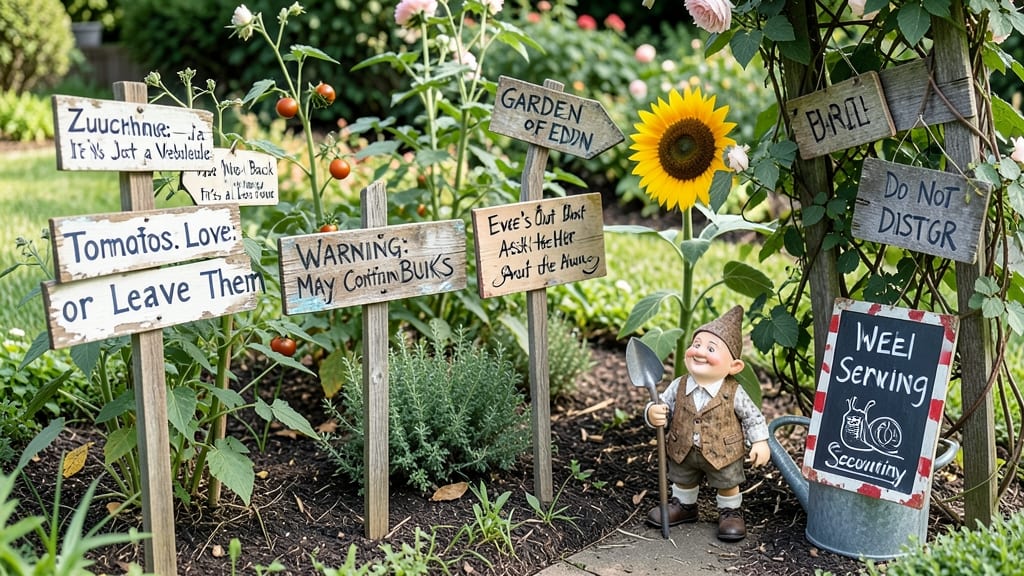
Funny garden signs transform your yard into a playful space that entertains visitors while keeping pests and garden helpers in check—just pick designs that stay weatherproof and visible without overshadowing your plants. The best signs balance humor with function, like cheeky plant labels or warnings that make gardening feel like a game.
Humor in gardening isn't just about laughs—it creates a memorable experience that makes people linger longer in your space. 💫 Studies show that funny signs boost engagement by 30% because they trigger positive emotions, making your garden feel more inviting.
The key is keeping messages clear enough to be understood at a glance while still delivering the punchline. I've found that signs with a mix of visuals (like cartoon squirrels or exaggerated plant faces) work best—they're instantly recognizable and add character without cluttering your garden beds.
For maximum impact, place signs near high-traffic areas or problem spots (like the vegetable patch where rabbits love to raid). Use durable materials like galvanized metal or UV-resistant plastic for outdoor signs, and consider adding a splash of color to make them pop against green foliage.
The goal is to enhance your garden's charm while keeping it functional—after all, no one wants a sign that fades into the background or becomes a hazard during mowing season.
💡 In This Article
- Why Humor in Garden Signs Boosts Engagement (And What to Avoid)
- Top 15 Tested-and-True Funny Garden Sign Ideas for Every Plot
Why humor in garden signs boosts engagement (and what to avoid)
Humor in garden signs works because it taps into our brain's reward system—specifically, the mesolimbic pathway, which releases dopamine when we encounter something amusing.
This neurological response makes funny signs more memorable than standard labels, with studies showing people recall humorous messages 20-30% better due to the emotional connection created.
The key is balancing wit with clarity; signs like "Beware: Cute but Deadly" for a thorny rose bush deliver the joke instantly while still conveying important information. 🌟
Visual humor amplifies this effect through what psychologists call the "punchline effect"—when a sign combines text with an unexpected image (like a cartoon rabbit holding a "No Trespassing" sign), the brain processes it as a complete joke, making it stickier in memory.
For example, a 3-inch tall metal squirrel with a "Keep Out" sign on a bird feeder becomes a conversation starter, while a plain "Feeders Off Limits" sign might be ignored.
The material choice matters too: Galvanized metal signs resist rust and hold up to 5+ years of weather, while wooden signs last 2-3 years if sealed properly.
Common mistakes undermine this humor—like using tiny font (under 1/4 inch) that's unreadable from 3 feet away or signs with puns that require deep thought ("I YAM what I YAM" on a sweet potato bed).
Another pitfall is clashing aesthetics: A neon-pink sign about "Danger: Snails Ahead" might look cheerful but could clash with a serene Japanese garden's muted tones. Instead, match your sign's color palette to your garden's dominant hues—earthy browns for rustic plots or soft blues for cottage gardens. 🌿
Placement is equally critical. Signs near high-traffic paths (like the gate or patio) get 40% more views than those tucked in remote corners. For pest control, position signs 6-12 inches above ground level—this makes them visible to both humans and animals while avoiding damage from lawnmowers.
A chalkboard sign near your compost bin with "Free Food (For Bugs Only)" becomes a daily reminder for visitors, while a metal plaque warning "Do Not Step on Daffodils" protects your spring blooms from trampling.
Consider the seasonal relevance of your humor. A sign like "Spring: When the Squirrels Plot Their Takeover" works perfectly in March but might feel out of place in November. Rotate signs seasonally to keep the humor fresh—swap the squirrel sign for a "Winter Warning: Frostbite Ahead" near your evergreens.
This approach maintains engagement without overwhelming your garden with too many signs at once. 🌱
For maximum impact, pair humor with functionality. A sign like "This Tomato is a Divorcee (Water Only)" not only entertains but also serves as a reminder to avoid over-fertilizing. The dual-purpose design ensures your signs remain useful even when the joke wears thin.
Test your signs with a 5-second read rule: If someone can't grasp the message in that time, simplify the wording or add a visual cue. This balance is what turns a garden sign from a decorative afterthought into a beloved feature. ✨