
Tools
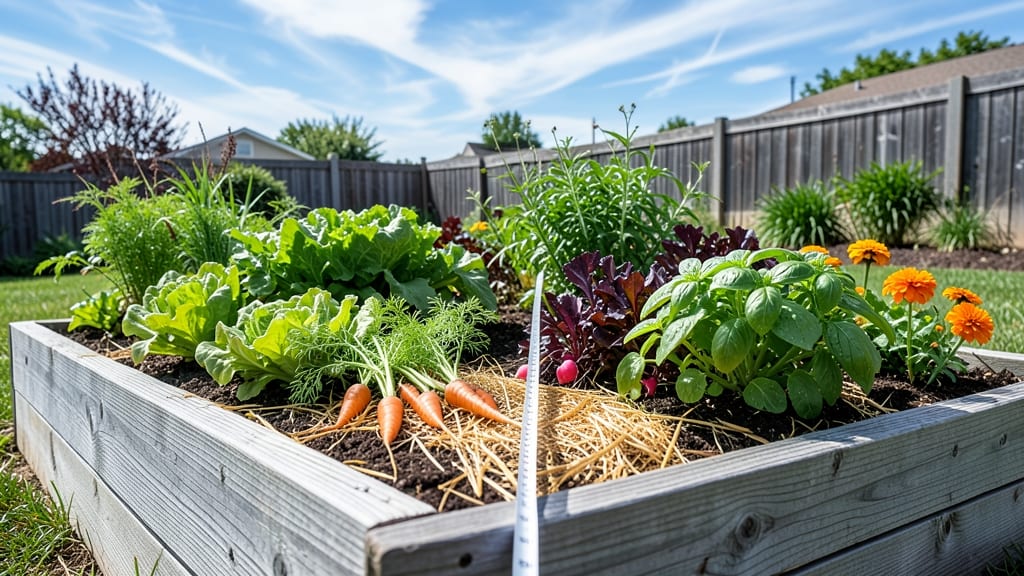
Choosing the right garden bed size starts with your plants' spacing needs, where a 4x8-foot layout works best for most vegetables to balance growth and accessibility. Raised beds shouldn't exceed 4 feet wide for easy reach, and row spacing should range from 18 to 36 inches depending on the crop to ensure proper airflow and sunlight distribution.
Your garden's layout directly impacts how well your plants thrive.
A 4x8-foot raised bed strikes the perfect balance—wide enough for multiple rows but narrow enough to avoid deep soil compaction while keeping weeds manageable. 🌱 For in-ground beds, you can expand dimensions, but remember that wider rows (over 3 feet) make weeding and harvesting more challenging.
The key is matching bed size to your plants' mature width, not just their seedling spacing—tomatoes, for instance, need 18-24 inches between plants but 36 inches between rows for airflow.
Pro tip: If space is limited, consider square-foot gardening, where you divide beds into 1-foot sections and plant according to specific spacing charts. This method maximizes every inch while reducing waste from overcrowding.
For larger gardens, wider rows (up to 3 feet) can work with proper tools, but always prioritize accessibility—you want to be able to stand comfortably between rows without stepping on plants.
💡 In This Article
- How Garden Bed Dimensions Affect Plant Growth and Yield
- Calculating Garden Bed Size Based on Crop Type and Space
How garden bed dimensions affect plant growth and yield
Garden bed dimensions directly influence plant health through root competition and sunlight interception. Plants need space to develop strong root systems—crowding forces roots to compete for nutrients and water, which weakens growth.
For example, leafy greens like lettuce thrive with just 4-6 inches between plants, but tomatoes require 18-24 inches to support their sprawling vines. The 4x8-foot standard bed balances this by allowing 2-3 rows of most vegetables with proper spacing while keeping soil conditions consistent across the entire area. 🌱
Bed width also impacts accessibility and weeding efficiency. Raised beds wider than 4 feet force you to step inside, compacting soil and disturbing roots. In-ground beds can stretch wider (up to 5-6 feet), but this makes weeding and harvesting more labor-intensive.
Airflow is another critical factor—rows spaced 18-36 inches apart prevent fungal diseases by reducing humidity near foliage. For instance, basil needs tight spacing (6-12 inches) but benefits from 24-inch row spacing to dry quickly after watering.
Soil temperature and moisture retention vary by bed type. Raised beds warm up faster in spring (ideal for early planting) but dry out quicker, requiring more frequent watering. In-ground beds maintain more consistent moisture but may stay cool longer.
The 4x8-foot raised bed's surface-to-volume ratio also means it heats evenly, preventing hot spots that could stress plants. For heat-loving crops like peppers, this uniform warmth is a game-changer compared to wider in-ground beds where edge plants often get less sun. ✨
Light interception follows the "square-foot rule"—plants in the center of a bed receive 10-15% less light than those at the edges due to shading from taller neighbors. This is why wide-row methods (planting in 3-foot-wide strips) work for some crops: they maximize light exposure for each plant.
However, this approach requires precise spacing calculations to avoid overcrowding. For example, a 4x8-foot bed could fit 4 rows of carrots (3-inch spacing) with 12-inch between rows, but swapping to wide rows might reduce yield by 20% if not managed carefully.
Root zone depth matters too—raised beds typically have 12-18 inches of soil, perfect for most vegetables, while in-ground beds can go deeper (up to 24 inches) for root crops like potatoes.
The deeper soil in in-ground beds also helps regulate temperature swings, which is why some gardeners use a mix of both: raised beds for leafy greens and in-ground for root vegetables. This layered approach optimizes space while catering to different plant needs. 💫
Finally, consider the "reach factor"—most adults can comfortably work 24-30 inches into a bed without straining. This is why 4-foot-wide raised beds are ideal: you can stand on one side and tend to the entire bed without stepping inside.
In-ground beds can stretch wider, but you'll need to walk through them, which compacts soil and disturbs plants. For larger gardens, creating multiple 4x8-foot beds with pathways between them ensures you can move freely while maintaining optimal growing conditions.
This layout also makes crop rotation easier, reducing disease buildup in the soil.