
Tools
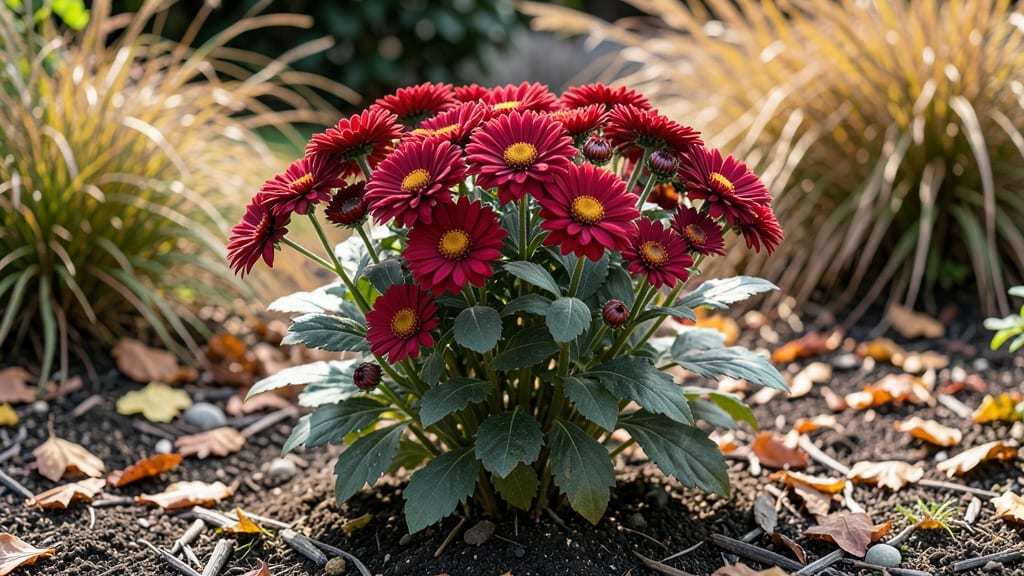
Garden mum perennials bloom for 6-8 weeks in late summer through fall, with some varieties producing second blooms if you deadhead regularly. These hardy plants love full sun, well-draining soil, and steady watering while developing drought resistance once mature. Proper winter protection helps them thrive for multiple seasons.
These perennials stand out because their root systems develop deeper over time, giving them better access to nutrients and moisture—unlike annual mums that rely on seasonal care. 🌿 The key to longer blooming is consistent deadheading (removing spent flowers) which encourages new buds, while mulching in winter protects their roots from freezing.
I’ve found that varieties like 'Autumn Joy' and 'Pardon Me' consistently deliver the most reliable second blooms when given these conditions.
For best results, plant them in well-drained soil with morning sun exposure to prevent wilting. A balanced fertilizer in spring boosts growth, while drought-tolerant once established means you won’t need to water daily after the first year.
The trade-off? They need more upfront care than annuals but reward you with years of vibrant color.
💡 In This Article
- Why Garden Mums Bloom Longer as Perennials
- Seasonal Care Guide for Year-Round Garden Mum Success
Why garden mums bloom longer as perennials
The extended blooming period of garden mum perennials comes down to their deep root systems that develop over multiple seasons. Unlike annual mums, which rely on seasonal growth spurts, perennials establish extensive root networks that tap into nutrients and moisture deeper in the soil.
This gives them a competitive advantage during drought periods and allows them to store energy for future blooms. 🌱 The root system of a mature garden mum can spread up to 2 feet wide and 1-2 feet deep, creating a self-sustaining water reserve.
Light exposure plays a crucial role in their blooming duration. Garden mums thrive in full sun (6-8 hours daily), but they're actually more sensitive to temperature extremes than light deprivation.
The ideal blooming temperature range is 60-75°F—when nights dip below 50°F, blooms may open more slowly or close prematurely. This is why late summer to fall blooming aligns perfectly with their natural temperature preferences.
The longer daylight hours of summer provide the energy they need, while the cooling nights preserve flower integrity.
Deadheading—removing spent blooms—is the single most effective way to extend their season. When you snip off faded flowers, you're signaling the plant to redirect energy from seed production to new bud formation.
Studies show that regular deadheading can extend blooming by 3-4 weeks in varieties like 'Autumn Joy' and 'Pardon Me'.
The key is to cut back to the first set of healthy leaves below the bloom, which encourages bushier growth and more flowers. 🌼 This technique works because it maintains the plant's hormonal balance, keeping it in a continuous flowering state rather than shifting to reproductive mode.
Fertilization timing also makes a significant difference. A slow-release 10-10-10 fertilizer applied in early spring provides steady nutrients, while a second application in mid-summer boosts bloom production.
The nitrogen-phosphorus-potassium ratio is carefully balanced because too much nitrogen promotes leafy growth at the expense of flowers, while too much phosphorus can lead to weak stems. Perennial mums typically need about 1 pound of fertilizer per 100 square feet annually, spread evenly across the growing season.
One often-overlooked factor is the plant's natural dormancy cycle. Unlike annuals that complete their life cycle in one season, perennials enter a semi-dormant state in winter, conserving energy for spring regrowth. This dormancy period is crucial—it allows the plant to "reset" and come back stronger.
Proper winter care, including mulching with 3-4 inches of organic mulch, protects these roots from freezing temperatures while still allowing moisture to penetrate. The result? A more vigorous plant that blooms even more prolifically the following year.
Consider this comparison: Annual mums typically bloom for 4-6 weeks before their energy shifts to seed production, while well-cared-for perennials can maintain blooms for 8-10 weeks or longer with proper deadheading.
The difference comes down to their ability to store and utilize resources over multiple seasons rather than burning through them in one growing cycle. 🌿 This biological advantage makes perennials the clear winner for gardeners seeking long-lasting color.