
Tools
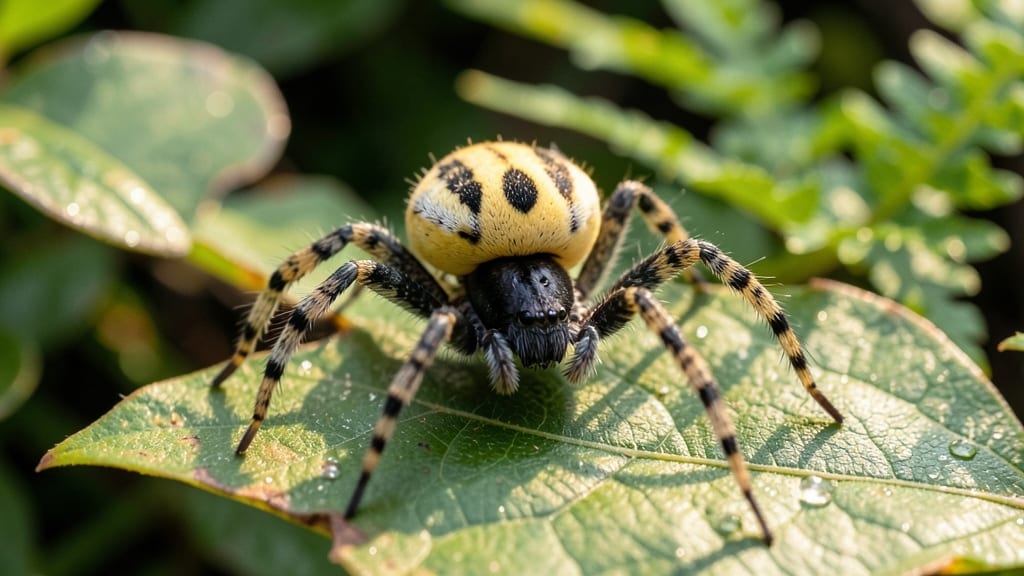
Garden spiders in Oregon are typically harmless orb-weavers with distinctive white markings and large, round webs. They help control pests but may be mistaken for dangerous species; proper identification prevents unnecessary removal or harm.
Oregon's garden spiders (Argiope spp.) are actually beneficial predators that feast on flies, mosquitoes, and even other spiders—making them nature's pest control. 🕷️ Their striking white and black striped abdomens and silvery webs are unmistakable once you know what to look for.
The confusion often arises because their size (up to 2 inches) and bold patterns can make them look intimidating, but their docile nature means they'll only bite if severely provoked.
Unlike black widows or hobo spiders, garden spiders don't build messy webs in corners—they create symmetrical orb webs in open areas, often near gardens or shrubs where they can catch flying insects.
If you're dealing with one in your yard, the key is to observe before acting. These spiders are most active during warm Oregon summers, so late spring through early fall is when you're likely to spot them.
A simple solution is to carefully relocate their web to a less frequented area using a stick or vacuum—this preserves their role in your ecosystem while keeping them away from doorways.
For those who prefer a more hands-off approach, planting spider-repelling herbs like mint or lavender around entry points can help deter them naturally.
💡 In This Article
- How to Identify Oregon Garden Spiders vs Dangerous Lookalikes
- Safe Removal Methods for Garden Spiders in Home Gardens
How to identify Oregon garden spiders vs dangerous lookalikes
Oregon's garden spiders (Argiope spp.) have a distinctive appearance that sets them apart from dangerous species. Their bodies typically measure 1-2 inches long, with a bulbous abdomen featuring bold white and black stripes or zigzag patterns.
The most striking feature is their silvery orb webs, which can span up to 3 feet wide—these webs are symmetrical and built in open areas, unlike the messy, funnel-shaped webs of hobo spiders or the small, tangled webs of black widows.
The key difference lies in their leg patterns and behavior. Garden spiders have long, banded legs that spread out dramatically when they sense vibrations, creating a "starburst" appearance. In contrast, black widows have shorter, smooth legs and a glossy black body with a distinctive red hourglass marking on the underside.
Hobo spiders, Oregon's other notorious species, have longer legs with no distinct markings and build irregular, funnel-like webs in dark corners or under debris. 🕸️ Another clue: garden spiders are active daytime hunters, while black widows and hobo spiders are primarily nocturnal.
Oregon's climate plays a role in their behavior too. Garden spiders thrive in the state's mild, moist summers, often building webs near gardens, shrubs, or fences where they can catch flying insects. They're most active between May and September, when temperatures range from 60-85°F.
Black widows prefer drier, sheltered spots like woodpiles or sheds, while hobo spiders favor dark, undisturbed areas like basements or crawl spaces. This habitat separation helps explain why you're more likely to encounter garden spiders in your yard during late summer evenings.
One common misidentification involves the yellow garden spider (Argiope aurantia), which has a bright yellow and black abdomen. While still harmless, its vibrant color can make it look more alarming than it is.
The best way to confirm an identification is to observe the spider's web structure and location—garden spiders always build their characteristic orb webs in open, exposed areas, never in hidden corners or crevices where dangerous species hide.
If you're still unsure, consider these visual cues: garden spiders have eight eyes arranged in two distinct rows of four, while black widows have six eyes in three pairs and hobo spiders have eight eyes in two irregular rows.
This eye arrangement is a foolproof way to distinguish them, especially when viewed through a magnifying glass or smartphone camera with a macro lens. 🔍
Remember that proper identification is crucial because it determines whether you should relocate the spider or leave it be. Garden spiders are completely harmless to humans and play a vital role in controlling Oregon's insect populations—removing one without cause disrupts this natural balance.
For dangerous species, however, swift removal is necessary to protect your household.