
Tools
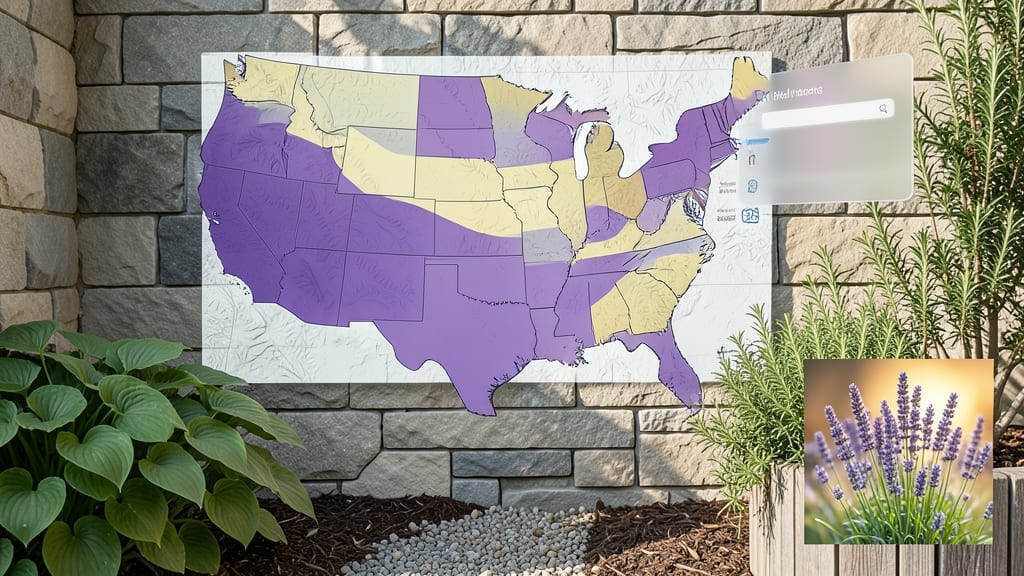
To find your garden zone map by zip code, use the USDA's interactive tool to identify your Plant Hardiness Zone, which shows which plants will survive winter in your area. This zone number helps you choose cold-hardy species that match your local frost patterns and temperature averages.
Your Plant Hardiness Zone isn't just a number—it's the foundation for successful gardening. 🌱 The USDA system divides the country into 13 zones (1-13) based on average annual minimum temperatures, with each zone further split into 'a' and 'b' subzones for precision.
For example, my Zone 7b in the Midwest handles winters down to 0°F to 5°F, while coastal Zone 9a in California rarely drops below 20°F to 25°F. This explains why a peony thrives in my yard but would freeze in a Zone 5 garden.
The interactive map accounts for microclimates too, so your backyard might actually be one zone warmer than the official zip code reading if it's near a south-facing wall or body of water.
The beauty of this system is how it simplifies plant selection.
Instead of guessing whether your azaleas will survive winter, you can cross-reference your zone with a plant's hardiness range (like Zone 5-9 for hydrangeas) to make confident choices. 💫 The USDA updates their map every 10 years to reflect climate shifts—so what was Zone 6 in 2012 might now be Zone 7 in your area.
For exact planting times, combine your zone with your first and last frost dates, which vary even within the same zip code.
💡 In This Article
- How USDA Plant Hardiness Zones Define Your Gardening Limits
- Tools to Look Up Your Zone by Zip Code Instantly
How USDA plant hardiness zones define your gardening limits
The USDA Plant Hardiness Zone system organizes North America into 13 main zones based on the average annual minimum temperature your area experiences. Each zone represents a 10°F range, with subzones 'a' and 'b' adding 5°F precision.
For instance, Zone 5b (-15°F to -10°F) is colder than Zone 6a (-10°F to -5°F), which explains why a Zone 5 perennial like coneflowers might struggle in Zone 4 but thrive in Zone 6. This temperature baseline determines which plants can survive winter dormancy in your climate.
What makes this system so powerful is how it accounts for microclimates—small areas with unique conditions. A south-facing slope might be 2-5°F warmer than the official zone reading, while a low-lying valley could be 3°F colder.
Urban areas often experience the "urban heat island" effect, pushing zones up by 1-2 degrees compared to rural surroundings. 🌡️ The USDA map now includes overlays showing these variations, so you can adjust your planting choices based on your specific yard conditions rather than just your zip code.
The zones also reflect frost-free days, which directly impact planting schedules. In Zone 8 (10°F to 15°F), you might have 240 frost-free days, allowing for longer growing seasons and tropical plants like bougainvillea.
Meanwhile, Zone 3 (below -30°F) gardens face only 90 frost-free days, limiting options to hardy perennials like Russian sage. This explains why a Zone 9 tomato (like Celebrity) won't survive Zone 4 winters, but a Zone 3 variety (like Glacier) will.
Climate change is reshaping these zones faster than you might think. Since the 1990 update, many areas have shifted one full zone warmer—what was Zone 6 in 2000 might now be Zone 7.
The USDA's 2023 map reflects these changes, showing how Zone 5 now covers 12% less area than before. This shift means plants that once struggled in your area (like hydrangeas in Zone 5) may now thrive without winter protection.
However, sudden cold snaps can still damage tender plants, so always verify with local frost date records.
Here's how to use this knowledge practically: If you're in Zone 6b (-5°F to 0°F), avoid planting Zone 8+ plants without winter protection. Instead, choose Zone 4-7 varieties for reliability. For example, Daylilies (Zone 3-9) are safer than Oleanders (Zone 9-11).
The zone system also helps with container gardening—if you bring pots indoors in winter, you can grow Zone 9 plants even in Zone 5 climates.
For advanced gardeners, consider heat zone maps (like the American Horticultural Society's system), which complement hardiness zones by showing summer temperature extremes.
This dual approach helps you select plants that thrive in both your winter lows and summer highs. 🌿 For instance, a Zone 7 garden might need Heat Zone 6-7 plants to avoid wilting in 95°F+ summers.