
Plants
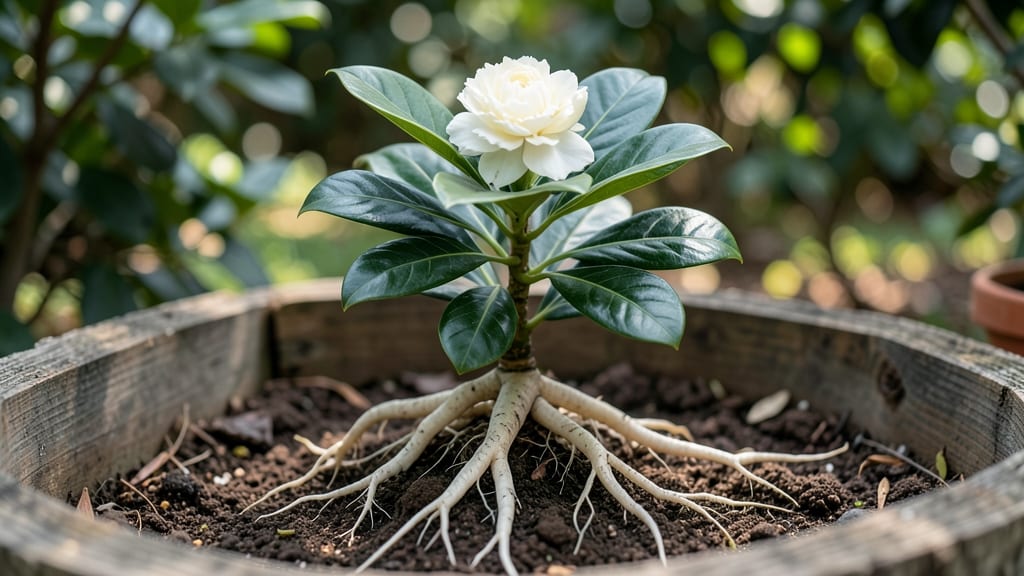
The gardenia root system grows as a delicate, fibrous network that spreads horizontally 2–3 feet wide while staying shallow at just 12–18 inches deep. This shallow spread maximizes fragrance production by staying close to the soil surface where warm air circulates, but it demands loose, acidic soil and consistent moisture to prevent stress or root rot.
The gardenia's shallow, fibrous roots create a dense mat that absorbs nutrients and water efficiently, which is why they thrive in well-draining, slightly acidic soil. 🌱 Unlike deep taproots, these roots prioritize surface-level growth to support the plant's heavy blooms and signature scent.
This makes gardenias particularly sensitive to soil compaction—their delicate roots can suffocate if the ground becomes too dense, leading to poor flowering. I always recommend amending planting areas with organic matter like compost or peat moss to keep roots happy and fragrant.
For container gardeners, this shallow root system means choosing pots with at least 12-inch depth and wide drainage holes. The roots also hate drying out, so I keep my gardenias on a moisture schedule—watering when the top inch of soil feels dry but never letting them sit in soggy conditions.
Mulching with pine bark helps maintain that ideal acidic environment while protecting roots from temperature swings.
💡 In This Article
- Gardenia Root Structure: Fibrous vs Taproot Dynamics
- Soil and Care Tips for Healthy Gardenia Roots
Gardenia root structure: fibrous vs taproot dynamics
Gardenia roots grow shallow because they prioritize surface-level aeration and nutrient exchange over deep penetration. Unlike taproot systems (like carrots or dandelions), which send one main root deep for stability, gardenias develop a dense, fibrous network within the top 12-18 inches of soil.
This design allows them to quickly access moisture and organic matter near the surface while maximizing fragrance production through specialized root hairs that release volatile compounds into the air.
The fibrous nature means each root is thin (typically 1-3mm in diameter) but abundant—up to 500 roots per square foot in mature plants. This density creates a sponge-like structure that absorbs water efficiently but also makes them vulnerable to compaction.
When soil becomes dense, oxygen can't reach the roots, causing them to suffocate and reducing bloom quality. 🌿 The trade-off is clear: shallow roots mean more blooms (and fragrance) but require perfect soil conditions to thrive.
Fragrance intensity is directly linked to root health. Gardenias produce their signature scent through a process called volatile organic compound (VOC) emission, which occurs most actively in warm, well-aerated soil.
The fibrous roots act like tiny pipes, channeling water and nutrients to the plant's metabolic centers where these aromatic compounds are synthesized. In contrast, taproot plants (like roses) often have deeper scent production zones, but gardenias' surface-level growth makes them more sensitive to environmental changes.
Consider how this compares to other tropical plants: orchids also have shallow, fibrous roots that rely on humidity and air circulation, while rubber trees develop deep taproots for structural support. The key difference is that gardenias need both surface-level nutrients AND protection from drying out—hence why mulching is critical.
Their root system is essentially a compromise between maximizing fragrance output and surviving in humid, tropical conditions where deep roots would be unnecessary.
One fascinating adaptation is their ability to form mycorrhizal associations with beneficial fungi in the soil. These fungal networks extend the gardenia's reach for nutrients, acting like an invisible root extension.
The fungi get sugars from the plant, while the gardenia gains enhanced water and mineral absorption—especially phosphorus, which is crucial for flower development. This symbiotic relationship explains why gardenias often thrive in slightly acidic soils (pH 5.5-6.5), where these fungi are most active.
For gardeners, this means avoiding heavy, clay soils that would smother these delicate roots. Instead, aim for a loamy, humus-rich mix with 30-40% organic matter to keep roots happy.
The fibrous structure also means they recover poorly from transplant shock—always water thoroughly before and after moving plants to minimize root damage. 🌱