
Tools
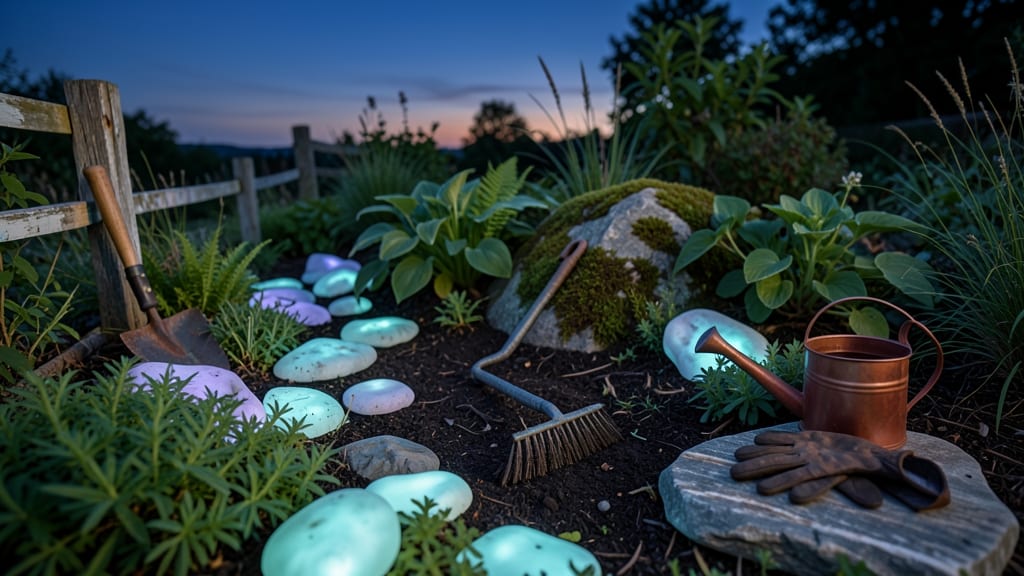
Glow in the dark stones for garden create magical nighttime lighting by soaking up sunlight during the day and glowing softly for hours afterward. Opt for high-quality UV-reactive stones, position them in well-trafficked garden areas, and give them at least 6+ hours of direct sunlight daily to maintain their brightness and durability.
These phosphorescent garden stones work by converting ultraviolet light into stored energy, which they release as a gentle glow when darkness falls. 💫 The best ones contain strontium aluminate, a compound that ensures longer-lasting illumination—some can shine for up to 12 hours after a full day of sunlight.
Unlike artificial lights, they require no electricity, making them eco-friendly and low-maintenance. For maximum effect, place them along pathways, near seating areas, or along borders where their soft light will enhance safety and ambiance.
To keep them glowing their brightest, avoid exposing them to water or moisture, which can dull the surface. After heavy rain or prolonged cloudy weather, simply return them to sunlight for a few hours to recharge.
Grouping stones together also amplifies their glow, creating brighter focal points in your garden. With proper care, these stones can last for years, providing a hassle-free way to illuminate your outdoor space.
💡 In This Article
- How UV-Reactive Garden Stones Work for Nighttime Illumination
- Strategic Placement and Maintenance for Long-Lasting Glow
How UV-reactive garden stones work for nighttime illumination
UV-reactive garden stones harness a fascinating chemical process called photoluminescence. When exposed to sunlight, their core material—typically strontium aluminate—absorbs ultraviolet (UV) rays, which excite electrons in the compound. These energized electrons then jump to higher energy states before gradually releasing that energy as visible light over time.
The best stones can store enough energy from just 6-8 hours of direct sunlight to glow for 8-12 hours afterward, depending on the stone's quality and formulation.
The key difference between sunlight and artificial light lies in the UV spectrum. Sunlight contains natural UV rays (specifically UVA and UVB), which are essential for fully charging the stones. Standard indoor lighting or even LED bulbs lack sufficient UV output to properly energize the phosphorescent compounds.
For example, a stone exposed to 6 hours of midday sunlight will glow about 30-50% brighter than one charged under fluorescent lighting for the same duration. This is why positioning stones in sunny spots—like south-facing garden beds or near reflective surfaces—maximizes their performance.
Stone quality directly impacts glow duration and brightness. Premium stones use high-purity strontium aluminate with additives like europium or dysprosium, which enhance the glow's intensity and longevity. Budget options may use zinc sulfide, which produces a dimmer, shorter-lasting glow (often 2-4 hours vs. 8-12 hours).
The texture also matters: smoother stones reflect more light, while rougher surfaces scatter it, creating a softer, ambient effect. For instance, a 2-inch diameter stone with a polished finish can illuminate a 3-foot radius effectively, while a textured one might cover 5 feet but with less brightness.
Temperature plays a subtle but important role in performance. Cooler conditions (50-70°F) preserve the stored energy longer, while heat (above 85°F) can cause the glow to fade faster. This is why stones placed near heat sources—like patios with hot pavers—may require more frequent recharging.
Additionally, moisture weakens the phosphorescent coating over time. Even a light rain can reduce glow intensity by 15-25% if the stones aren't dried and recharged promptly. This is why waterproof sealing (like a clear polyurethane coat) is recommended for outdoor use.
Consider the glow color when selecting stones, as it affects ambiance. Blue and green phosphors (common in garden stones) create a cool, serene effect, while yellow or orange tones add warmth. The color isn't just aesthetic—it's tied to the compound's chemical structure.
For example, copper-activated zinc sulfide produces green glow, while europium-doped strontium aluminate yields blue. Pairing stones with complementary colors (e.g., blue near water features, green along pathways) can enhance your garden's nighttime visual appeal while maintaining a cohesive look.
For DIY enthusiasts, you can even create custom glow patterns by arranging stones in geometric designs or along garden edges. The human eye perceives grouped stones as a single light source, so placing 3-5 stones in a cluster creates a brighter focal point than individual stones.
Just ensure they're spaced 6-12 inches apart to avoid overlapping glow zones, which can reduce overall brightness. 💫