
Size
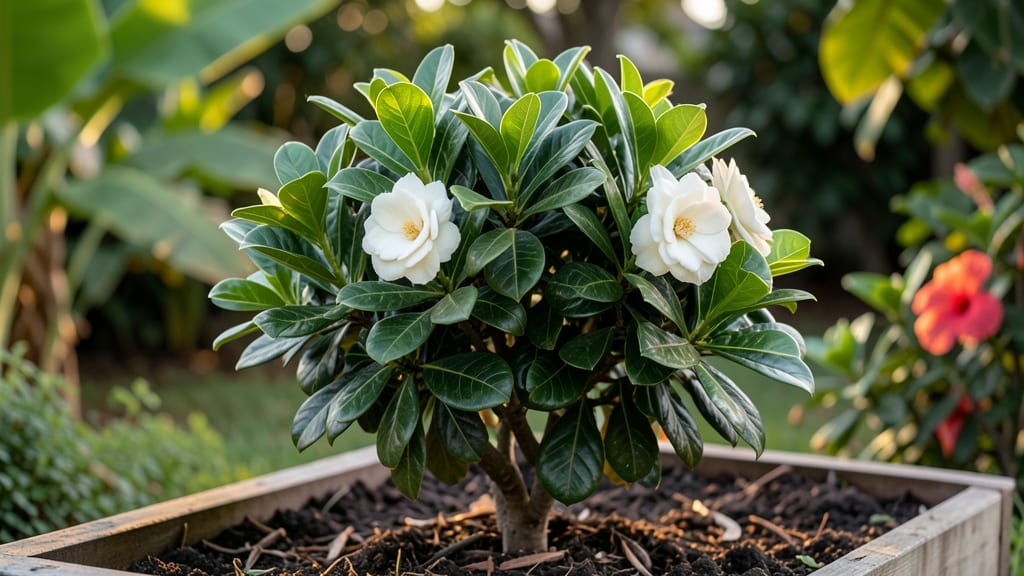
Gardenias grow to heights of 2 to 6 feet depending on the variety and care, so your space planning starts with knowing exactly which type you’re bringing home.
Picture this: a 3-foot-tall gardenia 🌸 spilling over a patio planter, its creamy blooms filling the air with perfume, or a 6-foot shrub lining your garden path like a fragrant hedge.
The difference? Variety, pruning, and sunlight exposure—all factors you can control to keep your gardenia at the perfect size for your yard.
Some gardenias, like the classic Gardenia jasminoides, mature as medium-height shrubs (4–6 feet), while dwarf varieties like 'Radicans' stay compact at 2–3 feet. If you’re working with limited space, you’ll want to focus on the smaller types—or learn how strategic pruning can keep even larger varieties in check.
Below, I’ll break down the exact height ranges for popular gardenias, how to manage their growth, and which varieties thrive best in containers, small gardens, or as bold landscape focal points.


Gardenia height ranges by variety: small, medium, and large options
When choosing gardenias for your landscape, size is one of the first considerations—and it varies wildly between varieties. The most common species, Gardenia jasminoides, typically grows as a 4-6-foot shrub, but some varieties stay under 2 feet while others can reach 10 feet with proper care.
Understanding these ranges helps you select the perfect gardenia for your space, whether it’s a container patio or a privacy hedge.
Gardenias also differ in growth habits: some stay compact and bushy, while others develop tall, leggy stems. The G. radicans variety, for example, naturally grows as a trailing vine up to 12 feet, making it ideal for trellises or vertical gardens.
Meanwhile, dwarf varieties like 'Kleim’s Hardy' max out at just 2-3 feet, perfect for small gardens or pots.
Here’s a quick reference for the most popular gardenia varieties, organized by size category to help you visualize their mature dimensions:
If you’re working with limited space, focus on dwarf or semi-dwarf varieties like 'Kleim’s Hardy' or 'Fortuniana'. These stay under 5 feet and thrive in containers or small garden beds. For larger landscapes, varieties like 'Veitchii' or 'Radicans' create stunning vertical accents or privacy barriers.
One key factor influencing height is pruning habits. Gardenias respond well to light pruning after flowering to encourage denser growth, but avoid heavy cuts, which can stunt new blooms.
In warmer climates (USDA Zones 8–11), gardenias grow faster and taller, while cooler zones may limit their height to 3–4 feet.
For container gardening, choose compact varieties and prune regularly to maintain shape. A 5-gallon pot works well for 'Kleim’s Hardy', while larger containers (15+ gallons) accommodate standard shrubs like 'Mystery'. Always use well-draining, acidic soil (pH 5.0–6.0) to support healthy growth.
Pro tip: If you love the fragrance and blooms but want a smaller plant, consider root pruning during repotting. This encourages a bushier, more compact habit while keeping the plant manageable. Just be sure to water consistently—gardenias hate drying out!
Whether you’re planning a romantic garden bed or a fragrant patio display, picking the right gardenia variety ensures your space stays scented, lush, and perfectly sized. Start with the chart above, then adjust for your climate and care routine to get the best results.
🌿
How pruning and care affect gardenia growth size
Pruning and care are the secret weapons for controlling your gardenia’s height and shape. Without proper guidance, these tropical beauties can grow wildly unruly, reaching heights of 6 feet or more—or worse, become leggy and sparse.
The key lies in understanding when and how to prune, along with optimizing their growing conditions for compact, bushy growth.
For most gardenia varieties like Gardenia jasminoides, regular pruning keeps them between 3-5 feet tall, making them perfect for foundation plantings or patio containers. But prune too much or too little, and you risk stunted blooms or overgrowth that crowds out sunlight for neighboring plants.
Let’s break down the essential techniques and care tips to keep your gardenia at your desired height.
⚠️ Pruning Mistakes That Stunt or Overgrow Gardenias
- Over-pruning: Cutting back more than 1/3 of new growth can shock the plant, leading to fewer blooms and weak stems.
- Pruning at wrong time: Trimming after June removes flower buds for the next season.
- Ignoring soil pH: Gardenias need acidic soil (pH 5.0-6.0)—alkaline soil causes yellow leaves and stunted growth.
- Inconsistent sunlight: Too much direct afternoon sun scorches leaves, while too little light weakens stems.
Fix these issues early to maintain healthy, bloom-rich gardenias at your ideal height.
Start with shaping pruning in early spring, just as new growth begins. Remove dead or crossing branches first, then trim back any overgrown stems to maintain your desired shape.
Use clean, sharp bypass pruners to make cuts just above a leaf node or bud, angled slightly downward to prevent water pooling.
For rejuvenation pruning, which is best for older gardenias that have become leggy, cut back 1/3 of the oldest stems to the ground in late winter or early spring.
This encourages new, bushier growth from the base. Just avoid heavy pruning in summer or fall, as it can delay blooming for the next season.
Sunlight exposure plays a huge role in controlling height. Gardenias thrive in partial shade (4-6 hours of morning sun), which promotes compact growth and vibrant blooms. Too much direct afternoon sun can cause the plant to stretch toward the shade, leading to taller, weaker stems.
If your gardenia starts reaching for the sky, consider moving it to a shadier spot or adding a light-colored shade cloth.
Soil pH is another critical factor. Gardenias are acid-loving plants and perform best in soil with a pH of 5.0-6.0.
Test your soil annually and amend it with peat moss or sulfur if it’s too alkaline. Yellow leaves are a classic sign of alkaline stress, and if left unchecked, this can lead to stunted growth and poor flowering.
Pair this with a balanced acid-loving fertilizer (like 8-3-9 NPK) every 4-6 weeks during growing season.
Finally, avoid the temptation to over-fertilize, especially with nitrogen-heavy products. Too much nitrogen promotes leafy growth at the expense of flowers, making your gardenia look lush but bloom-sparse.
Stick to a low-nitrogen, high-phosphorus fertilizer to encourage healthy blooms and controlled height. With the right care, your gardenia will stay bushy, fragrant, and perfectly sized for your garden. 🌸