
How To
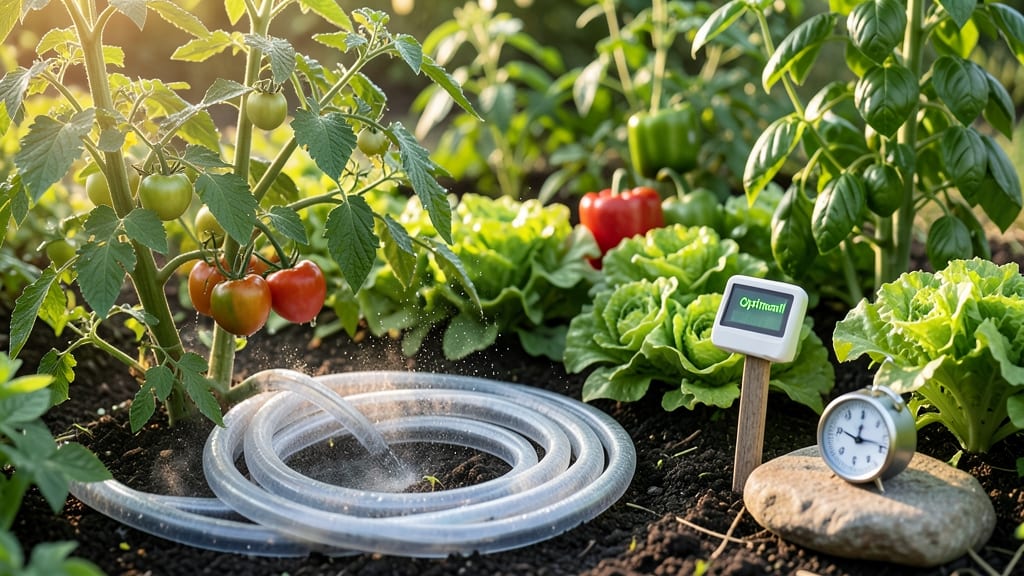
Leaving your soaker hose on the vegetable garden for the right amount of time is the difference between thriving 🥬 plants and wasted water.
Struggling to balance overwatering and underwatering? Mastering soaker hose timing is the key to lush, thriving plants without wasted water or root rot.
Most vegetable gardens need a deep soak that wets the soil 6-12 inches down, which typically takes 30 minutes to 2 hours depending on soil type and weather.
Below, I break down how to adjust timing for different vegetables, seasonal shifts, and the telltale signs your garden is getting too much—or too little—water.
Optimal soaker hose run times by plant type and soil conditions
Getting your soaker hose timing right is the difference between thriving vegetables and wasted water. Unlike overhead sprinklers, soaker hoses deliver water directly to the root zone, but duration matters—especially when balancing leafy greens that need frequent moisture with root crops that prefer deeper, less frequent watering.
The key? Adjusting run times based on soil type, seasonal heat, and plant maturity.
For example, sandy soil drains quickly, requiring shorter soaker hose runs (15–30 minutes), while clay soil holds moisture longer, often needing just 10–20 minutes. Summer heat can double these times, but winter might cut them in half.
Let’s break down the science-backed durations to keep your garden hydrated without drowning.
| Plant Type | Soil Type | Season | Soaker Hose Run Time | Notes |
|---|---|---|---|---|
| Leafy Greens (Lettuce, Spinach, Kale) | Sandy | Summer | 30–45 minutes | High evaporation; water early morning. |
| Leafy Greens | Clay | Summer | 20–30 minutes | Retains moisture; monitor for soggy soil. |
| Root Crops (Carrots, Radishes, Beets) | Sandy | Summer | 20–30 minutes | Deep watering encourages root growth. |
| Root Crops | Clay | Summer | 15–20 minutes | Avoid waterlogging; space waterings. |
| Tomatoes, Peppers, Cucumbers | Loamy | Summer | 45–60 minutes | Deep roots need consistent moisture. |
| All Vegetables | Any | Winter | 10–20 minutes | Reduced evaporation; water less frequently. |
Leafy greens like lettuce and spinach thrive with frequent, shallow watering—aim for 30–45 minutes in sandy soil during summer, but cut back to 15–25 minutes in clay. These plants have shallow roots and need consistent moisture to prevent bolting (going to seed prematurely).
Use a moisture meter to check if the top 1–2 inches of soil stays damp but not soggy.
Root crops like carrots and radishes, on the other hand, prefer deeper, less frequent watering. In sandy soil, run your soaker hose for 20–30 minutes to encourage roots to grow downward. In clay soil, 15–20 minutes is often enough—overwatering can cause roots to split or rot.
Pay attention to the soil’s structure: if it cracks easily, it’s too dry; if it stays clumpy, it’s overwatered.
For tomatoes, peppers, and cucumbers, which have deep root systems, longer soaker hose runs are
5 Key signs your vegetable garden needs more (or less) soaker hose time
Your vegetable garden is like a fine-tuned orchestra—too much or too little soaker hose time throws everything off balance. I’ve learned the hard way that ignoring these subtle cues can mean wilted lettuce one day and mushy tomatoes the next.
The key is reading your plants and soil like a pro, and I’m here to break it down into simple, actionable signs.
First, pay attention to the soil moisture at your fingertips. Stick your finger about an inch into the soil near your plants. If it feels bone-dry, your soaker hose needs more time—aim for 30-60 minutes depending on soil type.
But if it’s soggy and cool, you’re overdoing it. Clay soil holds moisture longer, while sandy soil drains faster, so adjust accordingly.
🌱 Numbered Highlights: Soaker Hose Time Adjustments
- 💧 1. Soil Test: Finger-test soil—dry at 1" depth? Run hose 15-30 mins longer.
- 🌿 2. Wilting Leaves: Midday droop? Add 20-40 mins to watering (avoid evening watering).
- 🪴 3. Root Exposure: Roots showing? Reduce time by 10-20 mins to prevent erosion.
- ☀️ 4. Weather Shift: Sudden heatwave? Extend by 30-60 mins daily; rain? Skip or cut time in half.
- 🌱 5. Plant Type: Leafy greens (e.g., lettuce) need shorter runs; root veggies (e.g., carrots) tolerate longer soaks.
Next, watch for wilting patterns in your plants. If leaves droop by midday but perk up in the evening, your garden is thirsty. For leafy greens like spinach or kale, I recommend running the soaker hose for 20-30 minutes daily during hot spells.
But if your tomatoes or peppers show crispy edges, you’re likely underwatering—extend the hose time by 15-20 minutes.
Another red flag is root exposure. If you notice roots poking through the soil surface after watering, your soaker hose is running too long or with too high pressure. This can lead to root rot or erosion.
In this case, reduce the watering time by 10-20 minutes or lower the hose pressure. Mulching around plants can also help retain moisture without overwatering.
Don’t ignore the weather forecast—it’s your best friend when adjusting soaker hose time. During drought conditions, I double the usual duration (e.g., 45-60 minutes for most vegetables) and water in the early morning to minimize evaporation.
After heavy rain, skip the soaker hose entirely or cut the time in half to avoid waterlogged soil, which can suffocate roots.
Finally, tailor your approach to plant types. Shallow-rooted plants like lettuce or radishes need frequent, shorter watering sessions (15-20 minutes), while deep-rooted crops such as carrots or potatoes benefit from longer, deeper soaks (30-45 minutes).
Pro tip: Group plants with similar water needs together in your garden layout to streamline soaker hose management.
Mastering soaker hose timing is all about observation and flexibility. Start with these five signs, and soon you’ll have a thriving vegetable garden that’s neither parched nor drowned—just perfectly hydrated. Happy gardening! 🌱