
Light Requirements
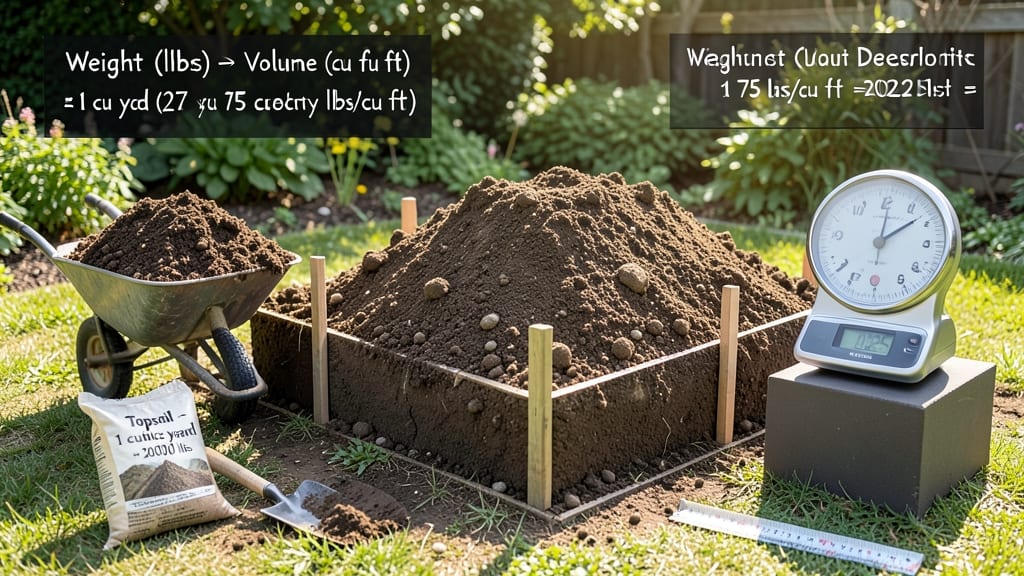
A yard of garden soil weighs between 1,800 to 2,200 pounds, depending on moisture levels and soil composition—sandy mixes hover around 1,800 lbs, while dense clay or loamy blends can approach 2,300 lbs. Always double-check with suppliers for exact figures before planning transport or storage.
A yard of garden soil's weight isn't just about volume—it's a science of density. 🌱 Sandy soils pack lighter because their particles are loose, while clay soils hold moisture like a sponge, adding hundreds of pounds.
I've seen projects go wrong when people assume all soil weighs the same: a truck that handles 2,000 lbs of sandy topsoil might struggle with clay-heavy mixes. Even moisture plays tricks—wet soil can weigh up to 30% more than dry!
For practical planning, I recommend weighing a small sample first if you're unsure. Many suppliers offer weight estimates per bag or bulk load, but real-world conditions (like compaction) can shift numbers.
If you're working with heavy soils, consider lightweight alternatives like compost blends or coco coir for container gardening—they cut weight without sacrificing nutrients.
💡 In This Article
- Factors Affecting Garden Soil Weight per Cubic Yard
- Practical Tips for Estimating and Handling Soil Weight
Factors affecting garden soil weight per cubic yard
The weight of a cubic yard of garden soil isn't fixed—it's determined by three key factors: particle density, moisture content, and organic matter percentage. Sandy soils, with their large, loosely packed particles, typically weigh around 1,800 pounds per cubic yard because air fills the gaps between grains.
In contrast, clay soils contain tiny, tightly packed particles that trap moisture, pushing their weight toward 2,300 pounds or more. 🌱 This difference is why a wheelbarrow of sandy soil feels light compared to clay-heavy mixes.
Moisture content can swing the weight by 30% or more. A cubic yard of dry sandy soil might weigh 1,800 pounds, but when saturated, it can balloon to 2,300 pounds—that's the weight of a small car! Organic matter like compost or peat moss adds even more variability.
Pure peat moss, with its high water-holding capacity, can weigh 1,500-1,800 pounds dry but over 2,500 pounds when wet. This is why suppliers often specify "dry weight" for bulk orders.
Compaction plays a hidden role too. Loose, freshly tilled soil weighs less than packed soil because air pockets reduce density. For example, a cubic yard of loose topsoil might weigh 2,000 pounds, but after being driven over or settled, it could reach 2,400 pounds.
This is why gardeners often overestimate their needs—what looks like a full truck bed might actually be 20% less than a cubic yard once settled. 💫
Particle size distribution (texture) creates another layer of complexity. Loamy soils—ideal for gardening—balance sand, silt, and clay, typically weighing 2,000-2,200 pounds per cubic yard. But add 10% organic matter, and the weight jumps closer to 2,300 pounds.
The USDA Soil Texture Triangle helps visualize this: move from sand (light) to clay (heavy) along the triangle, and you're tracking weight increases too.
Real-world example: A 10' x 10' x 12" raised bed (0.67 cubic yards) filled with sandy soil would weigh about 1,200 pounds, while the same bed with clay soil could exceed 1,500 pounds.
This is why heavy soils require reinforced beds or frequent turning to prevent compaction. For container gardens, lightweight mixes like 50% coco coir + 50% perlite can cut weight by 40% while maintaining drainage.
Understanding these factors helps avoid costly mistakes. I once saw a gardener order 5 cubic yards of clay soil for a project, only to realize their truck could only handle 3 cubic yards safely.
The extra weight strained the suspension and required multiple trips. Always confirm with your supplier about moisture conditions—wet soil can turn a manageable load into a dangerous one. ✨