
Light Requirements
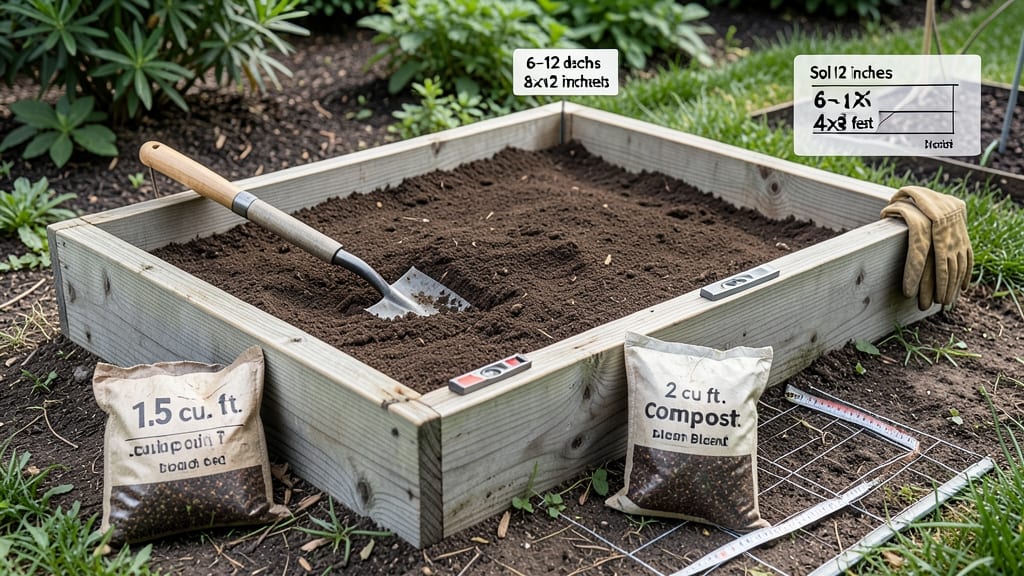
To determine how much soil you need for a raised garden bed, multiply the bed's length, width, and depth (all in feet), then add 10% extra to account for soil settling. For example, a 4-foot by 8-foot bed filled 1 foot deep needs about 32 cubic feet of soil, or roughly 1.2 cubic yards. Remember to adjust for deeper beds or heavier soil types like clay.
Figuring out soil volume isn't just about measurements—it's about creating the perfect growing environment. 🌱 A standard 12-inch deep bed gives roots plenty of room while preventing waterlogging, but deeper beds (18+ inches) may need 20% extra soil to compensate for compaction.
I always recommend testing your soil's drainage first; if it stays soggy, mix in perlite or sand to improve airflow. Pre-mixed raised bed soil often includes compost and nutrients, but blending your own (like 60% topsoil, 30% compost, and 10% perlite) gives you full control over fertility and texture.
Pro tip: Buy soil in bulk bags (often sold by the cubic yard) and verify the total volume before purchasing. A 4x8-foot bed at 18 inches deep jumps to about 48 cubic feet—nearly double the 12-inch version.
Heavy clay soils can require even more adjustments, so don't skimp on the extra 10-20%. Your plants will thank you with stronger roots and better yields!
💡 In This Article
- Calculating Soil Volume for Raised Garden Beds
- Best Soil Types and Mixes for Raised Garden Beds
Calculating soil volume for raised garden beds
The core calculation for soil volume uses simple geometry: multiply your bed's length, width, and depth (all converted to feet) to get cubic feet. For example, a 4-foot by 8-foot bed filled 1 foot deep (12 inches) equals 32 cubic feet of soil.
This works because volume = length × width × depth, and feet measurements keep the math straightforward. 🔥 The key is consistency—always measure in the same unit (feet) to avoid errors.
Depth matters more than most gardeners realize. A standard 12-inch depth provides enough root space for most vegetables, but deeper beds (18+ inches) support larger plants like tomatoes or corn. The trade-off? Deeper beds require 20% more soil due to compaction.
For instance, that same 4×8 bed at 18 inches deep jumps to 48 cubic feet—nearly double the volume. Always factor in your plants' mature root zones when planning.
Soil settling is the sneaky factor that trips up beginners. Organic materials like compost compress over time, reducing volume by 10-20%. To compensate, add extra soil upfront. For our 32 cubic feet example, buy 36 cubic feet (or 1.3 cubic yards) to account for settling.
Heavy clay soils settle even more, so err on the side of generosity—especially in northern climates where freezing/thawing cycles accelerate compaction. 💫
Here's a practical breakdown for common bed sizes:
- 4'x8' bed at 12" deep: 32 cu ft (1.2 cu yd)
- 4'x8' bed at 18" deep: 48 cu ft (1.8 cu yd)
- 8'x4' bed at 12" deep: 32 cu ft (same as above)
- Custom 6'x6' bed at 18" deep: 64.8 cu ft (2.4 cu yd)
Pro tip: Use a soil calculator tool to visualize adjustments. Many online calculators let you input dimensions and instantly see cubic feet/yards while accounting for settling.
This saves time and prevents costly over- or under-purchasing. For DIYers, mark your bed's interior dimensions precisely—wall thickness (usually 1-2 inches) reduces usable soil volume. ✨
Remember: The goal isn't just filling space—it's creating a fertile, well-draining environment. A properly calculated volume ensures your plants have the ideal mix of nutrients and aeration without waterlogging.
Test your soil's drainage before filling: If water pools after 30 minutes, add perlite or coarse sand to improve structure. 🌱