
Watering
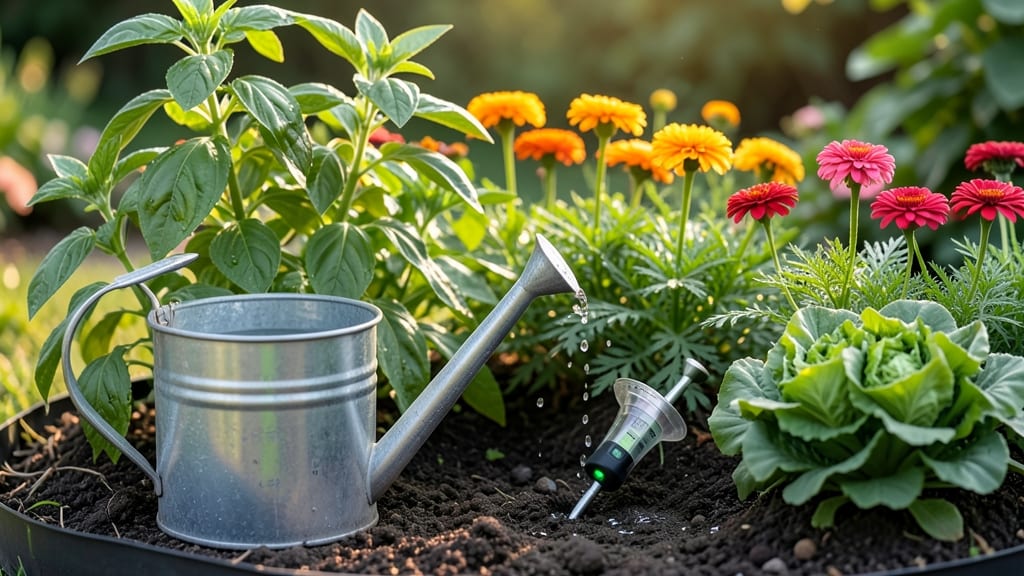
A garden needs how much water does a garden need per day—but that’s just the starting point. Too little and you’re watching your plants wilt; too much and you’re drowning roots.
Wondering why your garden thrives one season but wilts the next? The secret isn’t just when you water—it’s how much. Overwatering drowns roots, while underwatering stresses plants, but science reveals exact daily water needs for every plant type.
Climate, soil type, and plant variety all play a role—sun-loving tomatoes need more than shade-tolerant herbs, and sandy soil drains faster than clay. Here’s how to calculate the perfect amount for your 🌱 garden, no guesswork required.
You’ll learn how to read your soil, adjust for heatwaves, and even automate watering for efficiency. Let’s get your garden thriving with the right balance.
Daily water requirements by plant type: a science-backed breakdown
Watering your garden isn’t about guessing—it’s about understanding each plant’s unique needs. Vegetables like tomatoes and peppers crave 1-2 inches of water daily during peak summer, while herbs like rosemary thrive with just ½ inch every 2-3 days.
The key? Soil type and evaporation rates change everything. Sandy soil drains fast, while clay holds moisture longer, so adjust accordingly.
Climate plays a huge role too. In Zone 6a, where many gardeners live, summer afternoons can evaporate ¼ inch of water per hour. That means your morning watering needs to be deeper to compensate.
Even seasonal shifts matter—spring showers reduce needs, while winter dormancy cuts water by 70-80% for most plants.
Here’s the science: Plants absorb water through their root zone, which extends 6-12 inches deep for most annuals. A simple formula helps: Depth × Frequency = Total Water.
For example, a 1-inch-deep watering every 3 days equals 3 inches weekly, perfect for leafy greens like lettuce or spinach.
🌱
Let’s break down the calculator formula I use to avoid over/under-watering. Start by measuring your garden’s square footage, then multiply by your plant’s water rate.
For example, a 10 sqft bed of basil needs ½ inch daily in summer: 10 sqft × 0.5 inches = 5 gallons weekly. Adjust for rainfall—subtract ¼ inch for every 0.1 inches of rain.
Container gardens need extra attention. Potted plants dry out 3x faster than in-ground ones because their roots can’t spread. A 5-gallon pot may need 1-2 cups of water daily in summer, while a 1-gallon herb pot might only need ½ cup every 2 days.
Always check soil moisture 1 inch deep before watering—if it’s dry, it’s time.
Seasonal tweaks are critical. In spring, focus on deep soaks to encourage root growth, while fall watering should taper off as temps drop. Winter watering is minimal—just enough to prevent soil from freezing. Even evergreens like boxwoods only need ¼ inch weekly in dormancy.
Pro tip: Use a rain gauge or tensiometer to track moisture levels. These tools measure soil tension, telling you exactly when roots need hydration. For most gardens, morning watering between 6-9 AM minimizes evaporation and fungal risks. Avoid evening watering—wet foliage overnight invites powdery mildew.
Don’t forget mulch! A 2-3 inch layer of straw or wood chips retains 30-50% more moisture by slowing evaporation
How to calculate your garden’s exact water needs (step-by-step)
Calculating your garden’s water needs isn’t guesswork—it’s a science. I’ve learned that 1 inch of water per week is the general rule, but your garden’s actual needs depend on soil type, plant species, and local climate.
For example, sandy soil drains quickly, while clay holds moisture longer. Start by checking your USDA Hardiness Zone—Zone 7+ gardens often need 10-15% more water than cooler zones due to higher evaporation.
Before grabbing your hose, test your soil’s moisture level. The finger test is my go-to method: Stick your index finger 1-2 inches deep into the soil. If it feels dry, it’s time to water.
For precision, invest in a tensiometer ($20-$30), which measures soil moisture tension—ideal for high-value plants like tomatoes or peppers. These tools reveal when roots are actively thirsty versus just slightly dry.
- 1 Measure your garden’s square footage. Multiply length × width (e.g., a 10ft × 10ft bed = 100 sq ft).
-
2
Identify plant water groups. Group plants by needs:
- High-need: Tomatoes, peppers, cucumbers (1.5–2 inches/week)
- Medium-need: Basil, marigolds, zucchini (1–1.5 inches/week)
- Low-need: Lavender, rosemary, succulents (0.5–1 inch/week)
- 3 Adjust for climate. Add 0.25 inches/day in summer for every 10°F above 75°F. For example, at 90°F, add 0.5 inches/day to your total.
- 4 Calculate soil evaporation. Sandy soil loses 20% more water than loam; clay loses 10% less. Multiply your total by 0.8 (clay) or 1.2 (sand).
- 5 Divide by watering sessions. For deep watering (1–2 times/week), split your total. Example: A 100 sq ft bed with high-need plants in 80°F heat needs 2.25 inches/week. Water 1.125 inches twice weekly.
Automate precision with smart irrigation tools. Drip systems with soil moisture sensors (like the Rachio 3) adjust watering based on real-time data. For containers, use self-watering pots with built-in reservoirs—perfect for herbs like thyme or rosemary, which hate soggy roots.
Pro tip: Place a clear jar in your garden during rain to measure how much water your soil absorbs naturally. This helps you adjust your manual watering to avoid overdoing it.
Watch for visual cues to fine-tune your calculations. Wilted leaves that recover after watering? Underwatered. Yellowing leaves with mushy stems? Overwatered. My tomato plants once wilted daily—until I realized they needed morning watering (not evening) to prevent fungal diseases like early blight.
Small tweaks make a huge difference in plant health.
Seasonal adjustments are key. In spring, focus on establishing roots—water deeply but less frequently. By summer, increase frequency but shorten sessions to early morning (before 10 AM) to reduce evaporation. In fall, taper back as daylight fades.
I once killed a blueberry bush by watering it the same amount year-round—until I learned its needs halved in winter. Keep a garden journal to track what works!
Remember, consistency beats quantity. A little water daily is better than a drenching once a week, which encourages shallow roots. For new gardeners, start with the finger test and adjust based on plant responses.
Over time, you’ll develop an intuition for your garden’s unique needs—just like I did after my first sunflower reached 10 feet tall because I finally nailed the watering balance. 🌱