
Size
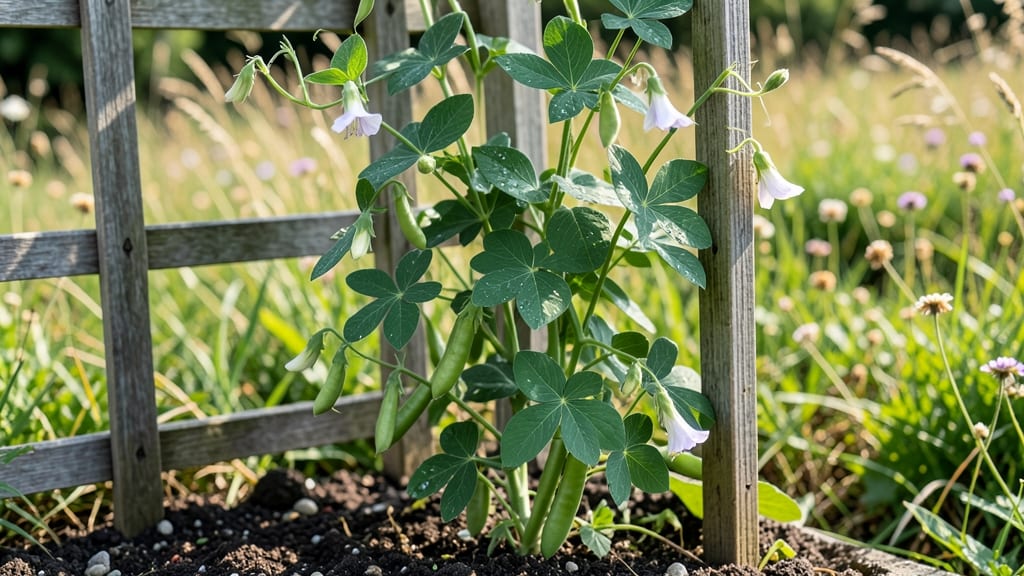
Garden peas grow between 1 and 6 feet tall, depending on the variety you choose—so knowing their mature height is the first step to planning your trellis or support system.
Wondering how much vertical space your garden peas will need? Dwarf varieties like 'Tom Thumb' stay under 2 feet, while climbing types such as 'Sugar Snap' can reach 6 feet or more. Without the right support, those vines will sprawl across your garden, making harvesting a tangled mess.
Beyond variety, soil fertility, sunlight exposure, and proper spacing play a huge role in how tall your peas grow. A well-supported vine in full sun can produce a bountiful harvest, while poor conditions might leave you with stunted plants and fewer pods.
In this guide, I’ll break down the height ranges of common varieties, share tips to maximize growth, and help you choose the perfect trellis setup for your garden.


Garden pea variety heights: from dwarf to towering vines
When planning your garden, knowing how tall garden peas grow helps you choose the right variety and support system. Some peas stay compact, while others climb like vines to 6 feet or more.
The difference often comes down to whether you're growing dwarf, semi-dwarf, or climbing varieties, each with unique space requirements.
Understanding these heights ensures you provide the right trellis height and spacing. A 4-foot trellis might work for dwarf types, but climbing varieties need 6-foot supports to thrive. Let’s break down the most popular pea varieties by height so you can pick the perfect fit for your garden layout.
Dwarf peas, like 'Little Marvel' or 'Tom Thumb', stay under 2 feet tall, making them ideal for containers or small gardens. These varieties don’t need trellises but benefit from light staking to keep vines upright and pods off the ground.
Semi-dwarf varieties, such as 'Doubles' or 'Green Arrow', reach 2–3 feet and work well with 3–4 foot trellises. They’re perfect for balconies or raised beds where vertical space is limited but still valuable.
Climbing peas, including 'Sugar Ann' (sugar snap) or 'Oregon Sugar Pod', can surpass 6 feet if given proper support. These varieties thrive on tall trellises or sturdy fences, maximizing your garden’s vertical real estate while producing higher yields.
For sugar snap peas, a 6-foot trellis is often necessary to support their long, heavy vines. Without adequate support, vines can sprawl, leading to poor air circulation and disease risk.
Meanwhile, snow peas like 'Oregon Sugar Pod' typically need 4–5 feet of height but produce edible pods without the need for thick shells.
If you’re growing shelling peas like 'Wando' or 'Lincoln', expect heights of 4–5 feet. These varieties focus on seed production rather than edible pods, so their trellis needs lean toward medium-height supports to keep vines organized.
Pro tip: Always check the seed packet for exact height expectations, as some varieties can vary slightly. For example, 'Tom Thumb' might stay under 18 inches, while 'Sugar Snap' can easily reach 7 feet with proper care.
When in doubt, opt for a taller trellis—it’s easier to trim excess growth than to wish you’d installed a higher support later. Happy planting! 🌱
How pea vine height affects your trellis and garden layout
Selecting the right trellis height for your garden peas isn't just about aesthetics—it directly impacts yield potential and harvesting ease. Taller varieties need sturdy supports, while dwarf types can thrive in containers or ground beds.
The key is matching your pea variety to the right support structure to avoid tangled vines and maximize productivity.
When planning your garden layout, consider how vine length affects spacing between plants and supports. Climbing varieties (4-6 feet) require taller trellises and wider spacing, while dwarf peas (1-2 feet) need minimal support.
Proper spacing prevents overcrowding, which can reduce airflow and increase disease risk. Let's break down how to optimize your setup based on pea height.
- 🌱 Dwarf varieties (1-2 ft): Ideal for containers or ground beds, no trellis needed
- 🌿 Semi-dwarf varieties (2-3 ft): Require 3-4 ft trellises for full growth potential
- 🪴 Climbing varieties (4-6 ft): Need 6-8 ft trellises or sturdy fences for support
- ✅ Spacing tip: Space dwarf peas 2-3 inches apart; climbing types need 4-6 inches between plants
- 📏 Trellis width: Place supports 18-24 inches apart for optimal vine spread
Taller pea vines produce more pods because they capture more sunlight and benefit from improved airflow. However, if your trellis isn't tall enough, vines will sprawl across the ground, making harvesting difficult and increasing the risk of pest damage or rot.
For example, sugar snap peas like 'Sugar Sprint' (6 feet) need a sturdy 8-foot trellis to reach their full potential, while shelling peas like 'Little Marvel' (2 feet) can thrive without supports.
Another critical factor is vine length distribution. Longer vines produce pods over a more extended period, giving you a longer harvest window. But if your trellis is too short, lower pods may rot from soil contact while upper pods remain underdeveloped.
For continuous harvesting, aim for trellises that are at least 12 inches taller than your tallest variety's mature height.
Don't overlook the role of garden layout in supporting vine growth. Place trellises along fences or garden edges to save space, and orient them to face south for maximum sunlight exposure.
For small gardens, vertical trellises free up ground space for other crops. In larger plots, consider double-row trellises with shared supports to maximize efficiency and reduce material costs.
Remember that soil quality and watering consistency also influence vine height. Well-draining soil with added compost promotes stronger stems, while regular morning watering prevents stress that can stunt growth.
By matching your trellis height to your pea variety and optimizing spacing, you'll create an ideal environment for healthy vines and abundant harvests.