
Watering
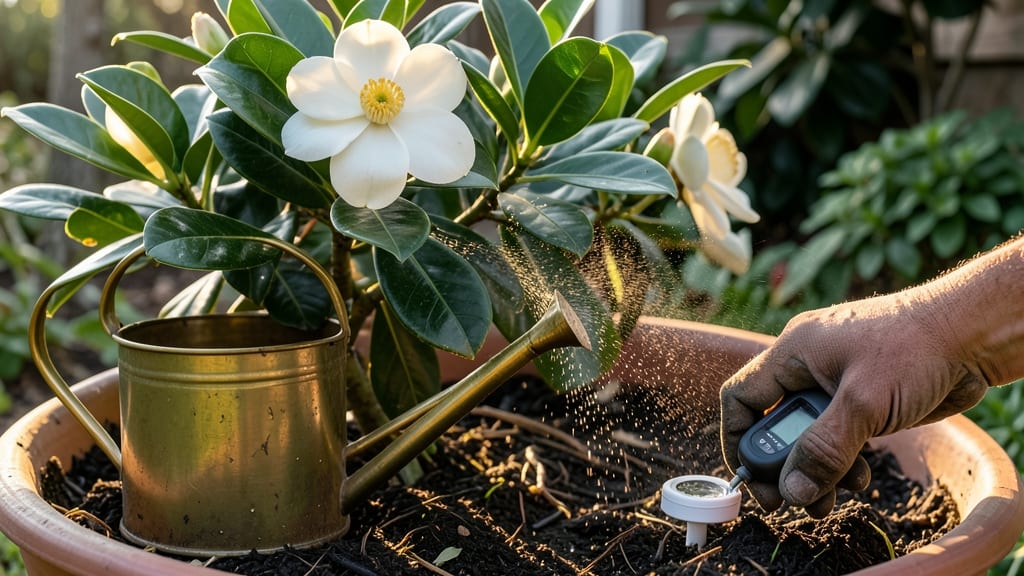
Watering a gardenia plant the right way is the key to those glossy leaves and intoxicating blooms 🌸 — but most gardeners either drown it or leave it high and dry.
Picture this: You’ve spent weeks waiting for buds to open, only for them to drop before they even bloom. Or worse, your gardenia’s leaves turn yellow and mushy from too much love. The truth? Gardenias demand consistent moisture but hate soggy roots.
In this guide, I’ll walk you through the exact watering routine—when to soak, how often to check the soil, and how to tell if you’re overdoing (or underdoing) it. Whether your gardenia lives in a pot or the ground, you’ll learn the tricks to keep it thriving all season long.
From seasonal adjustments to fixing common mistakes, you’ll discover how to give your gardenia the perfect balance of water—no guesswork, just lush, fragrant blooms.
The ideal watering schedule for gardenia plants by season
Gardenia plants thrive on consistency, but their water needs shift dramatically with the seasons. In my Zone 6 garden, I’ve learned that spring and summer demand frequent hydration, while fall and winter require a gentler touch.
The key? Monitoring soil moisture and adjusting based on your local climate. For example, gardenias in hotter zones (8-9) may need daily watering in summer, while those in cooler zones (6-7) can stretch to every 3-4 days.
Start by testing your soil’s moisture level—stick your finger 2 inches deep. If it feels dry, it’s time to water. Overwatering is the #1 killer of gardenias, leading to root rot and dropped buds.
I always water deeply (1-2 gallons per plant) to encourage strong root growth, rather than giving shallow, frequent sips. This method also helps prevent fungal diseases that thrive in damp foliage.
🌸 Seasonal Watering Summary for Gardenias 🌸
| Season | Frequency | Method | Soil Check | Climate Note |
|---|---|---|---|---|
| Spring | Every 2-3 days | Deep watering (1-2 gallons) | 2" deep dry | Increase frequency as temps rise |
| Summer | Daily (early AM) or every other day | Deep soak + light misting (evenings) | 1-2" deep dry | Hotter zones: water more often |
| Fall | Every 3-4 days | Moderate watering (reduce gradually) | Top 1" dry | Prepare for dormancy |
| Winter | Bi-weekly | Light moisture (keep soil barely damp) | Top 1/2" dry | Avoid soggy soil; mulch to retain moisture |
In spring, gardenias wake up from dormancy and need a steady water supply to support new growth and bud formation. I start with every 2-3 days in early spring, then increase to daily as temperatures climb.
Use a soaker hose or drip irrigation to deliver water directly to the roots, minimizing evaporation and fungal risks. Mulching with pine bark or pine needles (to maintain acidic soil) helps retain moisture and regulate soil temperature.
Summer is the most critical season for gardenias, especially in hot, dry climates. My plants in Zone 7 often need watering daily in peak heat, but I always opt for deep watering in the early morning (6-8 AM) to prevent afternoon wilting.
For container gardenias, I water every 1-2 days since pots dry out faster. A quick trick? Place a moisture meter in the pot—if it reads dry, water thoroughly until it drains from the bottom.
As fall arrives, I gradually reduce watering to prepare my gardenias for dormancy. By mid-October, I’m watering only when the top 1 inch of soil feels dry. This slow taper helps prevent root rot during winter.
In cooler zones (6a-7a), you might even reduce to weekly watering if rainfall is consistent. Always avoid wet foliage during fall to prevent fungal diseases like powdery mildew, which thrives in damp, chilly conditions.
Winter care is about minimal moisture. In my garden, I water gardenias bi-weekly or only when the soil surface feels dry. Overwatering in winter can suffocate roots and lead to rot. If you’re in a warmer winter zone (8-9), you might need to water monthly instead.
Always use room-temperature water and avoid ice-cold water from hoses, which can shock the roots. A thick layer of mulch (3-4 inches) insulates the roots and reduces how often you need to water.
One mistake I made early on was overhead watering, which left my gardenias’ leaves damp and prone to fungal spots.
Now, I use a watering wand with a fine mist setting for light hydration on hot days, but I always direct the stream to the soil base, not the foliage. For container gardenias, I’ve switched to self-watering pots with reservoirs, which maintain consistent moisture without the risk of overwatering.
This has cut my summer watering time in half!
Pro tip: Adjust for your microclimate. A gardenia in a south-facing bed will dry out faster than one in a shaded spot. I group my gardenias together and water them as a block to ensure even moisture distribution.
And if you’re unsure whether to water, always check the soil—your gardenia’s health depends on it! 💧
Signs your gardenia is thirsty (or drowned) and how to fix it
Your gardenia’s glossy leaves and fragrant blooms are its pride, but they’re also the first to scream for help when watering goes wrong. Yellowing leaves or drooping buds aren’t just aesthetic issues—they’re your plant’s way of saying, “I’m thirsty!” or “I’m drowning!”
Let’s decode these signals so you can rescue your gardenia before it’s too late.
First, check the soil moisture by sticking your finger 1-2 inches deep. If it feels dry, your gardenia is thirsty. But if it’s soggy, you’ve got a root rot risk. Gardenias hate soggy feet—just like us!—so let’s fix this before it’s too late.
🌸 PROS-CONS BOX: Watering Your Gardenia
DO: The Right Way
- Deep watering (1-2 gallons) once every 2-3 days in warm weather
- Water at morning (6-8 AM) to reduce evaporation and fungal risk
- Use well-draining soil (peat moss + perlite mix) to prevent soggy roots
- Check soil moisture before watering—stick your finger in!
DON'T: Common Mistakes
- Overhead watering (leads to fungal diseases like powdery mildew)
- Watering at night (encourages rot and pests)
- Letting soil stay constantly soggy (root rot in 3-5 days!)
- Ignoring drooping buds or yellow leaves—these are SOS signals!
If your gardenia’s leaves turn yellow or feel mushy, it’s likely overwatered. Pull the plant gently to check for root rot—black, smelly roots are a red flag. Trim the rotten roots with sterilized scissors and repot in fresh, well-draining soil.
Reduce watering to every 5-7 days until it recovers.
On the flip side, if buds drop before opening or leaves feel crispy at the edges, your gardenia is thirsty.
Water deeply until it drains from the bottom, then let the top 1 inch of soil dry before watering again. Mulch around the base to retain moisture—this helps in hot climates where soil dries out fast.
For container gardenias, check soil moisture daily in summer—pots dry out 2-3x faster than in-ground plants. If the soil feels dry just below the surface, it’s time to water. Avoid letting the pot sit in water—empty saucers after 10 minutes to prevent root suffocation.
Remember, gardenias thrive on consistency. Whether it’s too much love (water) or not enough, they’ll let you know. Keep an eye on those leaves and buds, and your gardenia will reward you with lush blooms all season! 🌸