
Planting
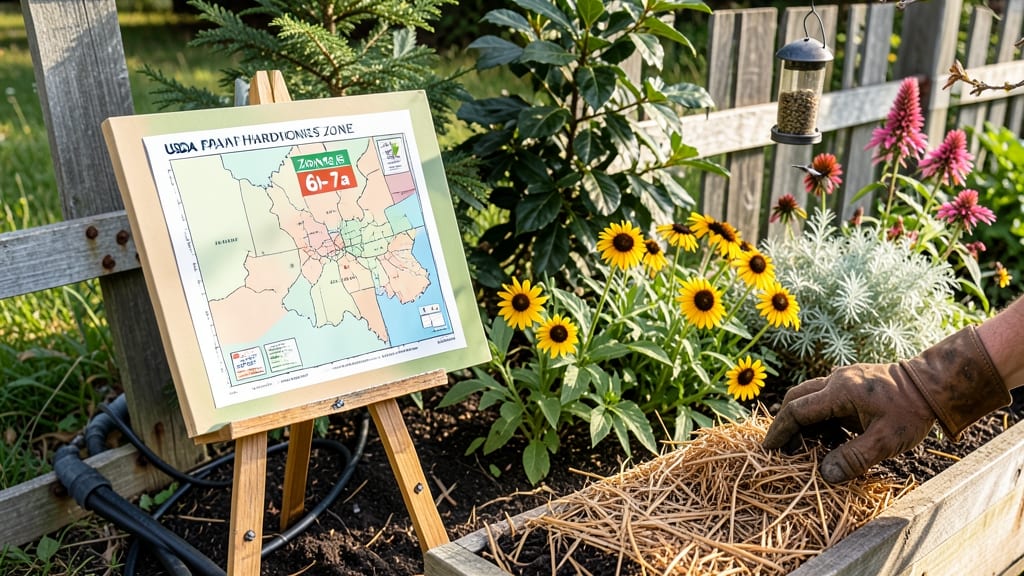
Understanding Maryland's gardening zones helps you select plants that thrive in USDA Hardiness Zones 5b through 8a, with most of the state falling in Zones 6a–7b. Coastal regions typically align with Zone 7b–8a, while western mountain areas reach Zone 5b. These distinctions directly impact your planting timeline, as last frost dates vary from mid-April to early June across the state.
Maryland's diverse geography creates distinct growing conditions—coastal areas benefit from milder winters, while inland regions face harsher cold snaps. 🌱 The USDA zone map helps you match plants to your specific location, whether you're in Baltimore's Zone 7a or Garrett County's Zone 5b. For instance, tender annuals like tomatoes thrive in coastal areas but may need extra protection in higher elevations.
Many gardeners use local frost data to fine-tune their schedules, especially for warm-season crops that need consistent warmth to germinate.
What sets Maryland apart is how quickly conditions change over short distances.
A garden in Annapolis might see Zone 7b conditions, while just 30 miles inland in Howard County you could be in Zone 6b. This variability means your planting calendar should account for microclimates—urban areas often run warmer than rural spots, while valleys collect cold air.
The Maryland Department of Agriculture provides county-specific frost dates that can help you adjust your schedule by 2-3 weeks depending on your exact location.
💡 In This Article
- USDA Hardiness Zones in Maryland: Exact Designations and Microclimates
- Maryland Planting Calendar: When to Start Seeds and Transplant
USDA hardiness zones in Maryland: exact designations and microclimates
Maryland's gardening zones reflect a fascinating blend of geography and climate, where elevation and water bodies create distinct growing conditions. The state's western mountains—like those in Garrett and Allegany counties—plunge into Zone 5b, where winter lows can dip to -15°F or colder.
This harshness forces gardeners to choose cold-hardy plants like Korean lilac (Syringa meyeri) or serviceberry (Amelanchier), which survive -30°F temperatures.
Meanwhile, coastal areas from Annapolis to Ocean City bask in Zone 7b-8a, where winters rarely drop below 10°F, allowing tender plants like bougainvillea or olive trees to thrive year-round.
The Piedmont region, home to Baltimore and Frederick, dominates Zones 6a-7a, where winter temperatures typically range from 0°F to 10°F. This zone's moderate climate supports a broader variety of plants, including peach trees and hydrangeas, which struggle in colder zones but can't handle coastal humidity.
Urban heat islands in cities like Baltimore add another layer—temperatures can be 5-10°F warmer than rural areas just 10 miles away, creating microclimates where fig trees might survive winters that would kill them in nearby suburbs. 🌿 These variations mean a gardener in Towson (Zone 7a) might plant tomatoes two weeks earlier than one in Hagerstown (Zone 6b).
Proximity to water plays a critical role too. The Chesapeake Bay's moderating influence keeps coastal areas frost-free longer, while inland valleys—like those in Frederick County—can experience 2-3 weeks of delayed spring warmth due to cold air pooling.
This is why last frost dates vary dramatically: Ocean City averages April 15, while Cumberland in the west may not see its final freeze until May 10.
For gardeners, this means starting cool-season crops like lettuce indoors by February 15 in coastal areas but waiting until March 1 in western zones.
Understanding these microclimates helps explain why some plants thrive in unexpected places. For example, crepe myrtles flourish in Baltimore's Zone 7a but may struggle in Garrett County's Zone 5b unless planted against a south-facing wall.
Similarly, blueberries, which need acidic soil and cold winters, do well in the Piedmont but require winter chilling hours that coastal areas often lack. The USDA map provides a starting point, but local observations—like tracking when daffodils bloom in your yard—can refine your zone even further.
Temperature extremes also shape Maryland's gardening challenges. While coastal areas rarely see -10°F winters, inland regions can experience sudden cold snaps in late spring or early fall, catching gardeners off guard. This is why hardy perennials like coneflowers or black-eyed Susans are safer bets than tropical plants.
Even within a single zone, elevation changes of just 500 feet can shift hardiness by a full zone—meaning a backyard in Boonsboro (Zone 6b) might have pockets of Zone 5b conditions in its higher areas.
For precise planning, gardeners often cross-reference the USDA map with local data from sources like the Maryland Climate Hub or Purple Martin Observatory's frost records.
These tools reveal that while the official last frost date for Baltimore is April 15, some years see frost as late as May 5.
This variability is why experienced gardeners in Zone 7a might still wait until May 1 to plant tomatoes, giving nature a buffer against unpredictable cold snaps. 🌱