
Tools
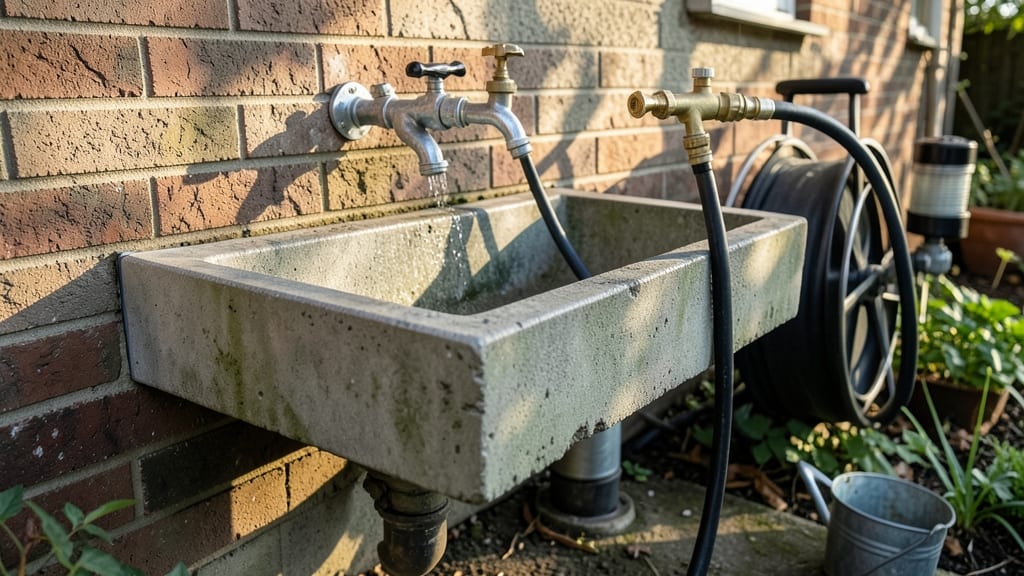
An outdoor garden hose sink provides direct water access for gardening, combining built-in drainage to prevent water pooling and maintain steady pressure while minimizing waste. Look for models with durable construction and adjustable spouts to match your garden's specific needs.
This specialized fixture combines functionality with efficiency—its drainage system prevents soggy soil while maintaining consistent water flow, unlike standard faucets that waste water through splashing. 🌿 For larger gardens, I recommend models with pressure regulators to avoid over-saturating plants, especially in areas with uneven terrain.
The right placement (near your hose reel or garden beds) can save you time and effort during watering sessions.
Durability matters most in outdoor setups, so I prioritize sinks made from corrosion-resistant materials like stainless steel or heavy-duty plastic. Wall-mounted options work well for small spaces, while ground-level models provide easier access for filling containers or watering low-growing plants.
Always check your water pressure first—some systems require at least 40 PSI to operate effectively.
💡 In This Article
- How Pressure and Drainage Systems Work in Garden Hose Sinks
- Selecting the Right Outdoor Hose Sink for Your Garden Layout
How pressure and drainage systems work in garden hose sinks
Garden hose sinks regulate water flow through a combination of pressure regulators and drainage channels. The pressure regulator—typically a spring-loaded valve—adjusts water flow to maintain consistent pressure, usually between 20-40 PSI, regardless of your home's supply pressure.
This prevents either weak streams (under 20 PSI) that fail to reach distant garden beds or forceful jets (over 60 PSI) that waste water and erode soil.
The system works by restricting or expanding the water passage based on incoming pressure, much like how a showerhead adjusts to your water pressure.
Drainage design varies between gravity-fed and forced systems. Gravity-fed models rely on a sloped basin that directs excess water through a 1-inch diameter drain pipe to a designated runoff area, while forced systems use a small submersible pump (usually 1/12 horsepower) to actively move water away.
The material of the sink—like stainless steel or polyethylene—also affects water flow; stainless steel minimizes pressure loss (typically 5% loss over 50 feet) while plastic models may lose up to 15% due to smoother but less rigid surfaces. 🌊
Sink placement dramatically impacts water distribution. Mounting a sink at ground level near garden beds ensures water flows directly to roots without splashing, while wall-mounted units (typically 36-42 inches high) work better for filling containers or watering hanging plants.
The spout's height—usually adjustable between 12-24 inches—lets you direct water precisely, reducing waste by up to 30% compared to handheld hoses. For example, a spout set at 18 inches targets ground-level plants, while raising it to 24 inches reaches taller shrubs without overspray.
Soil type influences drainage needs: sandy soil drains quickly and needs moderate flow rates (2-3 GPM), while clay soil requires low-flow (1-2 GPM) to prevent runoff.
The sink's basin depth—typically 6-8 inches—also matters; deeper basins hold more water for filling containers, while shallow ones (4 inches) reduce pooling. Some premium models include a drip tray that catches excess water, redirecting it to a soaker hose for efficient use.
Pressure loss occurs when water travels through hoses and fittings, with each 50-foot hose reducing pressure by about 10 PSI. To combat this, some garden hose sinks include a booster pump (usually 120 GPH capacity) that maintains flow for long hoses.
The pump activates automatically when pressure drops below 30 PSI, ensuring consistent performance even in large gardens. This is especially useful for slopes or when watering 100+ square feet of garden beds.
For optimal performance, position the sink within 25 feet of your water source to minimize pressure loss. If you must extend further, use 1/2-inch diameter hoses (which lose 5 PSI per 100 feet) and avoid sharp bends that restrict flow.
The sink's drain pipe should slope at least 1/4 inch per foot to ensure gravity-assisted drainage, preventing clogs from debris. 💧